

The most common pain medications for severe pain fall into four groups: NSAIDs and acetaminophen, nerve-pain medicines such as gabapentin and topiramate, antidepressants, and opioids, which include buprenorphine. No single drug works for every patient, and the right choice depends on the pain's source, your other health conditions, and how long the pain has lasted. This guide explains what each group does, what side effects to expect, and when it makes sense to look beyond pills altogether.
How Doctors Choose Pain Medications for Severe Pain
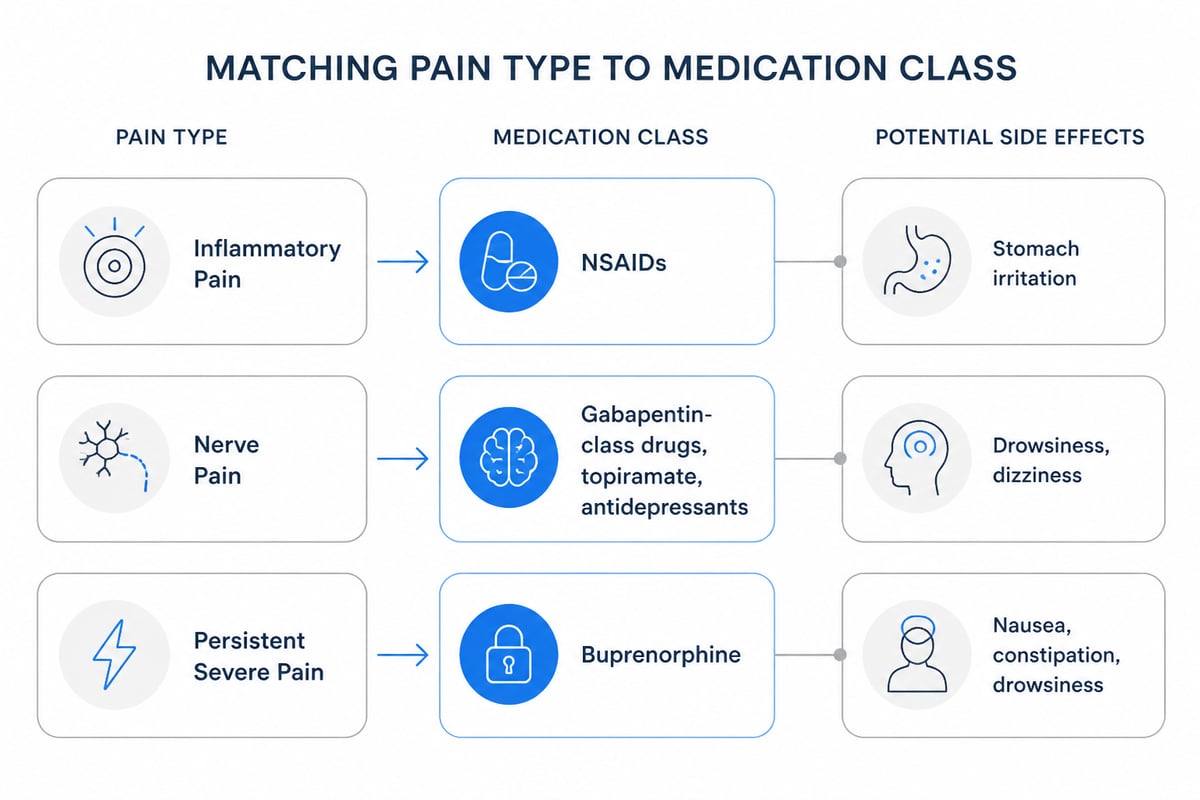
A physician selects pain medications for severe pain by matching the drug to the type of pain, then weighing benefits against risks for that specific patient. Pain that comes from inflamed tissue responds to different drugs than pain that comes from damaged nerves.
Duration matters as well. The CDC clinical guideline covers outpatient care for adults 18 and older and separates acute pain (under 1 month), subacute pain (1 to 3 months), and chronic pain (more than 3 months). Chronic pain rarely resolves with a single prescription, so treatment tends to combine several approaches.
Three questions usually guide the decision:
- What is causing the pain? Inflammation, nerve injury, muscle strain, and central sensitization each respond differently.
- What else are you taking? Blood thinners, kidney disease, liver conditions, and other prescriptions limit your options.
- What does a good day look like for you? Goals such as sleeping through the night, walking a mile, or returning to work shape the plan more than a pain number alone.
Non-Opioid Options: NSAIDs and Acetaminophen
Acetaminophen and NSAIDs are the first-line medications for most pain, and they remain useful even when pain is severe. They carry fewer dependence concerns than opioids, but they are not risk-free.
Acetaminophen relieves pain and lowers fever without reducing inflammation. Its main hazard is liver injury when daily limits are exceeded, which happens easily because it hides in many cold remedies and combination products.
NSAIDs such as ibuprofen, naproxen, and prescription-strength options reduce both pain and inflammation. They suit arthritis, back pain, and injuries involving swollen tissue. Long-term use can irritate the stomach lining, raise blood pressure, and strain the kidneys, so older adults and people with heart or kidney disease need close monitoring.
The CDC reports that for many common types of acute pain, including low back pain, neck pain, musculoskeletal injuries, and minor surgery pain, nonopioid therapies are at least as effective as opioids. That finding is a good reason to confirm these basics have been tried properly, at the right dose and for long enough, before moving to stronger drugs.
Nerve Pain Medications and Antidepressants
When severe pain comes from irritated or damaged nerves, medicines originally developed for seizures and depression often work better than standard painkillers. Nerve pain feels burning, shooting, or electric, and ibuprofen rarely touches it.
Common choices include:
- Gabapentin and related medications: These calm overactive nerve signaling and are widely used for neuropathy and radiating pain. Drowsiness, dizziness, and swelling in the legs are the usual complaints.
- Topiramate (Topamax): Another anticonvulsant used for certain pain conditions, including some headache disorders. It can cause tingling, appetite loss, and difficulty with word-finding.
- Antidepressants: Certain tricyclics and serotonin-norepinephrine reuptake inhibitors reduce pain signals independent of any effect on mood. Dry mouth, constipation, and sleepiness are common early on.
These drugs build up gradually. Patients often need several weeks at an adjusted dose before judging whether they help, and stopping suddenly can cause problems, so changes should be guided by a physician.
Opioids and Buprenorphine for Severe Pain
Opioids are reserved for severe pain that other treatments have not controlled, and current guidance asks prescribers to use them cautiously, at the lowest effective dose, and for the shortest necessary time. The CDC guideline contains recommendations grouped into four areas: whether to start opioids, how to select and dose them, how long to prescribe and how to follow up, and how to assess risk and prevent harm.
Two principles from that guidance matter to patients. First, when opioid therapy begins, the CDC recommends immediate-release rather than extended-release or long-acting formulations. Second, the lowest-effective-dose principle means dose increases should be justified by real functional gains, not by pain scores alone.
Buprenorphine deserves separate mention. It is a partial opioid agonist, which means it activates the same receptors as other opioids but has a ceiling effect that lowers the risk of respiratory depression. It is used for chronic pain and for opioid dependence, and it is one of the medications offered in the center's chronic pain program. Patients who have developed tolerance or dependence on stronger opioids sometimes find buprenorphine gives steadier relief with fewer swings between relief and withdrawal.
Opioid risks include constipation, nausea, sedation, tolerance, and dependence. Anyone taking these medicines should store them securely, avoid alcohol and sedatives, and tell every provider on their care team what they take.
Common Side Effects of Pain Medications
Every class of pain medication has predictable side effects, and knowing them in advance helps you report problems early. The table below summarizes the most frequent ones.
| Medication class | Common side effects | Key caution |
|---|---|---|
| Acetaminophen | Rare at normal doses | Liver damage if daily limit is exceeded |
| NSAIDs | Stomach upset, heartburn | Kidney strain, raised blood pressure, bleeding risk |
| Gabapentin-class drugs | Drowsiness, dizziness, leg swelling | Do not stop abruptly |
| Topiramate | Tingling, appetite loss, slowed thinking | Report vision changes promptly |
| Antidepressants | Dry mouth, constipation, sleepiness | Takes weeks to reach full effect |
| Opioids and buprenorphine | Constipation, nausea, sedation | Dependence, respiratory depression with sedatives |
Call your physician promptly for severe stomach pain, black stools, yellowing skin, confusion, slowed breathing, or any allergic reaction. For a broader look at pills used when pain is intense, the center's article on severe pain pills covers additional detail.

Dosing and Safety for Older Adults
Older adults need lower starting doses, slower increases, and more frequent check-ins, because age changes how the body processes medication. Kidney and liver function decline, body composition shifts, and most patients in this age group already take several other drugs.
Practical safeguards include:
- Keep one current list of every prescription, supplement, and over-the-counter product, and bring it to each appointment.
- Ask whether an NSAID is safe given your kidney function and blood pressure.
- Use caution with anything that causes drowsiness, since falls are a leading cause of injury in older adults.
- Review the full regimen regularly and remove drugs that no longer help.
Many aches in older adults trace back to osteoarthritis, old injuries, spinal changes, and nerve damage from conditions such as diabetes. Identifying the cause makes it easier to choose a medication that fits rather than adding another pill to an already crowded schedule.
Measuring Pain So Treatment Can Be Adjusted
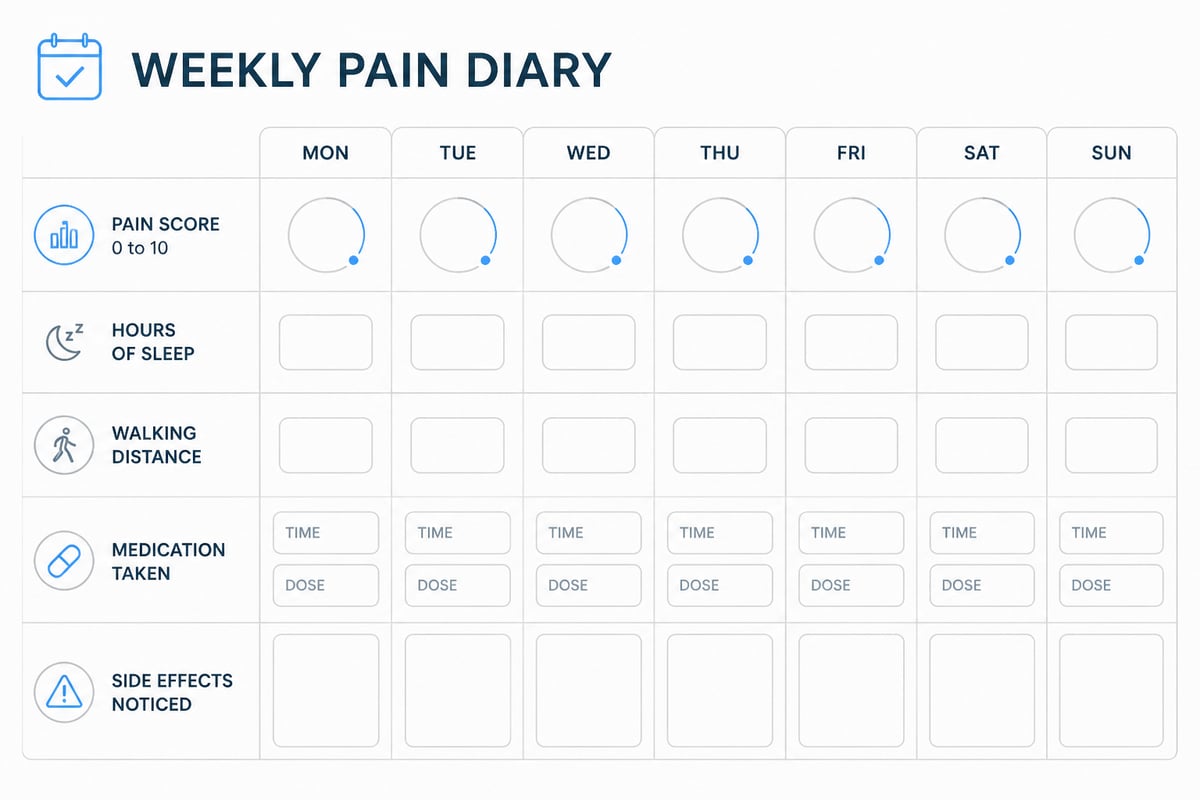
Clinicians measure pain with simple scales, and the most widely used is the numeric rating scale, where you rate pain from 0 to 10. Other tools include the visual analog scale, a line on which you mark your pain level, and the Wong-Baker faces scale, which helps patients who find numbers hard to use. Choose the one you can apply consistently, because a score only becomes useful when it is recorded the same way each time.
A single number says little on its own. Better tracking pairs the score with function: how far you can walk, how well you sleep, whether you can dress or cook without help. A drug that lowers your score from 8 to 6 but lets you return to daily activities may be working better than one that lowers it to 4 and leaves you too sedated to leave the house.
Record your score at roughly the same times each day, along with the dose and time of each medication. That pattern shows whether relief wears off before the next dose, whether pain peaks in the morning or evening, and whether a new side effect appeared after a change. Those details let your physician decide whether to adjust timing, change the dose, or try a different drug class, and they carry the most weight when judging a medication that needs weeks to take effect.
When Medication Alone Is Not Enough
Pills rarely control severe chronic pain on their own, and the strongest treatment plans pair medication with other therapies. If your current prescriptions no longer give adequate relief, that usually signals a need to widen the plan, not to raise the dose.
Evidence-supported additions include physical therapy, counseling and cognitive behavioral approaches, acupuncture, chiropractic care, trigger point injections, and dietary changes. Some patients also qualify for medical marijuana under Pennsylvania's program, which requires certification by a physician.
At Pain & Recovery Medical Centre, treatment is individualized and delivered by a team that provides compassionate, judgment-free care. Dr. Paul Simpson, who has more than 35 years of primary care experience in Internal Medicine, integrates conventional and alternative treatments, including medical marijuana. The Chronic Pain Management Program draws on medications such as buprenorphine, NSAIDs, gabapentin-class drugs, and topiramate, alongside counseling, acupuncture, physical therapy, and other therapies. The center serves adults 18 and older.
You can read more about managing chronic pain and what to expect from pain management services before booking a visit.
Questions to Bring to Your Appointment
Walking into a visit with specific questions leads to a more useful conversation and a safer plan. Consider asking:
- What is the likely source of my pain, and does it call for a particular class of medication? Inflamed tissue, damaged nerves, and strained muscle each respond to different drugs, so a clear answer here shapes everything that follows.
- What have I not yet tried at an adequate dose or length of time? Nerve-pain medicines and antidepressants often need several weeks at an adjusted dose, so a drug dropped after a few days may not have had a fair trial.
- What side effects should prompt me to call you immediately? Ask for a specific list tied to your prescription, such as black stools with an NSAID or slowed breathing with an opioid.
- How will we judge whether this drug is working, and when will we review it? Agree on a measure beyond a pain score, such as sleeping through the night or walking a set distance, and book the follow-up before you leave.
- What is the plan if this medication stops helping? This opens the door to physical therapy, counseling, acupuncture, or a different drug class rather than a higher dose.
If opioids come up, ask why an immediate-release formulation is or is not being chosen, since the CDC recommends it over extended-release products when therapy begins. Bring your pain diary, your medication list, and a note on your goals. A physician who knows your daily limits can choose and adjust treatment far more precisely.
FAQ
What are the common side effects of painkillers?
The most frequent side effects are stomach upset with NSAIDs, drowsiness and dizziness with nerve-pain medicines, and constipation, nausea, and sedation with opioids. Liver damage is the main acetaminophen risk when daily limits are exceeded. Report severe or unusual symptoms to your physician right away.
What tool identifies a patient's pain level?
Clinicians most often use the 0 to 10 numeric rating scale, the visual analog scale, or the Wong-Baker faces scale. Each turns a subjective experience into a number that can be tracked over time. Pairing the score with notes on sleep and daily activity gives a fuller picture.
What are common causes of aches and pains in older adults?
Osteoarthritis, previous injuries, spinal changes, muscle loss, and nerve damage from conditions such as diabetes are the usual causes. Identifying the source helps determine which medication or therapy fits best.
If your current medications no longer control your pain, write down your pain scores and daily limits for one week and bring them to a physician who can review your full treatment history. Pain & Recovery Medical Centre builds individualized plans for Pennsylvania adults through its Chronic Pain Management Program, and the team can also discuss medical marijuana certification if you may qualify. When you are ready to talk with a physician who has more than 35 years of primary care experience, Pain & Recovery Medical Centre is available, so call now to schedule your visit.