

Chronic medication is any prescription taken on an ongoing basis to manage a long-term condition, and for people with persistent pain it means a regularly reviewed plan rather than a single remedy. The goal is steady control of pain and better daily function at the lowest effective dose, with the risks checked at set intervals. If your current pills no longer control your pain, that does not mean you have run out of options. It usually means the plan needs to be reassessed.
What Is a Chronic Medication?
A chronic medication is a drug prescribed for continuing use over months or years to control a condition that does not resolve on its own. Unlike an antibiotic course or a short post-surgical prescription, these medicines are meant to be part of a long-term routine.
Common conditions treated this way include high blood pressure, diabetes, asthma, heart failure and persistent pain. In pain care, the term covers several drug families, from anti-inflammatories to nerve-pain agents and, in selected cases, opioids or buprenorphine.
The distinction between acute and chronic matters for safety. A medicine that is reasonable for two weeks can carry very different risks at two years. Kidney function, stomach lining, sleep, mood, balance and dependence all need periodic review once a prescription becomes long term.
Which Conditions Usually Call for Long-Term Medicine?
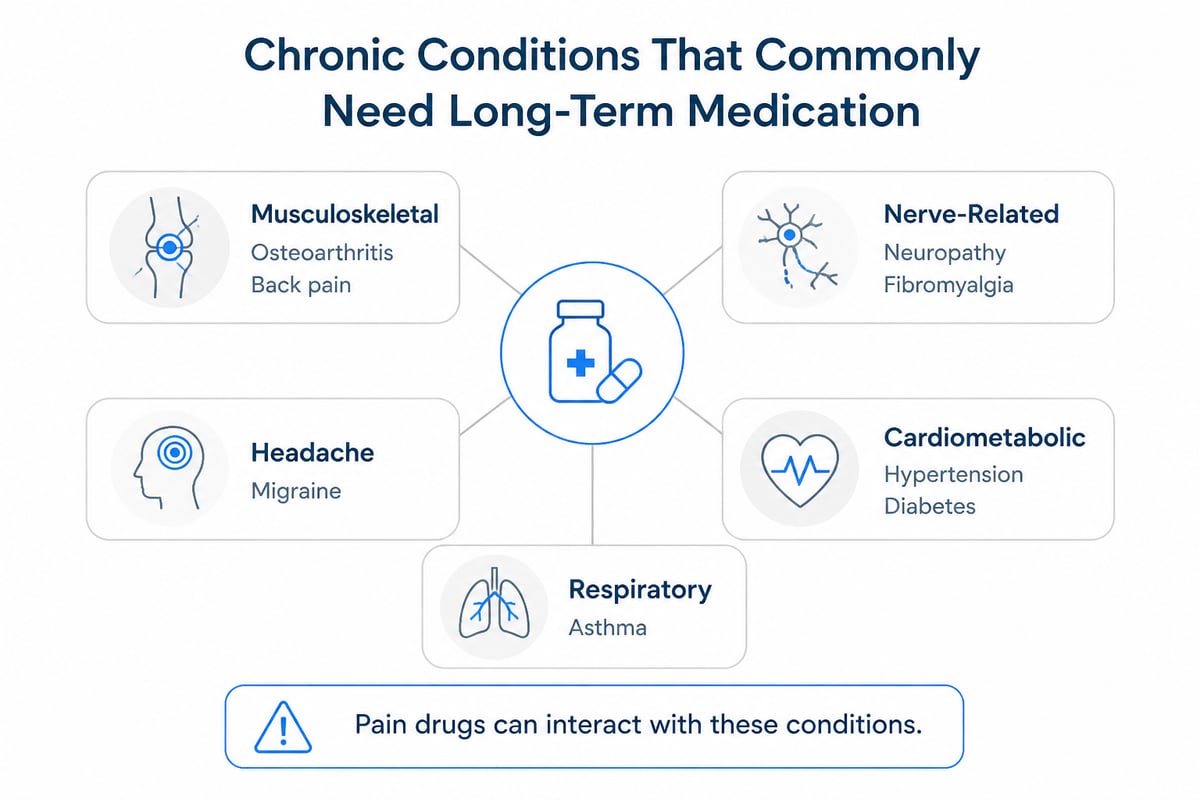
Chronic diseases are conditions that last a year or more and need ongoing medical attention or limit daily activities. Medication is one part of managing many of them.
Examples relevant to people living with persistent pain include:
- Osteoarthritis and rheumatoid arthritis
- Chronic low back and neck pain
- Fibromyalgia
- Neuropathy, including diabetic nerve pain
- Migraine and chronic headache disorders
- Pain that persists after injury or surgery
Many adults also take chronic medication for other conditions, such as hypertension or diabetes. That overlap is important, because pain drugs can interact with those prescriptions. A full list of everything you take, including supplements and over-the-counter products, is the foundation of any safe plan.
Main Types of Chronic Pain Medication
Several drug classes are used for long-term pain control, and each carries its own benefits and monitoring needs. Matching the class to the type of pain is the first step toward a plan that holds up over time.
| Drug class | Typically used for | Key long-term considerations |
|---|---|---|
| NSAIDs (such as ibuprofen, naproxen) | Inflammatory and joint pain | Stomach, kidney and blood pressure effects |
| Acetaminophen | Mild to moderate pain | Liver safety and total daily dose |
| Antidepressants (SNRIs, tricyclics) | Nerve pain, widespread pain | Drowsiness, dry mouth, mood monitoring |
| Gabapentinoids and topiramate | Neuropathic pain | Dizziness, sedation, withdrawal if stopped abruptly |
| Topical agents | Localized joint or nerve pain | Skin irritation, lower systemic exposure |
| Opioids and buprenorphine | Selected severe pain | Dependence, tolerance, overdose risk, close monitoring |
For adults with chronic primary pain, NICE recommends considering amitriptyline, citalopram, duloxetine, fluoxetine, paroxetine or sertraline after discussing potential benefits and harms. That is a useful reminder that some of the best-supported long-term options are not traditional painkillers at all.
The reasoning behind those recommendations, including the review of antidepressants and concerns about long-term opioids, is laid out in NICE’s rationale and impact summary.
Why Opioids Are Approached Cautiously
Opioids are not the default for chronic pain, because the risks tend to grow with duration and dose while the benefits often fade. The CDC guideline states that nonopioid therapies are preferred for subacute and chronic pain, and that clinicians should consider opioids only when the expected benefits for pain and function outweigh the risks.
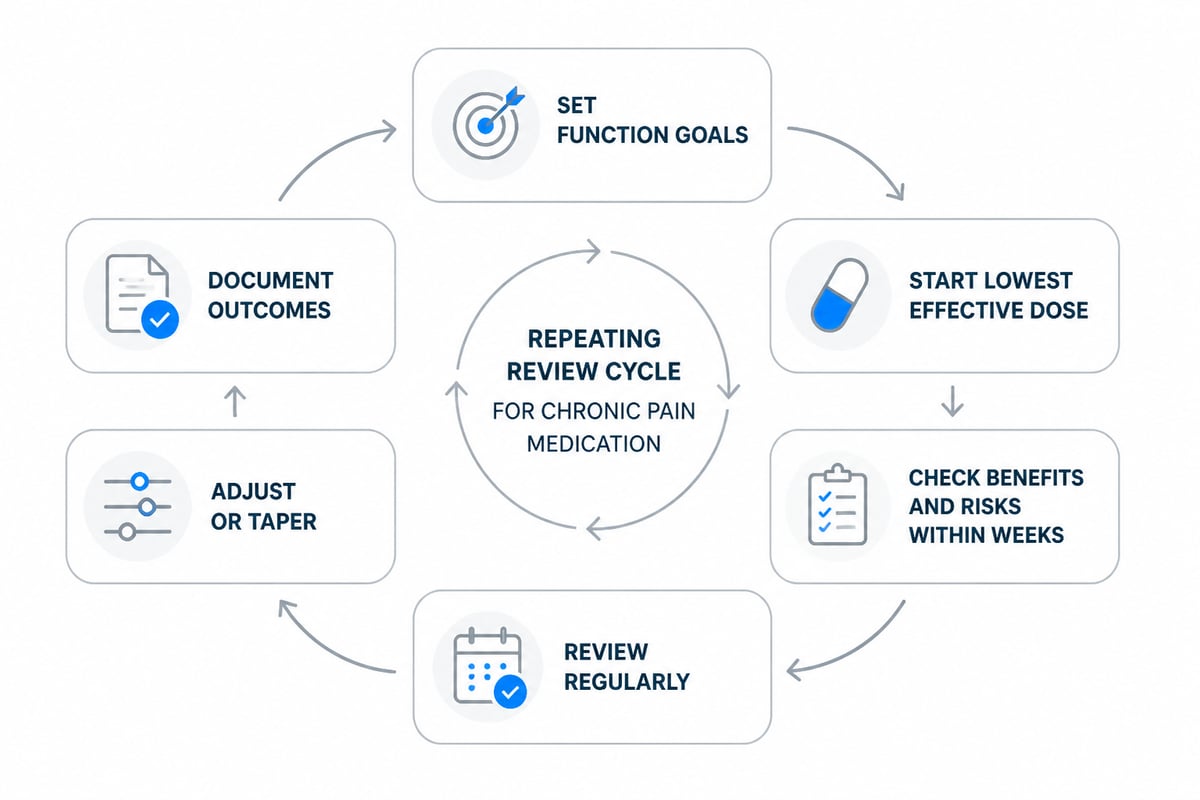
The same guidance advises prescribing the lowest effective dosage when opioids are started, and evaluating benefits and risks within 1 to 4 weeks. Ongoing therapy should be reevaluated regularly rather than renewed automatically.
Buprenorphine occupies a distinct position. It is a partial opioid agonist used both for pain and for opioid dependence, and its ceiling effect on respiratory depression is one reason clinicians consider it in carefully selected patients. It still requires structured monitoring.
Can Long-Term Medicine Be Harmful? Risks to Watch
Yes, many commonly used pain medicines can cause harm over time if they are not monitored. The risks depend on the drug, the dose, your age and your other health conditions.
Medicines worth reviewing regularly include:
- NSAIDs: Long-term use can contribute to stomach bleeding, kidney strain and higher blood pressure.
- Acetaminophen: Exceeding the daily limit, often by combining products, can injure the liver.
- Opioids: Tolerance, physical dependence, constipation, sedation and overdose risk increase with time and dose.
- Gabapentinoids: Dizziness, swelling and sedation are common, and the risk rises when combined with other sedating drugs.
- Benzodiazepines: Often prescribed for muscle spasm or anxiety, they add sedation and dependence risk, especially alongside opioids.
- Tricyclic antidepressants: Can cause confusion, dry mouth and heart rhythm effects at higher doses.
- Muscle relaxants: Drowsiness and falls are the main concerns, and benefits for long-term use are limited.
- Proton pump inhibitors (taken to protect the stomach): Prolonged use warrants periodic reassessment of the need.
NICE also advises reviewing medicines such as opioids, gabapentinoids and benzodiazepines through shared decision-making, including a discussion of withdrawal problems when considering stopping them. Never stop one of these abruptly on your own. A supervised taper is safer.

How to Keep a Long-Term Prescription Safe
A safe long-term prescription depends on scheduled review, honest reporting and a clear definition of success. The medicine alone does not make a plan safe. The monitoring around it does.
Define What Success Looks Like
Pain scores alone are a weak measure. Agree on function-based goals, such as walking a set distance, sleeping through the night, or returning to gardening or work tasks. If a drug has not moved those goals after a fair trial, that is a reason to change course.
Schedule Regular Reviews
Ask how often your prescriber will reassess benefit and harm. Reviews should cover side effects, other medicines, mood, sleep and daily function. Bring a written list of everything you take.
Know Your Prescribing Rules
Many prescribers now send prescriptions electronically, which reduces lost or altered paper prescriptions and supports tracking. Keep medicines in a secure place, never share them, and dispose of unused doses through a pharmacy take-back program.
Report Changes Early
Tell your prescriber about new drowsiness, mood shifts, stomach pain, dark stools, swelling, or any sense that you are taking more than planned. Early adjustments are easier than late corrections.
When Medication Alone Stops Working
If medication no longer controls your pain, the answer is rarely a higher dose. Persistent pain involves the nervous system, movement, sleep, stress and mood, and a plan that addresses only one of those layers tends to plateau.
Signs that your plan needs rethinking include:
- Needing more medicine to get the same relief
- Side effects that now limit daily life
- Pain that improves briefly but returns before the next dose
- Rising worry about dependence or interactions
- Declining activity despite steady prescriptions
At that point, combining medication with non-drug care often makes more sense than escalating. Options include physical therapy, acupuncture, chiropractic care, counseling and mind-body approaches. The Chronic Pain Management Program at Pain & Recovery Medical Centre offers treatment for Pennsylvania adults (18+) that can combine medications such as buprenorphine, NSAIDs, gabapentin-class medications or topiramate with counseling, physical therapy, trigger point injections, dietary therapies and other therapies, tailored to the individual.
For more on how pain behaves in the nervous system, see this overview of neuroplastic pain treatment and a look at the psychological management of pain.
Building a Combined Plan With Your Care Team
A combined plan places medication alongside other treatments, each with a defined role and a review date. The most dependable plans are individualized, because two people with the same diagnosis often respond very differently.
At Pain & Recovery Medical Centre, treatment is individualized to each patient's needs, and the team provides compassionate, judgement-free care. The approach integrates proven conventional and alternative treatments, including medical marijuana. Dr. Paul Simpson has practiced in primary care Internal Medicine, which is useful when pain medicine must be coordinated with other chronic conditions and prescriptions.
A practical combined plan often includes:
- A short, clearly stated medication list with the purpose of each drug
- Movement and physical therapy goals that build gradually
- Sleep and stress strategies, since both amplify pain signals
- A written plan for flare-ups so you are not improvising
- Agreed checkpoints for tapering or changing a drug
If you are weighing options for severe pain specifically, this discussion of pain medications for severe pain offers further context.
Questions to Ask Before You Start or Continue a Prescription
The best way to protect yourself on long-term treatment is to ask specific questions at every renewal. Prepared questions turn a rushed visit into a useful review.
- What is this medicine meant to improve, and how will we know it is working?
- What are the most likely side effects, and which ones should I report immediately?
- How does it interact with my other prescriptions and supplements?
- What is the plan if it stops helping, and how would we taper it?
- Which non-drug treatments could reduce how much medication I need?
- How often will we review this prescription?
Write the answers down. If a prescriber cannot explain the purpose of a drug you have taken for years, that is a signal to schedule a dedicated review.
FAQ
What are 20 common medications that can be harmful in the long term?
No single list covers everyone, but the groups most often flagged for long-term risk include NSAIDs, opioids, benzodiazepines, gabapentinoids, muscle relaxants, tricyclic antidepressants, sleep medicines and acid-reducing drugs. Risk depends on dose, duration, age and other conditions, so the safest step is a scheduled review with your prescriber rather than stopping anything abruptly.
How often should chronic medication be reviewed?
There is no single schedule, but reviews should happen at regular, agreed intervals. For opioids, the CDC advises evaluating benefits and risks within 1 to 4 weeks of starting and reevaluating regularly afterward. Ask your prescriber to set review dates for every long-term drug you take.
Can I stop a chronic pain medicine if I feel better?
Do not stop on your own, because some drugs, including opioids, gabapentinoids and benzodiazepines, can cause withdrawal problems if stopped suddenly. Ask your prescriber for a supervised plan to reduce the dose gradually. Feeling better is a good reason to start that conversation.
Start by writing down every medicine you take, what each is meant to do, and how your pain affects your day, then bring that list to a prescriber who will review it with you. If your current plan is no longer controlling your pain, the Chronic Pain Management Program is one place to explore a combined approach. Pain & Recovery Medical Centre specializes in treating patients with chronic pain, providing programs to improve quality of life and promote independence, and its services include medical marijuana services, chronic pain management and substance dependence treatment tailored to individual needs. If you live in State College or central Pennsylvania and are ready to talk through your options, Call Now to speak with the Pain & Recovery Medical Centre team.