
Pain interventions are the medical, physical, psychological, and complementary treatments used to reduce pain or help a person function despite it, and the right choice depends on the type of pain, its duration, and the person's goals. For adults whose medication no longer controls their symptoms, the most effective plans usually combine several approaches rather than relying on a single prescription.
This guide explains the main categories of treatment, who each tends to help, and how to think through the decision with a physician.
What Counts as a Pain Intervention?
A pain intervention is any planned treatment that targets pain itself, the factors that sustain it, or its effect on daily life. That definition is broader than many patients expect. It includes pills and injections, but also movement programs, talk therapy, acupuncture, nutrition changes, and procedures.
The distinction between acute and chronic pain shapes everything that follows. NICE defines chronic pain as pain that persists or recurs for more than three months, and it recommends a person-centered assessment of both its causes and its effects. That second part matters. Two people with the same diagnosis can need very different plans because pain affects sleep, mood, work, and relationships differently.
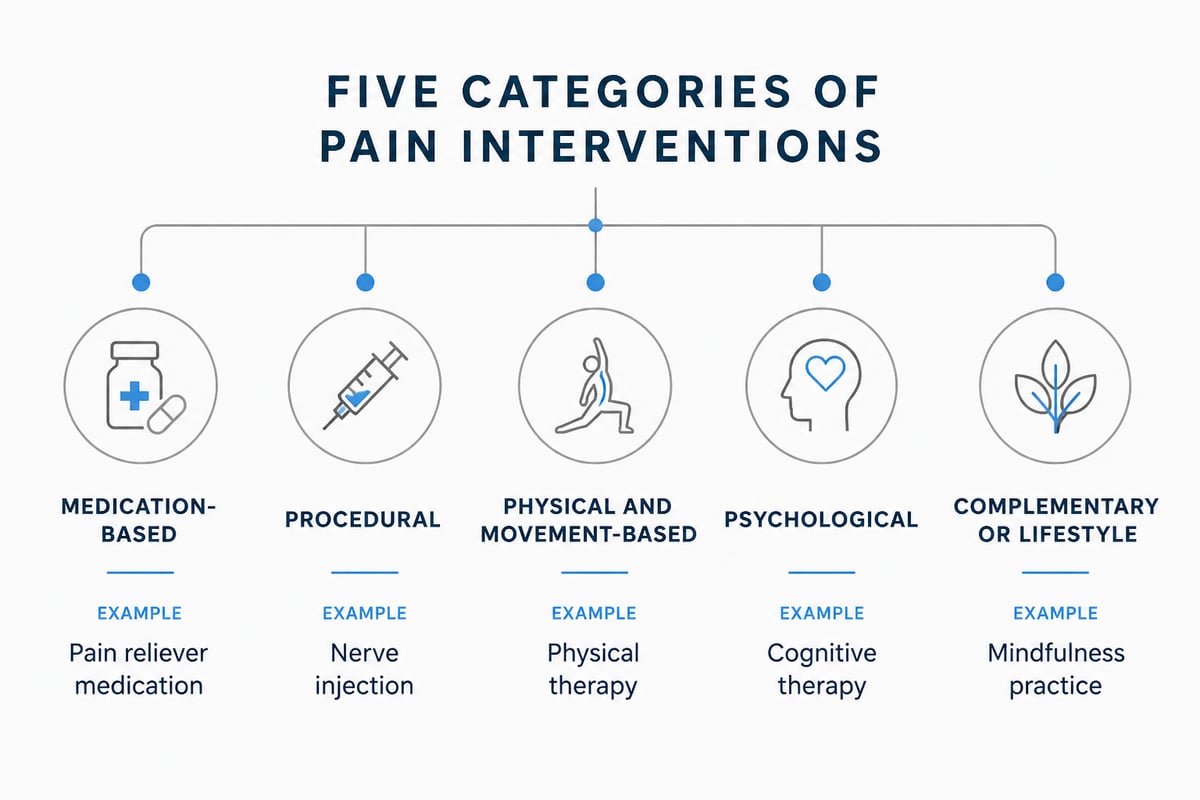
Interventions generally fall into five groups:
- Medication-based: NSAIDs, gabapentin-class drugs, topiramate, and buprenorphine
- Procedural: trigger point injections and, in selected cases, surgery
- Physical and movement-based: physical therapy, supervised exercise, chiropractic care
- Psychological: cognitive behavioral therapy, acceptance-based approaches, counseling
- Complementary and lifestyle: acupuncture, mind-body practice, dietary therapy
How Do Medications Fit Into Pain Interventions?
Medications remain a common starting point, but they work best as one part of a plan rather than the entire plan. Each drug class targets pain through a different pathway, which is why a medication that fails for one type of pain may succeed for another.
NSAIDs reduce inflammation and suit pain driven by tissue irritation, such as some joint and muscle conditions. Gabapentin-class medications and topiramate act on nerve signaling and are often considered for nerve-related pain. Buprenorphine, a partial opioid agonist, has a more limited ceiling effect than full opioids and is used both for pain and for opioid dependence.
For patients who have been on long-term pain pills with diminishing results, the question is rarely "which stronger drug comes next." More often it is whether the current regimen is still doing its job, whether tolerance or dependence has developed, and whether non-drug approaches could carry more of the load. Those are conversations to have with a physician who reviews your full history. You can read more about how clinicians approach this in our overview of pain meds for pain.
Which Pain Interventions Help Opioid-Dependent Patients?
For adults dependent on opioids who also live with chronic pain, buprenorphine-based treatment paired with non-opioid pain strategies is a common route to stability. Treating the pain and the dependence together tends to work better than addressing them in separate silos, because untreated pain is a frequent driver of relapse.
A sound plan for this group usually includes:
- A clear assessment of current opioid use and pain sources
- A prescribing approach that is monitored and documented
- Non-opioid pain tools such as physical therapy, counseling, and nerve-targeted medication
- Ongoing follow-up rather than a one-time visit
Care for this group should be judgement-free. Dependence is a medical condition, and patients who feel stigmatized are less likely to stay in treatment. Electronic prescribing creates a transparent record that supports safe monitoring.
What Non-Drug Pain Interventions Have Evidence Behind Them?
Several non-drug approaches have formal guideline support for chronic primary pain, meaning pain that is a condition in its own right rather than a symptom of another disease. The strongest guidance comes from NICE's review of the evidence.
NICE recommends offering supervised group exercise to people aged 16 and over with chronic primary pain, tailored to their needs, preferences, and abilities. It also says clinicians may consider cognitive behavioral therapy (CBT) or acceptance and commitment therapy, delivered by appropriately trained professionals. For acupuncture, NICE allows consideration of one course of acupuncture or dry needling for people aged 16 and over, with a cap of five hours of healthcare-professional time.
The guidance is just as clear about what to skip. NICE advises against TENS, ultrasound, and interferential therapy for chronic primary pain because it found no evidence of benefit. That is useful to know before spending money on devices or clinic sessions that are unlikely to help.
Similar guidance exists from other bodies, and the emphasis on movement, education, and psychological support as first-line tools reflects a broader shift in how chronic pain is managed.
| Intervention | Evidence position (NICE) | Typically suits |
|---|---|---|
| Supervised group exercise | Recommended | Most adults with chronic primary pain |
| CBT or acceptance and commitment therapy | May be considered | Pain affecting mood, sleep, or coping |
| One course of acupuncture or dry needling | May be considered, time-limited | Those open to a complementary option |
| TENS, ultrasound, interferential therapy | Advised against | Not recommended |
How Do Psychological Factors Change Pain Treatment?
Pain and psychological health influence each other, so treating one often changes the other. Persistent pain commonly brings anxiety, low mood, disrupted sleep, fear of movement, and withdrawal from activities, and each of those can amplify the pain signal in turn.
The psychological effects of pain are not a sign of weakness or of "imagined" symptoms. They reflect how the nervous system responds to ongoing threat. This is also why dealing with chronic pain and anxiety together usually works better than treating them separately. CBT, acceptance-based therapy, relaxation training, and paced activity all aim to break the cycle in which fear of pain leads to inactivity, which leads to deconditioning and more pain.
Some patients have pain that persists after tissue has healed, driven largely by sensitized nerve pathways. For that pattern, approaches that retrain the nervous system can matter as much as any procedure. Our article on neuroplastic pain treatment explains this concept in more detail, and the piece on the psychological management of pain covers the therapies involved.
How Is Central Pain Syndrome Treated?
Central pain syndrome is treated mainly with nerve-targeted medication combined with therapy and lifestyle support, because the pain originates in the brain or spinal cord rather than in damaged tissue. It can follow a stroke, spinal cord injury, or conditions such as multiple sclerosis.
Because ordinary anti-inflammatory drugs often do little for this type of pain, clinicians commonly turn to medications that calm overactive nerve signaling, including gabapentin-class drugs and topiramate. Counseling, physical therapy, and mind-body practice add support, since the condition tends to be long-lasting and affects mood and function. Treatment is rarely a cure. The realistic goal is reducing intensity and improving what a person can do each day.
What About Injections, Procedures, and Surgery?
Injections and procedures are targeted tools for specific, identifiable pain generators, and they work best when a physician can point to where the pain is coming from. Trigger point injections, for example, address tight, tender knots in muscle that refer pain to other areas.
Surgery sits at the far end of the spectrum. It is considered when structural problems such as nerve compression correlate with symptoms and conservative care has not been enough. For many people with chronic primary pain, there is no surgical target at all, which is why guidelines emphasize exercise, psychological therapy, and self-management first.
A useful rule: the less clearly a structural cause can be identified, the more a plan should lean on non-procedural pain interventions. A physician who reviews your history, examination, and prior treatments can tell you which side of that line your pain falls on. For those with ongoing back symptoms, this overview of a chronic back pain clinic approach is a helpful reference.
How Does Medical Marijuana Fit Into a Pain Plan?
Medical marijuana is an option some Pennsylvania adults pursue as one component of a broader plan, and it requires certification from a physician to access legally. It is not a first-line treatment in the guidelines cited above, so it is best framed as an addition for patients whose symptoms persist despite other approaches, or who want to reduce reliance on other medications.
Eligibility depends on having a qualifying condition under state rules, and a physician must evaluate you and certify that you qualify. If you are considering it, ask how it would interact with your current medications, how your response would be monitored, and how it fits alongside movement and psychological therapies rather than replacing them.
How Do You Choose Among Pain Interventions?
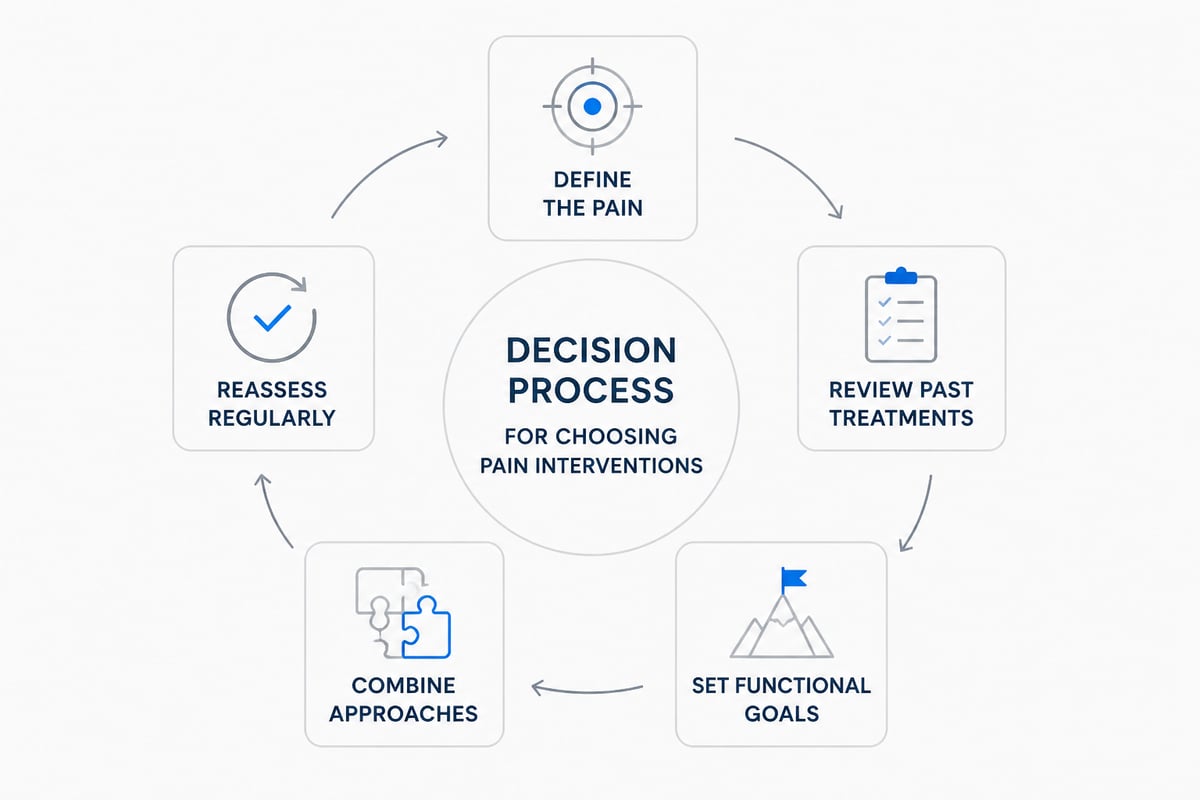
Choosing among pain interventions starts with a thorough assessment and clear goals, not with a preferred treatment. A practical approach looks like this:
- Define the pain. Note where it is, how long it has lasted, what worsens it, and what eases it.
- Review what has been tried. Past medications, therapies, and results narrow the options quickly.
- Set functional goals. Walking a mile, sleeping through the night, or returning to work are better targets than "zero pain."
- Combine approaches. Layer movement, psychological support, and appropriate medication rather than relying on one.
- Reassess regularly. Plans should change as your response changes.
At Pain & Recovery Medical Centre, treatment is individualized to each patient and integrates proven conventional and alternative options, including medical marijuana. The care team aims to be compassionate and judgement-free. Dr. Paul Simpson brings over 35 years of practice experience in primary care internal medicine. The center's Chronic Pain Management Program draws on medications such as buprenorphine, NSAIDs, gabapentin-class drugs, and topiramate, alongside counseling, acupuncture, physical therapy, chiropractic treatment, trigger point injections, dietary therapies, and other approaches, depending on what a patient needs. The center serves adults 18 and older.

What Are the Common Symptoms of Chronic Pain Syndrome?
Chronic pain syndrome typically involves pain lasting more than three months along with effects that reach beyond the pain itself. Common features include:
- Persistent aching, burning, or stabbing pain that continues past expected healing time
- Fatigue and disrupted or unrefreshing sleep
- Low mood, anxiety, or irritability
- Reduced activity, stiffness, and loss of fitness
- Difficulty concentrating
- Withdrawal from work, social life, or hobbies
If several of these describe your daily life, a structured evaluation is worthwhile. Our guide to living with pain offers practical context for the day-to-day side of the condition.
FAQ
Can pain interventions work if medication has stopped helping?
Yes. When a medication loses effectiveness, the usual next step is to review the whole regimen and add or substitute approaches such as supervised exercise, CBT, nerve-targeted drugs, or injections. A combined plan often succeeds where a single prescription has plateaued.
Is acupuncture a legitimate option for chronic pain?
NICE allows consideration of one course of acupuncture or dry needling for chronic primary pain, within a limit of five hours of healthcare-professional time. It is best viewed as an optional piece of a broader plan rather than a stand-alone solution.
Are pain interventions only for severe pain?
No. Interventions are appropriate whenever pain persists and interferes with function, regardless of how severe it feels on a given day. Starting earlier with movement and coping strategies can prevent pain from becoming more entrenched.
Start by writing down where your pain is, how long you have had it, and what you have already tried, since that summary makes any consultation more productive. Pain & Recovery Medical Centre builds individualized plans for adults in central Pennsylvania living with chronic pain, opioid dependence, or an interest in medical marijuana certification, and you can learn how the Chronic Pain Management Program is structured before you reach out. When you are ready to talk with a physician about your options, call Pain & Recovery Medical Centre now to begin.