
Worsening pain often means that something has changed: the underlying condition may have progressed, the body's pain signaling may have become more sensitive, or the current treatment may no longer match your needs. Pain that is intensifying, spreading, or no longer responding to medication deserves a medical evaluation rather than more waiting, and certain symptoms require emergency care the same day.
Many adults find this pattern familiar. A medication that once took the edge off stops working, or flare-ups arrive more often and last longer. This article explains the most common reasons pain escalates, the warning signs that call for urgent help, what to do in the moment when pain feels unmanageable, and how a physician can reassess your plan.
Why Does Pain Get Worse Over Time?
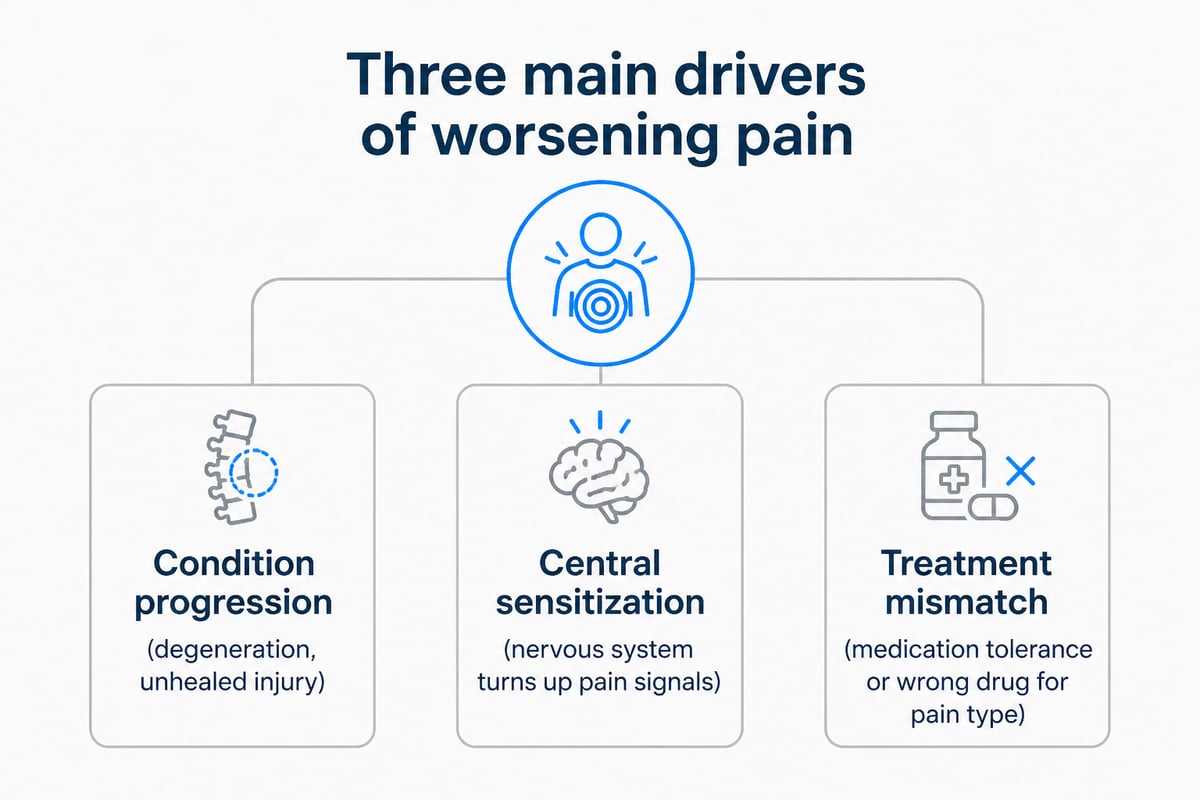
Pain gets worse over time because of one or more of three processes: progression of the original condition, changes in how the nervous system processes pain, and factors that amplify pain such as stress, poor sleep, and inactivity.
Understanding which process applies to you shapes the treatment that will actually help.
Progression of the underlying condition
Degenerative conditions such as osteoarthritis, spinal stenosis, and disc disease can advance gradually over time. Tissue changes that were mild years ago may now compress nerves or inflame joints more aggressively. An injury that never fully healed, or a surgical site that has developed scar tissue, can also produce pain that grows rather than fades.
Central sensitization
With persistent pain, the spinal cord and brain can become more reactive to incoming signals. This is called central sensitization. The nervous system effectively turns up the volume, so ordinary sensations such as light pressure or mild movement register as painful, and the pain may spread beyond its original location. This is one reason chronic pain can intensify even when scans show little structural change. For a closer look at this mechanism, the center's overview of neuroplastic pain treatment explains how learned pain pathways form and how treatment addresses them.
Medication tolerance and mismatch
Some medications can lose effectiveness over time, and a drug that suits acute pain may be a poor long-term fit for chronic pain. Worsening pain can also reflect a gap between what you are taking and what your pain type actually needs. Nerve pain, for example, often responds differently than inflammatory pain.
Common Factors That Make Pain Feel Worse
Several everyday factors can intensify pain without any change in the underlying diagnosis, and identifying them often reveals the easiest places to make progress.
- Poor sleep. Disrupted sleep lowers pain tolerance, and pain in turn disrupts sleep, creating a cycle that is difficult to break without deliberate intervention.
- Reduced activity. Avoiding movement to protect a painful area can weaken muscles and stiffen joints, which tends to increase pain over months.
- Mood and anxiety. Depression and persistent worry are closely tied to pain intensity and to how disruptive pain feels day to day.
- Overuse during good days. Doing too much when pain eases often triggers a flare that lasts days.
- Changes in medication. Missed doses, abrupt dose reductions, or interactions with new prescriptions can all cause a rebound in pain.
Can Stress Contribute to Pain?
Yes, stress can contribute to pain by tightening muscles, disturbing sleep, and heightening the nervous system's sensitivity to pain signals. Stress does not mean the pain is imagined. It means the body's alarm system is responding to a real signal more loudly when it is under strain.
Practical responses include paced breathing, gentle daily movement, a consistent sleep schedule, and structured counseling. Approaches that retrain how the brain responds to pain are well established; the center's discussion of the psychological management of pain outlines what these therapies involve and who tends to benefit.
Warning Signs That Need Urgent Medical Care
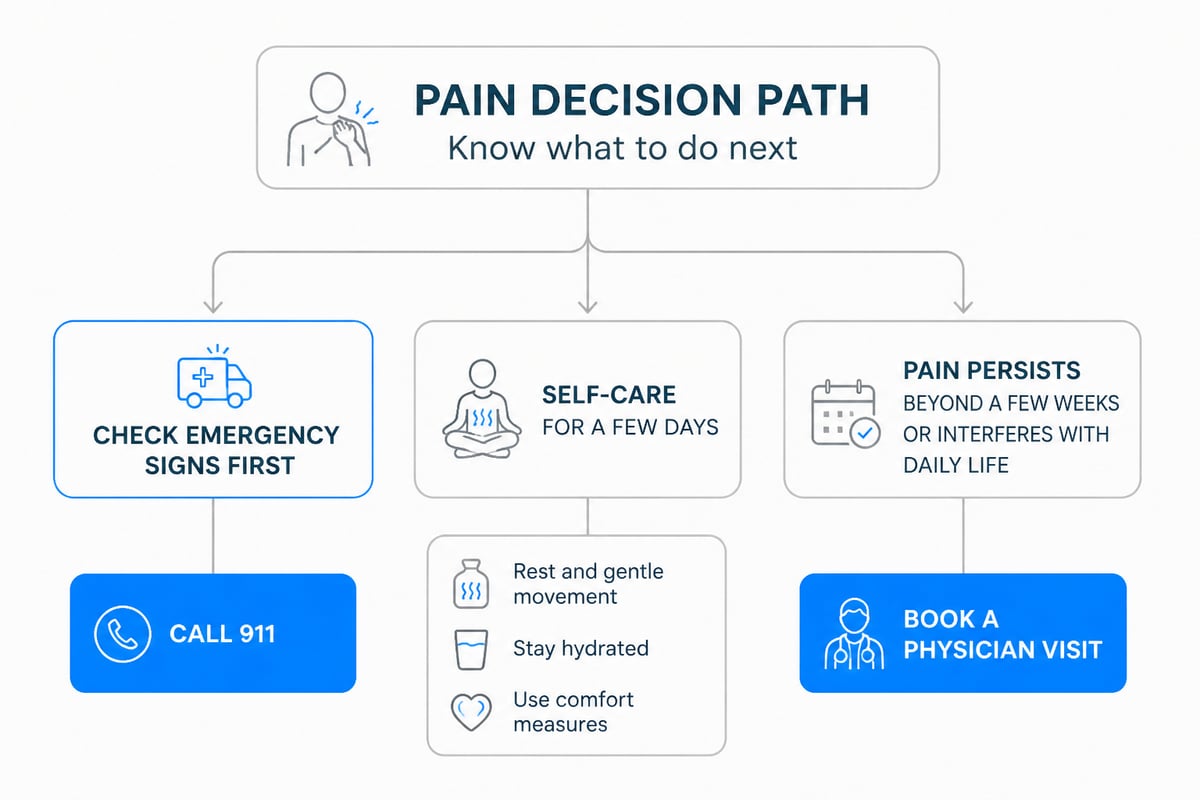
Certain symptoms alongside worsening pain signal a possible medical emergency and should not wait for a routine appointment.
The NHS advises that back pain accompanied by weakness or numbness in both legs, loss of feeling around the genitals or anus, or new bladder or bowel problems calls for emergency services or an emergency department visit. In an emergency, call your local emergency number or go to the nearest emergency department. These symptoms can indicate serious nerve compression that requires prompt treatment to prevent lasting damage.
Seek urgent care for any of the following:
- Pain that is severe and starts suddenly, or that is getting worse quickly
- Chest pain, shortness of breath, or pain spreading to the jaw or arm
- Pain with fever, unexplained weight loss, or night sweats
- Sudden weakness, loss of balance, or difficulty speaking
- Pain following a fall or injury, especially with swelling or deformity
- Thoughts of self-harm because the pain feels unbearable
If you are in crisis, contact a crisis line or emergency service right away.
When to Schedule a Medical Appointment
Book an appointment when pain has not improved after a few weeks of self-care, interferes with daily activities, or is hard to cope with. The NHS gives this same guidance, advising that you contact a GP if back pain has not improved after a few weeks of home treatment, interferes with daily activities, or is difficult to cope with. The principle applies to most persistent pain, not only back pain.
Other signals that a visit is overdue:
- Your current medication no longer provides the relief it once did
- Flare-ups are more frequent, longer, or more intense than before
- Pain is spreading to new areas
- You are skipping work, social plans, or exercise because of pain
- You find yourself taking more medication than prescribed to get through the day
Pain that has lasted more than a few months is considered chronic and benefits from a coordinated plan rather than short-term fixes. Pain that has lasted several months is generally considered chronic, and the NHS offers guidance on getting help for persistent pain.
What to Do When the Pain Is Too Much
When pain becomes overwhelming, the first priority is to rule out an emergency, then use short-term measures to bring the intensity down while arranging medical follow-up.
Start by checking the urgent warning signs listed above. If none apply, these steps can help in the moment:
- Take medication exactly as prescribed. Do not exceed the directed dose, and do not combine medications without checking with a physician or pharmacist.
- Change position and apply heat or cold. Heat can help relax tight muscles, while cold can help calm a recent strain. Limit each application to a short period and avoid burning or damaging the skin.
- Slow your breathing. Breathe in for four counts and out for six. Slow, controlled breathing can help many people feel calmer and less tense.
- Try gentle movement. A slow walk or light stretching often eases stiffness more than complete rest.
- Reach out. Tell someone how you feel, and call your physician's office to report that your pain has escalated.
A flare that you can bring down within hours is different from pain that is steadily climbing over weeks. The second pattern is the one that needs a full reassessment.

How to Reduce Leg Pain Immediately
To reduce leg pain quickly, rest the limb, change position, apply heat for muscle tightness or cold for a recent strain, and take your prescribed or appropriate over-the-counter medication as directed. Gentle stretching of the calf, hamstring, and hip can relieve tension that refers pain down the leg.
Leg pain with certain features should not be self-treated. Swelling, warmth, and redness in one calf can indicate a blood clot, which needs urgent assessment. Leg pain with numbness or weakness in both legs, or with bladder or bowel changes, needs emergency care. Shooting pain that travels from the lower back down the leg often points to a pinched nerve and warrants evaluation if it persists.
How a Physician Reassesses Worsening Pain
A physician reassessing worsening pain typically looks at the full picture: your history, the pain's pattern, what has and has not worked, and how pain affects your function, sleep, and mood.
A thorough evaluation typically covers:
- Pain history. When it started, what makes it better or worse, and how it has changed.
- Prior treatments. Medications, injections, therapies, and procedures you have already tried, and the results.
- Function. What you can and cannot do now compared with a year ago.
- Contributing factors. Sleep, stress, mood, and other health conditions.
- Next steps. Updated testing if warranted, adjusted medications, and non-drug therapies.
Treatment at Pain & Recovery Medical Centre is individualized to each patient, delivered by a team that provides compassionate, judgement-free care. The practice integrates conventional and alternative treatments, including medical marijuana, and its physician, Dr. Paul Simpson, is board certified in Internal Medicine and has over 35 years of practice experience in primary care Internal Medicine. You can read more about the clinical team on the About page.
Treatment Options When Medication No Longer Works
When medication alone no longer controls pain, the usual next step is a combined plan that adds non-drug therapies and reconsiders which medications fit your pain type.
The Chronic Pain Management Program at Pain & Recovery Medical Centre is available to Pennsylvania adults 18 and older and may include medications such as buprenorphine, NSAIDs, and gabapentin-class medications, along with other therapies. The mix is chosen to suit the individual rather than applied as a standard protocol.
Pennsylvania adults who may qualify for medical marijuana can also discuss it with a physician as one component of a broader plan. Prescribing at the center is done electronically, as Pennsylvania law requires. For background on how medication choices are weighed, see the center's article on medications for severe pain.
Note that Pain & Recovery Medical Centre does not accept insurance, so it may not be the right fit if insurance coverage is what you need.
Preparing for Your Appointment
A little preparation makes a pain evaluation far more productive, because the physician can see patterns that are hard to describe from memory.
Before your visit:
- Keep a simple pain diary for one to two weeks, noting intensity from 0 to 10, time of day, activity, and sleep
- List every medication and supplement you take, with doses
- Write down the treatments you have tried and what happened
- Note which daily activities pain has limited
- Prepare your top two or three questions
Clear, specific information helps the physician distinguish a flare from true progression and choose the next step with more confidence.
FAQ
How do I get rid of old age aches and pains?
Regular low-impact movement such as walking, swimming, or stretching can help, along with good sleep, a balanced diet, and physician-guided treatment for any underlying condition such as arthritis. Aches that are steadily worsening or interfere with daily life should be evaluated rather than assumed to be a normal part of aging.
Is worsening pain always a sign of something serious?
No. Flares often follow overactivity, poor sleep, or stress and settle within days. Pain that escalates over weeks, spreads, or arrives with neurological symptoms, fever, or sudden severity deserves prompt medical attention.
Does worsening pain mean my medication has stopped working?
Sometimes. Tolerance, a change in the underlying condition, or a drug that does not match your pain type can all reduce relief. A physician can review your regimen and adjust it rather than leaving you to raise doses on your own.
Your next step is to start a simple pain diary today, since a week or two of notes can give a physician a clearer view of what is changing. If your pain is climbing and your medication no longer holds it, the Chronic Pain Management Program at Pain & Recovery Medical Centre builds an individualized plan around your needs and goals. To talk with the team about your situation, Call Now and ask how an evaluation can help you regain comfort and independence.