
The best way to find chronic pain clinics near you is to look for a practice that evaluates your whole situation, offers more than one type of treatment, and is clear about costs and what it can and cannot prescribe. If you live in State College or elsewhere in central Pennsylvania and your current medication no longer controls your pain, the right clinic should help you build a plan rather than simply adjust a prescription. This guide explains what to look for, what questions to ask, and how to compare your options.
What Counts as Chronic Pain and Who Treats It
Chronic pain is pain that lasts longer than three months or continues beyond the expected healing time, according to the National Institute of Neurological Disorders and Stroke. The same source notes that care may combine medication, procedures, behavioral approaches, physical therapy, lifestyle changes, and complementary approaches.
That definition matters when you search for a clinic. A practice built around one tool, such as injections alone or a single medication class, may not match the way chronic pain actually behaves. Pain that has persisted for months often involves the nervous system, sleep, mood, and daily activity, not just the original injury.
Chronic pain is also common. Chronic low back pain, defined as lumbar pain lasting 12 weeks or more, is one of the most common forms of chronic pain in U.S. adults, according to the American Academy of Family Physicians. Chronic pain is common across the country, and access to specialty care can be harder in smaller communities and rural areas, so it is worth planning for travel time to a clinic.
Several types of clinicians treat chronic pain:
- Primary care physicians who focus on pain management
- Physiatrists (rehabilitation physicians)
- Anesthesiology-based interventional specialists who perform procedures
- Physical therapists, chiropractors, and acupuncturists who provide hands-on and movement-based care
- Counselors and psychologists who teach pain coping and behavioral skills
If you want a closer look at these roles, our overview of a chronic pain specialist near me breaks down who does what.
Signs You Are Ready for a Dedicated Pain Clinic
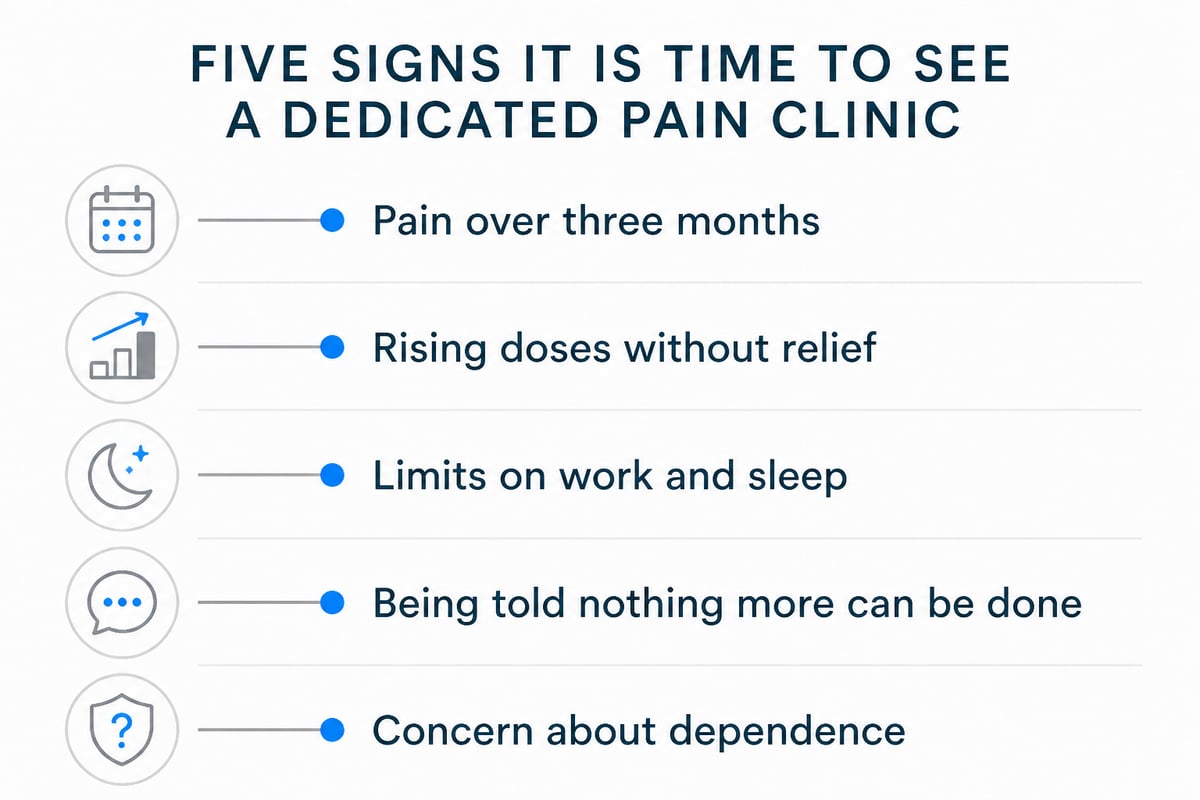
You are ready for a dedicated pain clinic when your current medication no longer controls your pain, or when it controls it at the cost of side effects you cannot accept. That is a common turning point for adults who have relied on a primary care visit and a refill for years.
Consider making an appointment if any of the following apply:
- Your pain has lasted more than three months despite treatment.
- Your dose has increased without lasting relief.
- Pain limits your work, sleep, or ability to live independently.
- You have been told “there is nothing more to try” but still hurt.
- You are worried about dependence on your current medication.
The three-month mark matters because it is the point at which pain is considered chronic, according to the National Institute of Neurological Disorders and Stroke. At that stage, care often works best when it combines medication, procedures, behavioral approaches, physical therapy, lifestyle changes, and complementary approaches rather than relying on a single prescription. A primary care visit is usually short, while a dedicated clinic can set aside time to review what you have already tried, why each option fell short, and what has not been attempted yet.
None of these signs mean you have failed. They mean the original plan has reached its limit, and a broader approach is reasonable. If medication is the part you are questioning, our article on medications for pain management explains the main classes and their tradeoffs.
What a Good Chronic Pain Clinic Should Offer
A good chronic pain clinic offers individualized treatment that combines several approaches, explains the reasoning behind each recommendation, and treats you without judgment. Those three qualities are more reliable indicators than a long list of services.
A combination of conventional and alternative care
For chronic low back pain without a condition that needs specific medical or surgical attention, the American Academy of Family Physicians states that nonpharmacologic treatments are first-line. Options include exercise and physical therapy, behavioral counseling, spinal manipulation, massage, heat, dry needling, acupuncture, and TENS. A clinic that only dispenses medication would be skipping the approaches with the strongest recommendation for this condition.
Look for a practice that can discuss both sides: conventional options such as anti-inflammatory drugs, nerve-pain medications, and trigger point injections, alongside complementary options such as acupuncture, mind-body therapies, and dietary approaches.
Clear boundaries on prescribing
Ask directly what the clinic prescribes and how. In Pennsylvania, prescribing is done electronically, as state law requires. Some clinics prescribe a wide range of controlled substances; others deliberately limit what they offer. Neither is automatically better, but you should know before you book so your expectations match reality.
Attention to the whole person
Persistent pain affects mood, sleep, and confidence. Clinics that include counseling or behavioral support recognize that. Our piece on the psychological management of pain covers why these skills help even when the cause of pain is physical.
Questions to Ask Before Your First Appointment
Ask five categories of questions before you book: who treats you, how the plan is built, what is prescribed, what it costs, and how success is measured. A short phone call can answer most of them.
| Question | Why it matters |
|---|---|
| Who will I see, and what are their credentials? | Training and years of experience shape how complex cases are handled |
| How is my treatment plan developed? | A plan built around you should differ from a standard protocol |
| Which medications and therapies do you offer, and which do you not? | Prevents surprises about prescribing limits |
| How are visits billed, and is insurance accepted? | Payment models vary widely between clinics |
| How do we decide whether treatment is working? | Defines goals such as function and independence, not only pain scores |
Write down the answers and compare two or three clinics side by side. A practice that welcomes these questions is usually one that will welcome your follow-up concerns later.
Understanding Costs, Insurance, and Medicare
Costs for chronic pain care depend on whether a clinic bills insurance, and you should confirm that before your first visit. Some clinics bill insurance directly, while others operate on a different payment model, so never assume.
For adults on Medicare, coverage can be substantial. Medicare Part B covers chronic pain management and treatment services for eligible people with chronic pain lasting longer than three months. After the Part B deductible, patients generally pay 20% of the Medicare-approved amount. Covered services may include acupuncture for chronic low back pain, physical therapy, occupational therapy, and chronic pain management services, with the same 20% coinsurance for most services.
Because coinsurance applies per service, the total depends on how many services your plan includes. A plan that pairs physical therapy with acupuncture involves coinsurance on each, so ask a clinic to list the services it expects you to use and estimate your share for a typical month. If you hold supplemental coverage, check whether it picks up some or all of the 20%.
If you plan to use insurance or Medicare, confirm in writing that the specific clinic and clinician are eligible. If a clinic does not accept insurance, ask for its fee structure up front, including the cost of follow-up visits, and compare it with your expected out-of-pocket costs elsewhere.
Questions About Medical Marijuana and Dependence Treatment
Some pain clinics address medical marijuana and substance dependence as part of pain care, and it is reasonable to ask whether a clinic does. Many adults with chronic pain have tried several medications, and some are concerned about dependence or want options beyond standard prescriptions.
A clinic that approaches these topics without judgment makes honest conversations easier. You are more likely to share what you are actually taking, and your clinician is more likely to build a safe plan. If severe pain is the issue and you are weighing stronger options, our guide to pain medications for severe pain outlines what to discuss with a prescriber.
How Pain & Recovery Medical Centre Approaches Chronic Pain
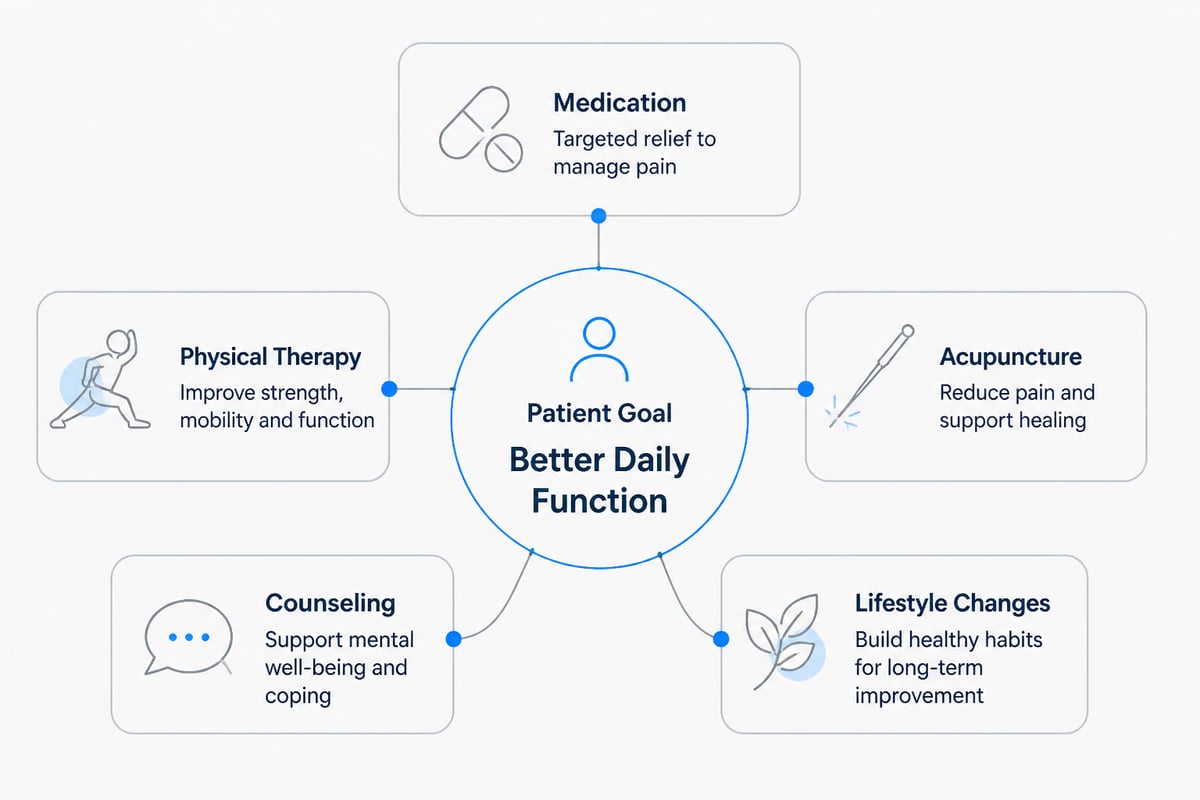
Pain & Recovery Medical Centre treats adults with chronic pain using individualized plans that integrate conventional and alternative treatments, including medical marijuana. The team provides compassionate, judgment-free care, and the practice focuses on programs that improve quality of life and promote independence.
The physician, Dr. Paul Simpson, is board certified in Internal Medicine and has practiced primary care Internal Medicine for many years. That background matters for patients whose pain overlaps with other health conditions, since an internist looks at the full medical picture. Someone managing diabetes, high blood pressure, or heart disease, for example, needs a pain plan that accounts for every medication already on their list.
The Chronic Pain Management Program serves Pennsylvania adults age 18 and older. Depending on the patient, treatment may involve medications such as buprenorphine, NSAIDs, gabapentin-class medications, or topiramate, along with counseling, acupuncture, physical therapy, chiropractic treatment, mind-body therapies, physiatry, trigger point injections, dietary therapies, and in some cases surgery referral. The mix is chosen for the individual. A person with chronic low back pain may lean on exercise, physical therapy, and acupuncture, which align with the nonpharmacologic first-line options the American Academy of Family Physicians describes, while someone with nerve-related pain may need a medication-based plan with behavioral support.
Fit is worth stating plainly. Fit is worth confirming with the practice directly, including whether it accepts your insurance, which age groups it treats, and which controlled substances it does or does not prescribe. If any of those points conflict with what you need, another provider will serve you better. Details about the practice are on the about page.
How to Compare Chronic Pain Clinics Near Me in Central Pennsylvania
To compare chronic pain clinics near me and across central Pennsylvania, score each practice against the same short list of criteria instead of relying on location alone. Distance matters for follow-up visits, but treatment fit matters more.
Use this simple process:
- List two or three clinics within a drive you can manage regularly.
- Call each one and ask the five question categories above.
- Note the treatment mix. Favor practices that combine approaches over those offering a single tool.
- Confirm payment terms in writing, including what insurance does or does not cover.
- Check the clinician’s background and how long they have treated chronic pain.
- Trust the tone of the call. A respectful, unhurried conversation predicts a respectful, unhurried visit.
Prepare for your first visit by bringing a list of current medications, past treatments and how each worked, imaging or test results, and your top two or three goals, such as sleeping through the night or walking a certain distance. Specific goals give the clinic something concrete to measure.

For related searches, you may also find our guides on chronic pain management near me and the chronic back pain clinic helpful as you narrow your choices.
Start today by writing down your three biggest pain-related goals and the treatments you have already tried, then use them to call two or three clinics and compare their answers. If you are an adult in State College or central Pennsylvania whose medication no longer controls your pain, the Chronic Pain Management Program at Pain & Recovery Medical Centre offers individualized, judgment-free care built around your needs. To discuss whether the program fits your situation, call now to speak with Pain & Recovery Medical Centre.