
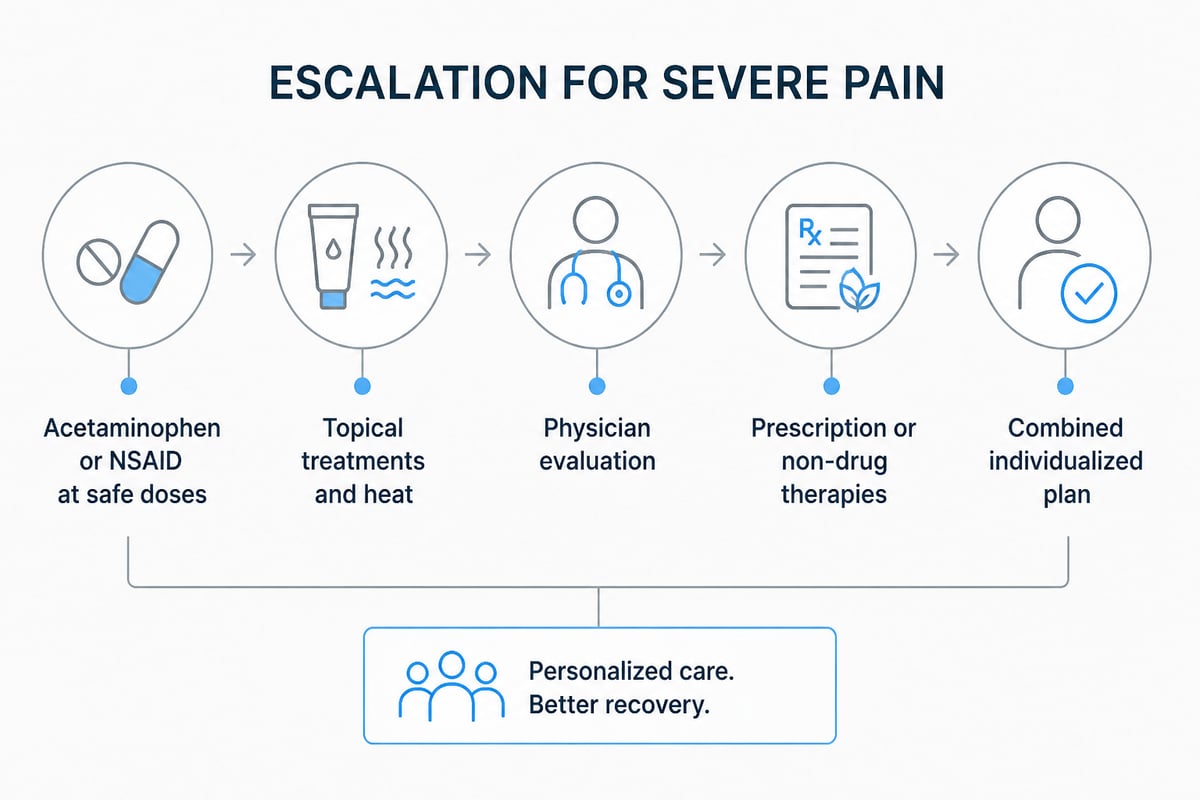
The most effective pain reliever for severe pain depends on the cause: over-the-counter acetaminophen or an NSAID such as ibuprofen or naproxen can control moderate to strong pain for a short time, while pain that persists or keeps returning usually calls for a physician-guided plan. Medication alone often stops working over months and years, which is why long-term severe pain is best treated with a combination of approaches rather than a larger dose of one drug.
This article compares the main options, explains the safety limits that matter most, and describes when it is time to move beyond the medicine cabinet.
What Is the Strongest Over-the-Counter Pain Reliever?
No single over-the-counter product is strongest for everyone, but NSAIDs tend to work best when pain involves inflammation, while acetaminophen suits pain without it. MedlinePlus lists acetaminophen and NSAIDs, including ibuprofen, naproxen, and aspirin, as the common over-the-counter pain relievers, and notes that NSAIDs can be especially useful when inflammation is part of the problem.
The practical differences look like this:
| Option | Works best for | Main cautions |
|---|---|---|
| Acetaminophen | Headache, general aches, pain without swelling | Liver damage if daily limits are exceeded |
| Ibuprofen | Joint pain, muscle strain, dental pain, cramps | Stomach irritation, kidney strain, blood pressure effects |
| Naproxen | Arthritis, back pain, longer-lasting relief | Ulcers, bleeding, heart and stroke risk |
| Aspirin | Short-term inflammatory pain | Bleeding risk, stomach irritation |
| Topical diclofenac or lidocaine | Localized joint or muscle pain | Skin irritation; limited reach for deep pain |
Naproxen lasts longer per dose than ibuprofen, which makes it convenient for pain that lingers through the day. Ibuprofen acts quickly and suits short episodes. Neither is a long-term solution for severe, ongoing pain.
How to Use Acetaminophen Without Harming Your Liver
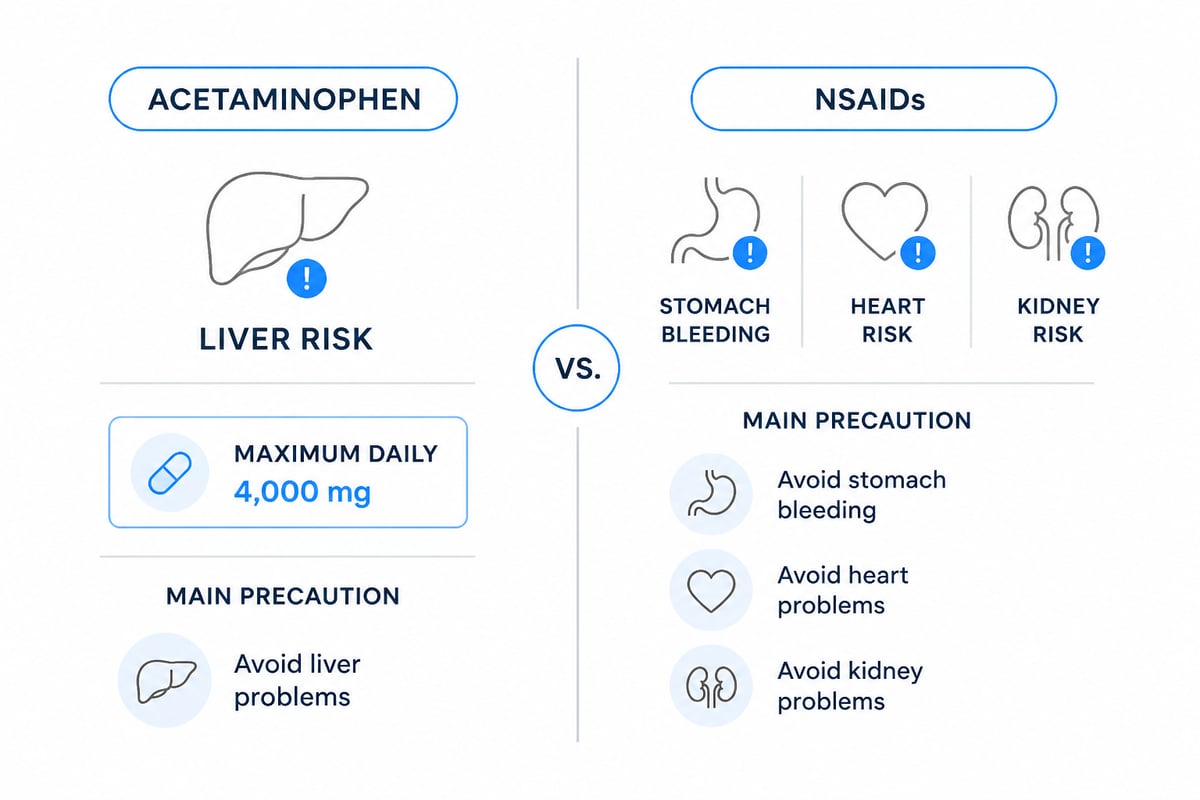
Acetaminophen is safe at recommended doses, but the margin narrows quickly because it hides in many products. MedlinePlus advises adults not to exceed 4,000 mg in a day from all sources, and warns that excess acetaminophen can cause serious liver damage. For people with liver disease, MedlinePlus says the limit is usually no more than 2,000 mg per day, with individualized guidance from a clinician.
Sources of hidden acetaminophen include:
- Combination cold and flu remedies
- Sleep aids marketed as “PM” formulas
- Prescription pain tablets that pair acetaminophen with another drug
- Some menstrual and sinus products
Read every label and add the milligrams together. The ingredient often appears as “acetaminophen” in the Drug Facts panel, and sometimes as the abbreviation “APAP” on prescription labels. A common way to exceed the limit is to take a pain tablet for a toothache, a cold remedy for congestion, and a nighttime sleep aid in the same day without realizing all three contain the drug. Choosing single-ingredient products makes the arithmetic simple, because you then know exactly what each dose contains.
Alcohol use compounds liver risk, so anyone who drinks regularly should ask a physician for a lower personal ceiling. A reasonable habit is to log each dose with the time, especially during a painful flare when it is easy to lose count. Keep the four-to-six-hour spacing printed on the package, and do not take an extra dose because pain returns early. If pain regularly outlasts a dose, that is a reason to call a physician, not to stack more acetaminophen on top.
Choosing an NSAID for Severe Pain
NSAIDs are often the most effective over-the-counter choice for severe pain with swelling, such as arthritis flares, tendon injuries, or back strain, but they carry real cardiovascular and digestive risks. MedlinePlus states that naproxen and other non-aspirin NSAIDs can increase the risk of heart attack or stroke, and that the risk may be higher with long-term use or higher doses. The same source warns that naproxen can cause ulcers or gastrointestinal bleeding, sometimes without warning, with greater risk for older adults, smokers, and heavy alcohol users.
To reduce risk:
- Use the lowest dose that controls the pain.
- Take the medication with food.
- Keep the course short unless a physician has approved longer use.
- Never combine two different NSAIDs, including aspirin with ibuprofen, without medical advice.
- Report black stools, stomach pain, or unexplained fatigue promptly.
What happens to your stomach if you take too many painkillers?
Taking too many painkillers, particularly NSAIDs, can inflame or erode the stomach lining and lead to ulcers or internal bleeding, sometimes without warning. Warning signs include black or tarry stools, vomiting blood, persistent stomach pain, and unusual weakness. Excess acetaminophen threatens the liver rather than the stomach, and symptoms may not appear until damage is underway, so any suspected overdose needs immediate medical attention.
Topical Treatments and Other Non-Pill Options
Topical pain relievers work well for localized pain because they deliver medication at the site with less exposure for the rest of the body. Diclofenac gel, lidocaine patches, and menthol or capsaicin creams are common choices for knees, hands, shoulders, and lower back.
They are not a fix for deep or widespread pain, but they allow some people to reduce oral NSAID use and its stomach and cardiovascular effects. The match between product and pain matters. Diclofenac gel is an anti-inflammatory and suits swollen, achy joints close to the skin, such as the knees and hands. Lidocaine patches numb a defined area and fit a sore spot along the lower back or shoulder blade. Menthol and capsaicin creams work by changing how the skin signals sensation, and capsaicin can cause a burning feeling at first, so wash your hands after applying it and keep it away from your eyes. Apply any topical only to intact skin, and stop if a rash develops.
Heat, gentle movement, and supervised physical therapy often add benefit, and they carry no drug risk. A warm compress before stretching can loosen stiff muscles, and a therapist can adjust exercises to protect a painful joint while rebuilding strength around it. For pain that interrupts sleep or daily tasks, these measures work best alongside, not instead of, a medical evaluation.

When Prescription Medication Enters the Picture
Prescription options become appropriate when over-the-counter products fail to control pain or when safe dosing limits leave pain uncovered. Depending on the diagnosis, physicians may consider prescription-strength NSAIDs, gabapentin-class medications for nerve pain, topiramate, or other agents matched to the pain type. The choice follows the cause. Burning, tingling, or shooting pain that travels along a nerve responds poorly to standard pain relievers and is the usual target for gabapentin-class drugs, while inflammatory joint pain is more likely to call for a stronger NSAID with monitoring. A physician will also weigh other conditions and medications, since kidney function, blood pressure, stomach history, and drug interactions all shape what is safe.
Opioids are a separate category. MedlinePlus warns that opioids can have serious side effects and carry addiction risk, and says they should be used only under a health care provider’s supervision. For chronic pain, many physicians now favor non-opioid strategies first. Buprenorphine, a partial opioid agonist, is one option some patients and physicians consider for chronic pain with a lower risk profile than full opioids, and it is prescribed electronically as Pennsylvania law requires.
Prescription treatment works best with a follow-up schedule. A physician typically reassesses pain, function, and side effects at regular intervals and adjusts or stops a drug that is not helping. Never share prescription pain medication or combine it with alcohol or sedatives without explicit medical direction.
Some people living with pain that standard medication no longer controls may also consider medical marijuana, which requires certification by a physician. It is one tool among several, and whether it fits depends on diagnosis, history, and current medications.
Signs Your Pain Needs More Than a Pain Reliever
Pain that lasts beyond three months, keeps returning, or no longer responds to the usual doses deserves a full evaluation rather than another pill. Reaching for stronger and stronger medication is a signal that the underlying plan needs to change. Persistent pain often has a cause that medication cannot correct on its own, such as a compressed nerve, a worn joint, or a muscle imbalance, and identifying it changes which treatments make sense.
Seek prompt care when you notice any of the following:
- Pain that wakes you at night or limits walking, work, or self-care
- Needing painkillers most days for several weeks
- Relief that fades faster than it used to
- Numbness, weakness, or pain that radiates down a limb
- Mood changes, withdrawal from activities, or worry about dependence on medication
The pattern of use is as informative as the pain itself. If a dose that once lasted six hours now wears off in three, or you find yourself timing the day around the next tablet, tolerance or a worsening condition may be at work. Daily NSAID use over weeks also raises the stomach and cardiovascular concerns described earlier, so frequent use is a reason to reassess, not to increase the dose. Bring a written log of doses, timing, and relief to the appointment, since it helps a physician see the trend quickly.
Seek emergency care for sudden severe pain with chest pressure, loss of bowel or bladder control, new weakness, or confusion.
What a Chronic Pain Program Adds
A chronic pain program treats the whole picture, combining medication choices with therapies that reduce how much medication is needed. The Chronic Pain Management Program at Pain & Recovery Medical Centre serves Pennsylvania adults 18 and older and may draw on medications such as buprenorphine, NSAIDs, gabapentin-class drugs, and topiramate, alongside counseling, acupuncture, physical therapy, chiropractic treatment, mind-body approaches, trigger point injections, and dietary therapies.
Treatment at the center is individualized, and the team provides compassionate, judgement-free care. Dr. Paul Simpson, who is board certified in Internal Medicine, brings over 35 years of primary care practice experience. The practice integrates proven conventional and alternative treatments, including medical marijuana. Patients under 18 are not treated at the center.
For readers who want more background first, the practice’s articles on treating chronic pain and severe pain pills cover related ground, and its living with pain piece addresses daily coping.
FAQ
How can older adults manage everyday aches and pains safely?
Older adults often do best with acetaminophen at conservative doses, topical treatments, regular gentle exercise, heat, and physical therapy, since NSAIDs carry greater stomach bleeding and cardiovascular risk with age. A physician should review every medication, including supplements, before long-term use begins.
What commonly causes pain in elderly people?
Osteoarthritis, spinal changes such as stenosis, nerve damage from diabetes or shingles, old injuries, and muscle loss are frequent causes. Persistent or worsening pain deserves evaluation, because treating the specific cause usually works better than masking symptoms.
Which pain medications are appropriate in older age?
Acetaminophen and topical diclofenac or lidocaine are generally the first options, with gabapentin-class medications sometimes used for nerve pain. Oral NSAIDs and opioids require extra caution and physician oversight because of kidney, stomach, heart, and fall risks.
If your current pain reliever for severe pain no longer holds, start by writing down every medication you take, the dose, and how long relief lasts, then bring that list to a physician who can build a plan around it. Pain & Recovery Medical Centre specializes in treating patients with chronic pain, with programs designed to improve quality of life and promote independence, and its Chronic Pain Management Program combines treatments tailored to each person. If you are ready to discuss your options with a physician, Pain & Recovery Medical Centre is the place to call now and schedule a conversation about what comes next.