

If you are thinking "I have pain" and want to know what it means, start with three questions: how long it has lasted, how severe it is, and whether it arrived with warning signs such as numbness, fever or weakness. Pain that is brief and tied to an injury is usually manageable at home, while pain that is severe, sudden or unexplained needs prompt medical attention. Pain that has lingered for months is a different problem and calls for a longer-term plan.
This guide explains the difference between acute and chronic pain, what commonly causes body-wide and one-sided pain, which symptoms need urgent care, and which treatments exist when medication alone no longer works.
What does it mean when I have pain?
Pain is your nervous system's signal that something is wrong, and its meaning depends on where it appears, how long it lasts and what it feels like. A sharp sting from a cut and a dull ache that has followed you for a year are both pain, but they point to very different problems.
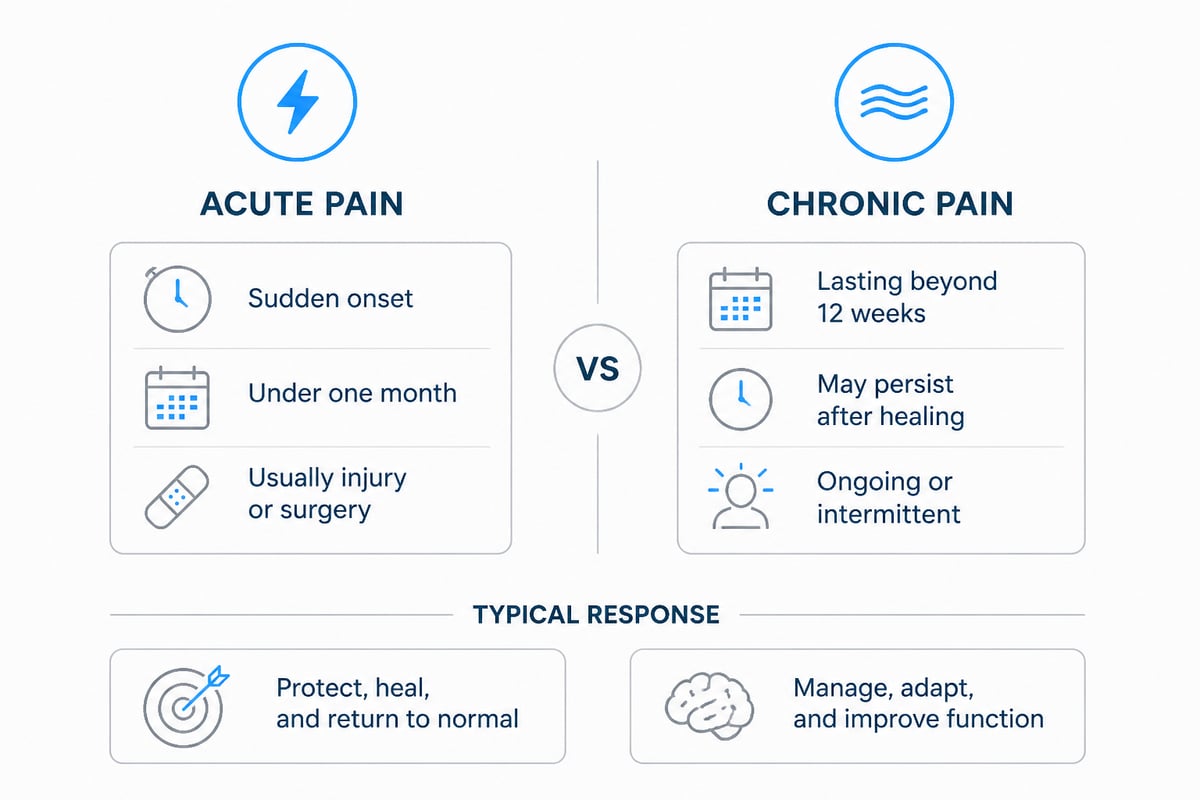
Doctors sort pain into two broad groups:
- Acute pain comes on suddenly and is time-limited. The CDC’s clinical practice guideline describes acute pain as usually sudden in onset and lasting less than one month, with common causes including injury, trauma and medical treatments such as surgery.
- Chronic pain persists beyond the expected healing time. The NHS describes long-term pain as pain lasting more than 12 weeks, and recommends starting by discussing it with a GP.
The distinction matters because the response differs. Acute pain often resolves as the tissue heals. Chronic pain can continue after the original injury has healed, and it may involve changes in how the nervous system processes pain signals. That is why rest and over-the-counter medication, which work well for a sprained ankle, often fall short for pain that has lasted for months or years.
How can I tell the difference between pain and soreness?
Soreness is a dull, diffuse tenderness that appears hours after exercise and fades within a few days, while pain is sharper, more localized and does not follow a predictable recovery pattern.
Use these points to tell them apart:
| Feature | Muscle soreness | Pain that needs attention |
|---|---|---|
| Timing | Starts 12 to 48 hours after activity | Starts during activity or without any trigger |
| Feel | Dull, achy, tender to the touch | Sharp, stabbing, burning or throbbing |
| Location | Spread across worked muscles, both sides | Concentrated in one spot or joint |
| Duration | Improves within two to three days | Persists or worsens beyond a few days |
| Movement | Eases with gentle activity | Worsens with movement or occurs at rest |
Soreness is a normal response to effort. Pain in a joint, pain that wakes you at night, or pain that gets steadily worse rather than better deserves evaluation. If a day or two of easy movement does not loosen the discomfort, treat it as pain rather than soreness.
Why does my body ache?
A generalized body ache most often comes from a viral illness, poor sleep, muscle overuse or stress, though persistent aching can also reflect an underlying condition.
Common causes include:
- Infections such as influenza, COVID-19 or other viral illnesses, which trigger inflammatory chemicals that cause muscle and joint aching along with fever and fatigue
- Sleep deprivation, which lowers the pain threshold and increases sensitivity to ordinary discomfort
- Physical or emotional stress, which causes muscle tension, especially in the neck, shoulders and back
- Dehydration or nutrient deficiencies, including low vitamin D, which can contribute to muscle and bone aching
- Medication side effects, including some statins and other prescriptions
- Conditions such as fibromyalgia, arthritis or thyroid disorders, which produce widespread aching that lasts weeks or longer
If aching follows a recent illness and fades within a week or two, it is usually not a concern. If it persists for more than a few weeks, comes with unexplained fatigue or swelling, or has no clear trigger, a physician should evaluate it. Widespread aching that continues for 12 weeks or more falls into the chronic category and benefits from a structured assessment rather than repeated self-treatment.
What could be causing pain on the left side of my body?
Left-sided pain can come from the muscles and spine, the digestive tract, the kidney, the spleen, the heart or the lung, so location alone does not identify the cause.
Here is how the possibilities group by region:
- Left chest and arm: Muscle strain and costochondritis (inflamed rib cartilage) are common and benign. Chest pressure, pain spreading to the arm or jaw, shortness of breath or sweating can signal a heart attack and require emergency care.
- Left upper abdomen: Gastritis, an ulcer, pancreatitis or gas trapped in the colon can all cause pain here. The spleen sits in this area as well.
- Left lower abdomen: Diverticulitis is a frequent cause in adults, along with constipation, bowel inflammation or, in women, ovarian causes.
- Left flank and back: Kidney stones, a urinary tract infection or a kidney infection often cause pain here, sometimes with a burning sensation during urination or visible blood.
- Left shoulder, hip or leg: Joint wear, a pinched nerve or sciatica are typical sources, particularly when the pain travels along a path or comes with tingling.
Pain that is mild, tied to a particular movement and improves with rest usually reflects a musculoskeletal problem. Pain that is intense, sudden, accompanied by fever, vomiting or breathing difficulty should be evaluated the same day.
What could be causing severe side pain?
Severe side pain most often comes from a kidney stone, an infection, a muscle injury or an intestinal problem, and its intensity alone is a reason to seek care promptly.
A kidney stone is the classic example. It produces sudden, intense pain in the flank that can radiate toward the groin and come in waves, sometimes with nausea or blood in the urine. Other causes include:
- A kidney or urinary tract infection, typically with fever or chills
- A pulled or torn intercostal muscle between the ribs, which hurts when you breathe deeply or twist
- Diverticulitis or appendicitis, depending on which side is affected
- Gallbladder disease, usually on the right but sometimes referred elsewhere
- Shingles, which can cause burning pain on one side before the rash appears
Severe side pain with fever, repeated vomiting, a rigid abdomen or difficulty passing urine should not wait. Sudden or severe pain is among the examples the Singapore Ministry of Health gives of situations warranting emergency-department care. If the pain is the worst you have felt or comes with other alarming symptoms, go to an emergency room or call 911.
What causes random sharp pains in the body?
Brief, random sharp pains are usually caused by a momentarily irritated nerve, a muscle spasm or trapped gas, and they typically resolve within seconds to minutes without any lasting problem.
Fleeting stabbing pains in the chest, ribs, limbs or head are common and often harmless. Typical explanations include a pinched nerve that releases when you shift position, a spasm in the diaphragm or intercostal muscles, and gas moving through the intestines. Stress and fatigue make these sensations more frequent.
The pattern is what matters. Occasional pains that vanish quickly and do not return in the same spot are rarely a concern. Sharp pains that recur in the same place, grow more frequent, or come with numbness, weakness, fever or weight loss should be reported to a physician. The National Institutes of Health lists new numbness, tingling or weakness, rapidly worsening or severe pain, pain after a fall or injury, bladder or bowel-control problems, fever and unintended weight loss as warning signs that warrant prompt medical attention.
When should I see a doctor for pain?
See a doctor promptly if your pain is severe, rapidly worsening, follows an injury, or comes with neurological symptoms, fever or unexplained weight loss, and schedule a routine appointment if pain lasts beyond a few weeks.
Seek emergency care for:
- Chest pain or pressure, especially with shortness of breath or sweating
- Sudden, severe pain unlike anything you have felt before
- Pain with loss of bladder or bowel control, or numbness in the groin area
- Pain following a fall, accident or head injury
- Weakness or numbness on one side of the body, or trouble speaking
Make an appointment within days for pain with fever, redness or swelling, or pain that steadily worsens. Make an appointment within a few weeks if pain interferes with sleep, work or daily activities, or has persisted for more than a month.
Chronic pain deserves particular attention. The NHS recommends starting by discussing long-term pain with a doctor, who can rule out other causes and refer you for specialist treatment. Waiting years for pain to resolve on its own often allows it to become more entrenched, affecting sleep, mood and mobility.
What treatments help when medication no longer controls my pain?
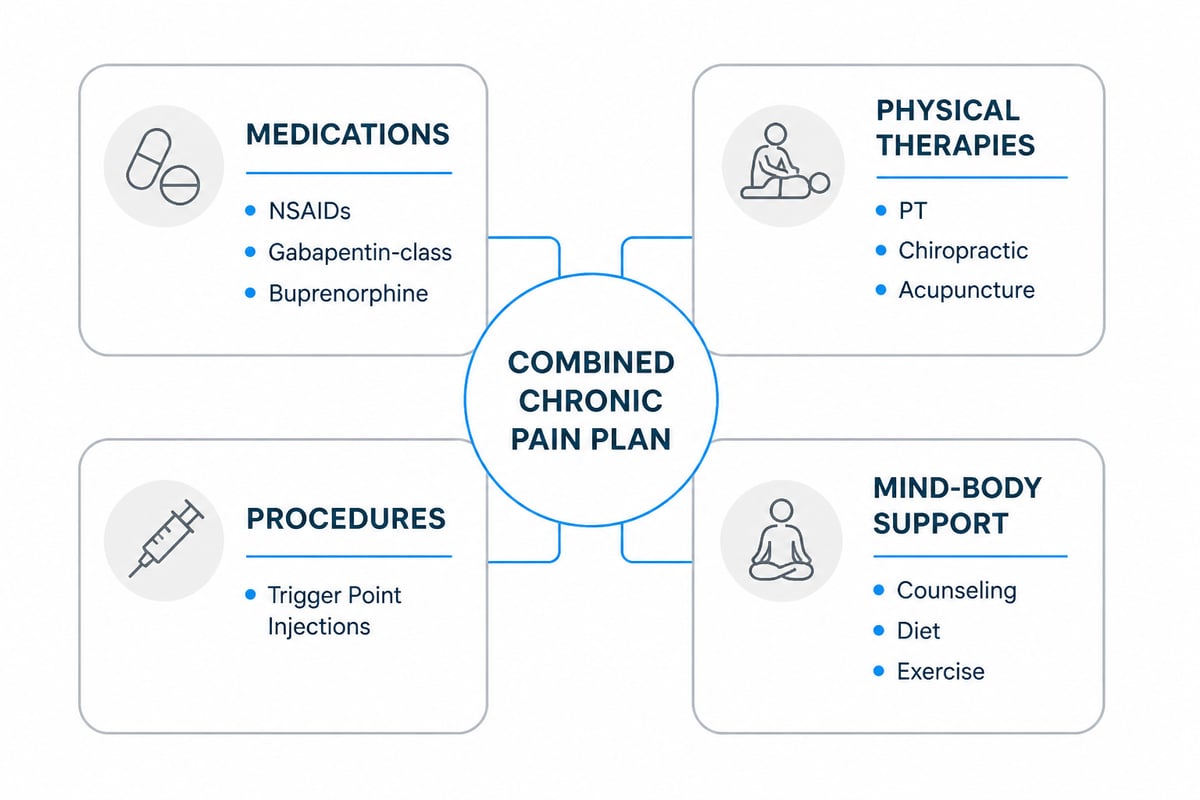
When over-the-counter and prescription medications stop working, a combined plan that adds therapies such as physical therapy, injections, counseling and, for eligible patients, medical marijuana is usually more effective than increasing doses of a single drug.
The NHS notes that pain-clinic treatments can include medicine, injections, manual therapy, exercise and psychological therapy. Pain management plans commonly combine several of these elements:
- Medications: NSAIDs for inflammation, gabapentin-class medications, and buprenorphine in selected cases
- Physical approaches: physical therapy and manual therapy
- Procedures: trigger point injections for muscle knots and targeted injections for joint or nerve pain
- Mind-body and behavioral support: counseling, relaxation training and pacing strategies, which address the way chronic pain amplifies stress and poor sleep
- Lifestyle measures: dietary changes, graded exercise and sleep routines
For adults in State College and across central Pennsylvania, one local option is the Chronic Pain Management Program at Pain & Recovery Medical Centre. Treatment there is individualized to each patient and integrates conventional and alternative approaches, delivered by a team that provides compassionate, judgement-free care. Physician Dr. Paul Simpson is board certified in Internal Medicine.
Could medical marijuana be an option for my chronic pain?
Medical marijuana can be an option for Pennsylvania adults whose chronic pain qualifies under the state's medical marijuana program, and a physician must certify you before you can obtain it.
A qualifying patient in Pennsylvania must be certified by a registered physician who has determined that the patient has a serious medical condition covered by the program. Certification is a clinical decision made after reviewing your history, prior treatments and current symptoms, so eligibility is never automatic.
For patients whose pain persists despite standard medications, marijuana can be considered as one part of a broader plan rather than a stand-alone solution. Pain & Recovery Medical Centre integrates medical marijuana alongside other proven treatments, and prescribing there is done electronically, as Pennsylvania law requires. If you are wondering whether you qualify, the practical step is to book an evaluation and bring a list of the medications and therapies you have already tried.
Keep in mind that Pain & Recovery Medical Centre serves adults 18 and older in Pennsylvania.
How can I prepare for a pain appointment?
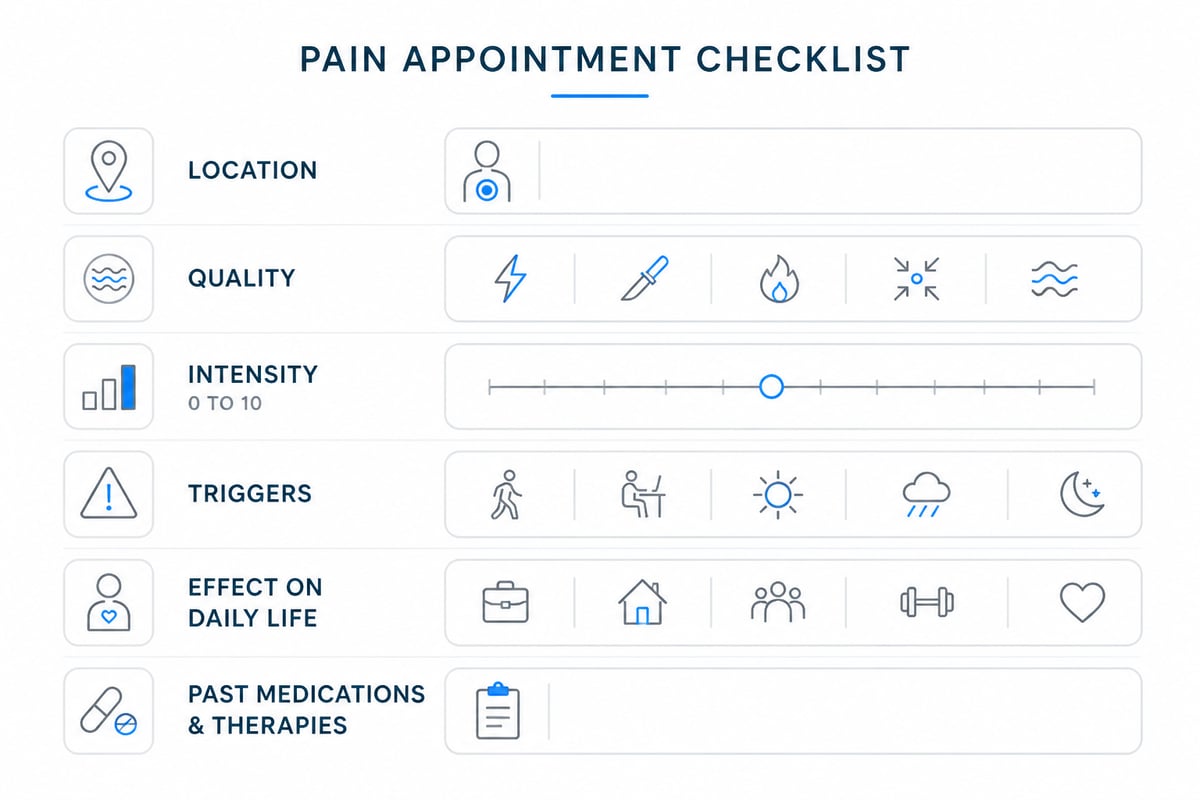
You can get more from a pain appointment by tracking your symptoms for one to two weeks beforehand and arriving with a clear history of what you have already tried.
A useful record includes:
- Location and spread: where the pain starts and whether it travels
- Quality: sharp, burning, aching, throbbing or electric
- Intensity: a daily rating from 0 to 10, plus your best and worst moments
- Triggers and relief: activities, positions, weather or stress that change it
- Impact: missed sleep, work limitations, reduced walking or lifting
- Treatment history: every medication, dose, therapy and procedure, and how each worked
Photographs of swelling or bruising, imaging reports and a list of current prescriptions all help the physician see the full picture. Being specific about function ("I can no longer stand for 15 minutes") often tells a clinician more than a single severity score. If I have pain that fluctuates, a short daily note on your phone is enough to reveal patterns that memory misses.
FAQ
Is it normal to have pain every day?
Daily pain is common but it is not something you must accept as normal. When pain lasts more than 12 weeks it is classified as chronic, and a physician can look for causes and build a treatment plan that goes beyond over-the-counter medication.
Can stress make physical pain worse?
Yes. Stress raises muscle tension and heightens the nervous system's sensitivity to pain signals, which is why tension headaches, neck pain and back pain often flare during stressful periods. Counseling, relaxation techniques and regular movement can reduce this effect.
Should I rest or stay active when I have pain?
For most musculoskeletal pain, gentle movement is better than prolonged bed rest, which tends to stiffen joints and weaken muscles. Rest briefly after a new injury, then return to light activity as tolerated, and stop and seek care if movement sharply worsens the pain or produces numbness or weakness.
Your next step is to write down your pain pattern for a week and list every treatment you have tried, so the first conversation with a physician is productive. If medication no longer controls your pain and you live in central Pennsylvania, the team at Pain & Recovery Medical Centre builds individualized plans through its Chronic Pain Management Program and can discuss whether medical marijuana certification fits your situation. To start that conversation, reach out through the Pain & Recovery Medical Centre contact page and call now to schedule an evaluation.