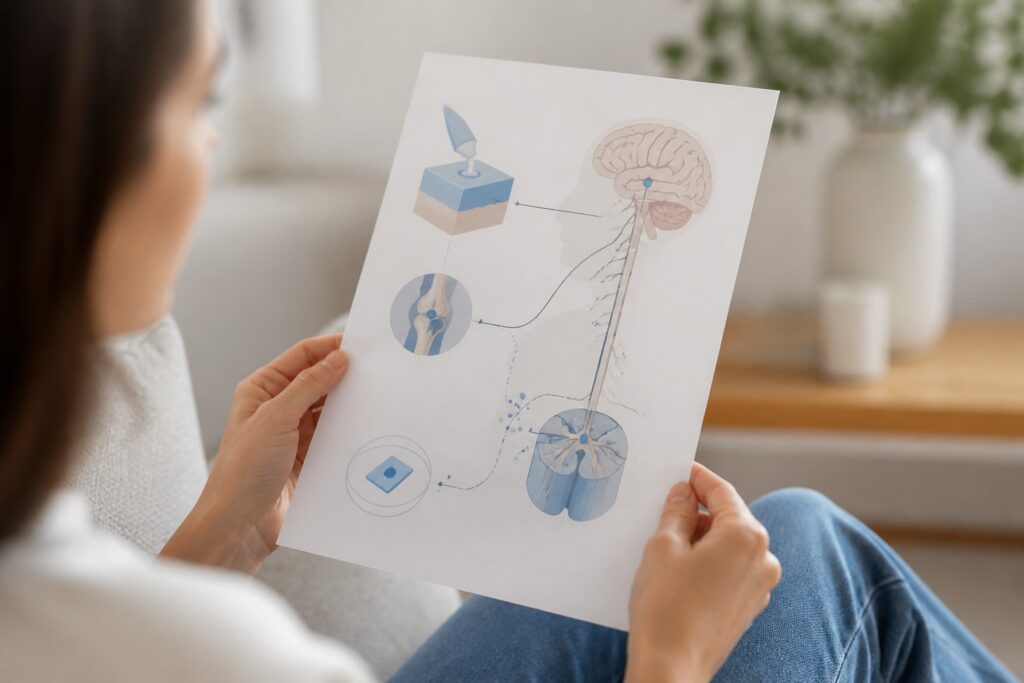
Pain control medication works by interrupting pain signals at one of several points: the injured tissue, the nerves that carry the signal, or the brain regions that interpret it. The right type depends on what is causing the pain, how long it has lasted, and how your body responds. Chronic pain is generally defined as pain lasting beyond normal healing time, with definitions commonly using a threshold of 3 to 6 months, and it often responds to a different set of drugs than a sprain or a dental procedure does.
This guide covers the main categories of pain relievers, how each one works, and where each fits. Over-the-counter examples are listed with their active ingredients and listed prices where available. Medication decisions for persistent pain belong with a physician, so the final sections explain what a prescribing visit can add.
1. Voltaren Arthritis Pain Gel
Voltaren Arthritis Pain Gel is a topical diclofenac sodium 1% gel, an NSAID applied directly over a painful joint. It works by blocking prostaglandin production at the site of application, so less of the drug reaches the bloodstream than with a pill.
- Active ingredient: Diclofenac sodium 1%
- Drug class: NSAID, topical
- Approximate price: $26 (Verywell Fit and Good Housekeeping listings)
- Suits: Localized joint pain, such as arthritis in the hands, knees, or ankles, where a limited area can be treated directly
Guidance summarized by PowerPak CE reports that topical NSAIDs were reported as having the highest benefit for acute musculoskeletal injuries other than low-back pain. That supports using a gel first when the pain is confined to one area. Someone with a stiff, aching knee can apply the gel to that joint alone, which limits how much of the drug reaches the rest of the body. Because the medication is absorbed through the skin, it should go on clean, dry, unbroken skin, and hands should be washed afterward unless the hands themselves are being treated.
Verdict: A sensible first topical option for single-joint pain, though it will not reach widespread or nerve-related pain.
2. Aspercreme Pain Relieving Creme With Lidocaine
Aspercreme with lidocaine is a topical numbing cream that blocks sodium channels in skin nerve endings, which reduces the signals sent from the treated area. It contains no anti-inflammatory drug, so it masks the sensation without addressing swelling.
- Active ingredient: Lidocaine
- Drug class: Topical local anesthetic
- Approximate price: $9 (Verywell Fit listing)
- Suits: Surface-level localized pain, such as a sore patch of muscle or skin-level nerve irritation, on a low budget
Because lidocaine acts only on nearby nerves, it suits people who want relief without taking a systemic drug. It is a poor match for deep joint inflammation. A tender spot along the shoulder blade or a small area of irritated skin over a strained muscle is the kind of target it handles well. Since it numbs rather than treats the cause, relief lasts only while the drug is active in the skin, and the underlying problem still needs attention if the pain keeps returning.
Verdict: An inexpensive, low-risk option for numbing a small, defined area.
3. Advil Liqui-Gels Easy Open Arthritis Cap
Advil Liqui-Gels Easy Open Arthritis Cap is an oral ibuprofen capsule in a package designed to be easier to open with stiff or painful hands. Ibuprofen is an NSAID that blocks COX enzymes throughout the body, lowering both pain and inflammation.
- Active ingredient: Ibuprofen
- Drug class: NSAID, oral
- Price: Varies by retailer
- Suits: Pain with an inflammatory component, such as arthritis flares or muscle strain, when the discomfort affects more than one area
Ibuprofen is shorter-acting, so doses are spaced through the day. The PowerPak CE summary also notes that NSAIDs are recommended first-line for acute dental pain and are at least as effective as opioids for acute kidney-stone pain. Since a pill reaches the whole body, it fits situations where both hands and a knee ache at once, which a single topical gel cannot cover. Taking it with food or milk helps limit stomach irritation, and the label's dosing limits should be followed rather than extended because the pain persists.
Verdict: A practical oral NSAID for flare-ups, with the easy-open cap a real convenience for people with hand arthritis.
4. Aleve Soft Grip Arthritis Cap
Aleve Soft Grip Arthritis Cap contains naproxen sodium 220 mg, an NSAID with a longer duration of action than ibuprofen. Naproxen blocks the same COX enzymes, but fewer doses are needed across a day.
- Active ingredient: Naproxen sodium 220 mg
- Drug class: NSAID, oral
- Price: Varies by retailer
- Suits: Ongoing arthritis pain and stiffness where less frequent dosing is preferred
Like all oral NSAIDs, naproxen can irritate the stomach and affect kidney function and blood pressure, so people with heart, kidney, or ulcer history should check with a physician first. Taking it with food lowers stomach upset for many people. The longer duration makes it a reasonable fit for morning stiffness that lingers into the afternoon, since one dose covers a wider stretch of the day. The soft-grip cap serves the same purpose as the easy-open design above: it makes the bottle manageable for painful or weak fingers.
Verdict: A longer-acting oral NSAID that fits steady, all-day arthritis discomfort.
5. Chronic Pain Management Program at Pain & Recovery Medical Centre
The Chronic Pain Management Program is a physician-directed service for Pennsylvania adults (18+) that combines prescription medication with non-drug therapies. Its listed medication options include buprenorphine, NSAIDs, gabapentin-class medications, and topiramate (Topamax).
- Medications listed: Buprenorphine, NSAIDs, gabapentin-class medications, topiramate
- Other therapies listed: Counseling, acupuncture, physical therapy, chiropractic treatment, mind-body therapies, physiatry, trigger point injections, dietary therapies, and in some cases surgery
- Prescribing: Done electronically, as Pennsylvania law requires
- Suits: Adults in State College and central Pennsylvania whose pain is no longer controlled by over-the-counter products
- Pricing: Contact the center for details
Each plan is individualized. The prescribing physician, Dr. Paul Simpson, is board certified in Internal Medicine with over 35 years of practice experience in primary care. Gabapentin-class drugs and topiramate calm overactive nerve signaling, which is why they are used for nerve-related pain that NSAIDs do not touch. Buprenorphine is a partial opioid agonist; it is the only controlled substance the center prescribes, and it is not a fit for patients seeking other controlled substances. Because the program lists a wide range of therapies, a plan can be built in layers, for instance pairing a prescription with physical therapy and counseling rather than relying on a drug alone.
Verdict: The step to consider when store-bought products have stopped working and nerve pain or long-standing pain needs a physician's assessment.
6. Medical Marijuana Services at Pain & Recovery Medical Centre
Medical Marijuana Services at the center are physician certification for Pennsylvania adults (18+) who may qualify under the state program. Dr. Simpson is certified with the state of Pennsylvania medical marijuana program.
- Service type: Physician certification under the Pennsylvania program
- Eligibility: Adults 18 and older who meet the state's qualifying-condition requirements
- Suits: Adults with chronic pain who want a physician to evaluate and certify them for the state program, alongside or instead of conventional drugs
- Pricing: Contact the center for details
Medical marijuana is one of the integrated options the practice offers next to conventional treatment. Whether you qualify, and how it would fit with other medications you take, is a decision made at the visit. Certification is a clinical evaluation rather than a prescription for a specific product, so the visit centers on your diagnosis, your pain history, and what you already take. Patients who are also using NSAIDs, gabapentin-class drugs, or buprenorphine should list everything, since the physician weighs how the pieces combine.
Verdict: A physician-supervised route into the state program for patients who qualify and want certification handled by a clinician who also manages their other pain treatment.
Comparison of Pain Control Medication Options
| Option | Type | Active ingredient or approach | Best use |
|---|---|---|---|
| Voltaren Arthritis Pain Gel | Topical NSAID | Diclofenac sodium 1% | Single-joint arthritis pain |
| Aspercreme with Lidocaine | Topical anesthetic | Lidocaine | Small areas of surface pain |
| Advil Liqui-Gels Easy Open Arthritis Cap | Oral NSAID | Ibuprofen | Flares with inflammation |
| Aleve Soft Grip Arthritis Cap | Oral NSAID | Naproxen sodium 220 mg | All-day arthritis discomfort |
| Chronic Pain Management Program | Prescription and multimodal | Buprenorphine, NSAIDs, gabapentin class, topiramate, plus therapies | Pain not controlled by OTC products |
| Medical Marijuana Services | Physician certification | Pennsylvania medical marijuana program | Qualifying adults seeking certification |
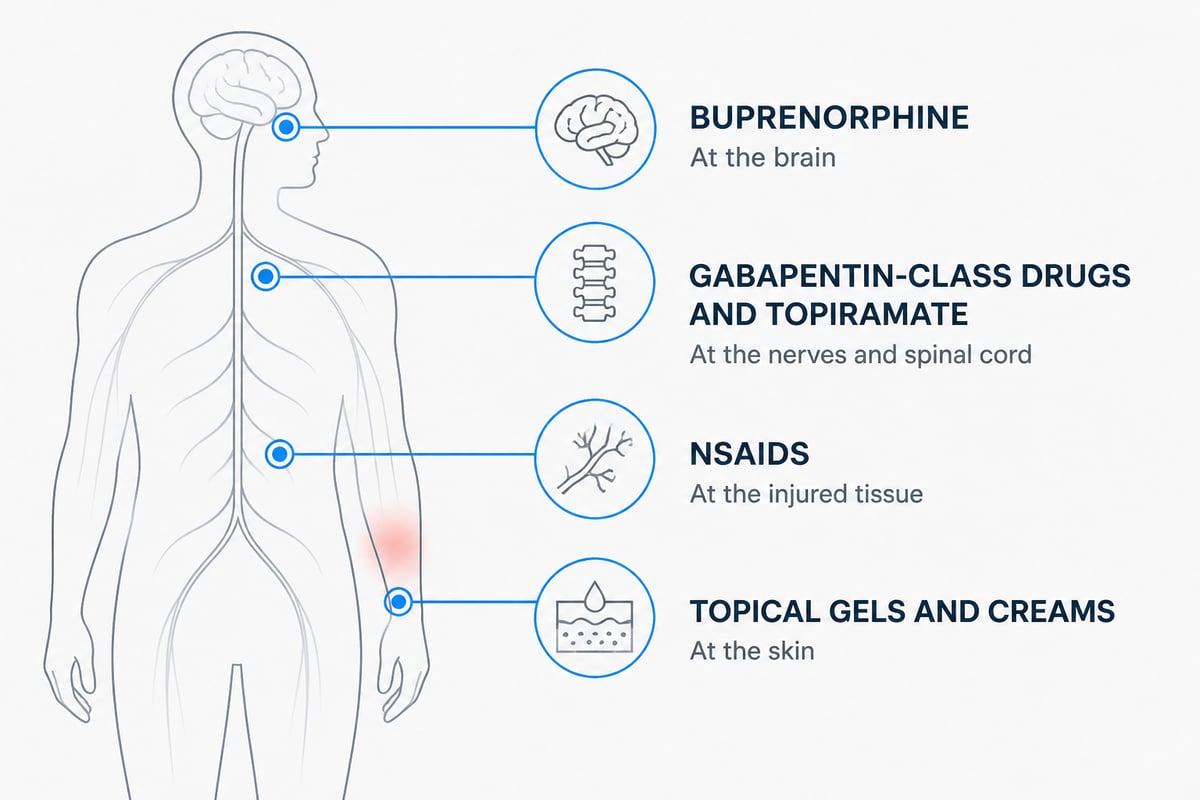
How Pain Control Medication Types Differ by Mechanism
Pain control medication falls into four working groups, and matching the group to the pain type matters more than choosing a brand.
- NSAIDs (ibuprofen, naproxen, diclofenac) reduce inflammation at the injury site.
- Local anesthetics (lidocaine) block signals at nearby nerve endings.
- Nerve-active drugs (gabapentin class, topiramate) quiet misfiring nerves, which suits burning, tingling, or shooting pain. A related read on this is the center's post on chronic nerve pain relief.
- Partial opioid agonists (buprenorphine) act on opioid receptors in the brain and spinal cord with a lower ceiling effect than full opioids.
The PowerPak CE summary also states that opioids are not recommended as first-line therapy for many common acute conditions, including low-back pain, neck pain, musculoskeletal injuries, dental pain, kidney-stone pain, and episodic migraine, because NSAIDs may provide equivalent or better relief and opioid use carries a risk of long-term use.

When Medication Alone Is Not Enough
Medication works best as one part of a plan, and the evidence for adding non-drug therapies is solid. NCCIH reports that acupuncture, hypnosis, massage, mindfulness meditation, music-based interventions, spinal manipulation, tai chi, qigong, and yoga may help manage some painful conditions. The 2022 CDC opioid-prescribing guideline, as described by NCCIH, concludes that multiple noninvasive, nonpharmacologic interventions improve chronic pain and function, with small-to-moderate effects for specific conditions and no serious harms associated with them.
For chronic low-back pain specifically, the American College of Physicians recommends initially selecting nonpharmacologic treatment, including exercise, multidisciplinary rehabilitation, acupuncture, or mindfulness-based stress reduction.
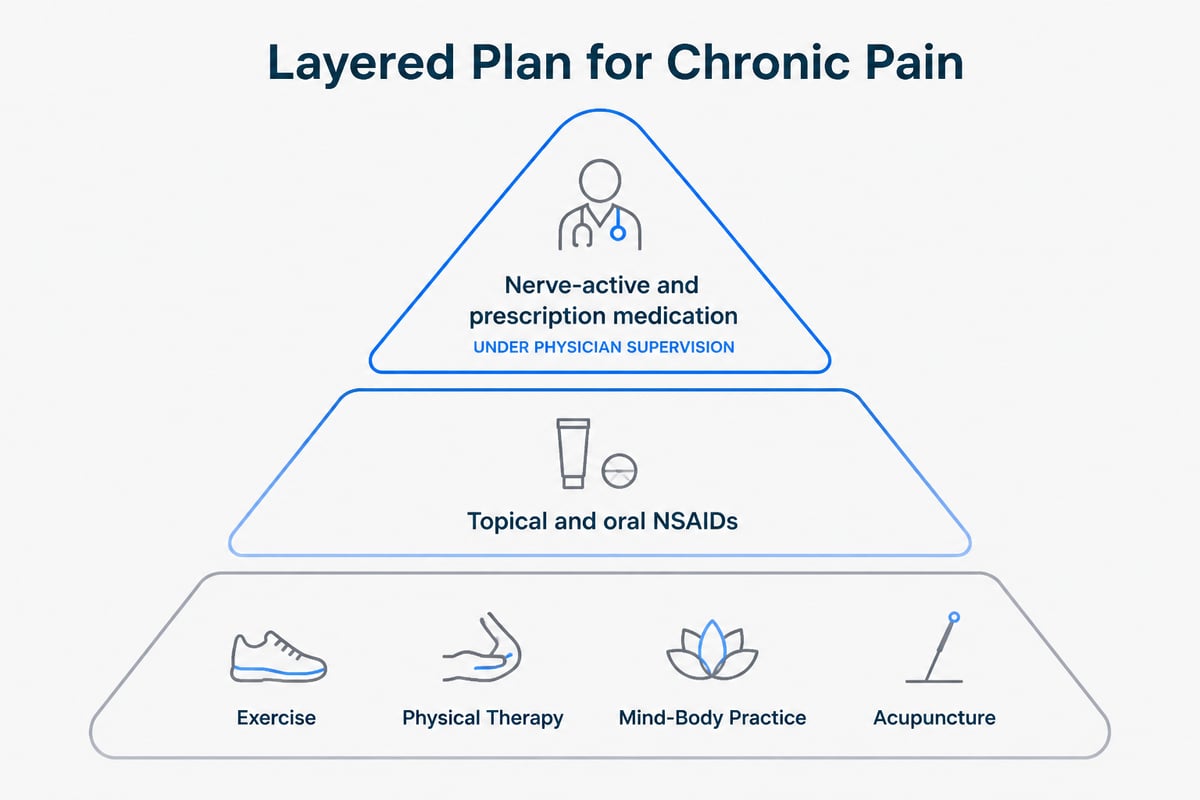
This is why the center's program pairs prescriptions with therapies such as physical therapy, acupuncture, and counseling. If you want more background on how a combined approach is structured, the center's overview of pain control treatment explains the reasoning.
Safety Points Before You Take Anything
Combining pain products without a plan is a common source of avoidable harm. Keep these points in mind:
- Do not stack NSAIDs. Taking ibuprofen and naproxen together, or either with a diclofenac gel on large areas, raises the risk of stomach bleeding and kidney strain.
- Check your history. Heart disease, kidney disease, high blood pressure, and ulcers change which NSAIDs are safe.
- Track how long you rely on over-the-counter products. Needing them daily for months is a signal that the approach is no longer adequate.
- Bring a full list to every visit. That includes supplements, topical products, and any cannabis products, since interactions depend on the whole picture.
Pain that medication no longer controls is common, and it is not a failure of willpower. It usually means the mechanism of the drug does not match the mechanism of the pain, which a physician can sort out. The center's article on living with pain covers day-to-day coping alongside treatment.
For broader background on how pain is studied and treated, the NCCIH pain overview is a reliable public reference.
Start by writing down every pain product you take, how often, and how well it works, so a physician can see the pattern. Pain & Recovery Medical Centre builds individualized plans from that kind of history, drawing on its Chronic Pain Management Program and physician certification for the Pennsylvania medical marijuana program, with compassionate, judgement-free care from Dr. Simpson's team. If your current medication no longer controls your pain, Pain & Recovery Medical Centre is ready to talk through your options when you call now.