

The psychological management of pain uses structured, evidence-based techniques such as cognitive behavioral therapy, acceptance and commitment therapy, activity pacing, and stress reduction to change how pain affects your thoughts, emotions, and daily life. These methods do not suggest the pain is imaginary. They target the feedback loops between the nervous system, mood, sleep, and behavior that can keep pain active long after an injury has healed. For adults in central Pennsylvania whose medication no longer controls their pain, psychological tools often provide the missing layer of relief and function.
How Pain and the Mind Influence Each Other
Pain and psychological state influence one another in both directions, which is why treating only the body often leaves gaps. Persistent pain keeps the stress response switched on, raising muscle tension and heightening nerve sensitivity. Worry, low mood, and poor sleep then amplify the pain signal, and the cycle repeats.
Several patterns commonly sustain this loop:
- Fear of movement. Avoiding activity to prevent flare-ups leads to deconditioning, stiffness, and more pain with ordinary tasks.
- Catastrophizing. Expecting the worst outcome makes pain feel more threatening and harder to tolerate.
- Boom and bust activity. Overdoing it on good days and crashing for the next several creates unpredictable energy and mood.
- Isolation. Withdrawing from friends, work, and hobbies removes the activities that naturally distract and reward.
Recognizing these patterns is the first step. Once you can name them, each one becomes something you can change with practice.
Cognitive Behavioral Therapy for Pain
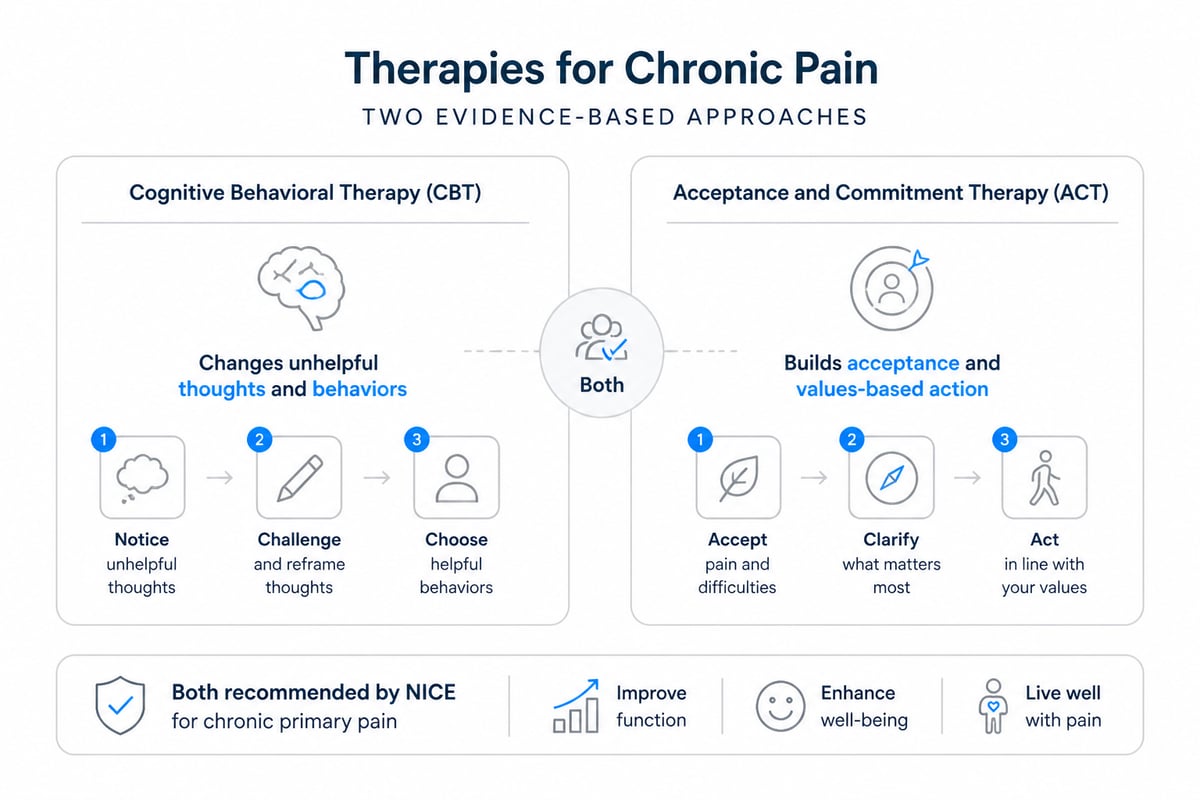
Cognitive behavioral therapy (CBT) for pain teaches you to identify unhelpful thoughts and behaviors and replace them with approaches that support function. A typical course involves setting goals, tracking pain and activity, challenging beliefs such as "hurt means harm," and practicing coping skills between sessions.
The evidence base is worth understanding clearly. The UK's National Institute for Health and Care Excellence (NICE) recommends considering either CBT or acceptance and commitment therapy for people with chronic primary pain, delivered by appropriately trained healthcare professionals. NICE also reports that CBT for pain improved quality of life in most of the evidence reviewed, although consistent benefits were not demonstrated for other outcomes, and it found no strong evidence of harm. That is a realistic framing: CBT is a tool for living better with pain, not a guaranteed way to erase it.
Acceptance and Commitment Therapy
Acceptance and commitment therapy (ACT) helps you stop fighting the presence of pain and redirect energy toward what matters to you. Instead of asking how to eliminate every sensation, ACT asks what you would do with your day if pain were allowed to be there.
ACT builds six core skills:
- Accepting sensations and emotions without struggling against them
- Stepping back from painful thoughts rather than obeying them
- Staying present instead of replaying the past or fearing the future
- Observing yourself with some distance from the pain story
- Clarifying personal values, such as family, work, faith, or gardening
- Taking committed action toward those values, even in small steps
NICE notes that the ACT evidence showed improvements in quality of life and sleep and reductions in pain and psychological distress, and that the evidence did not establish a preference for ACT over CBT or the reverse. In practice, the better choice is usually the one that matches your temperament and the clinician available to you.
Pacing: Finding the Right Level of Activity
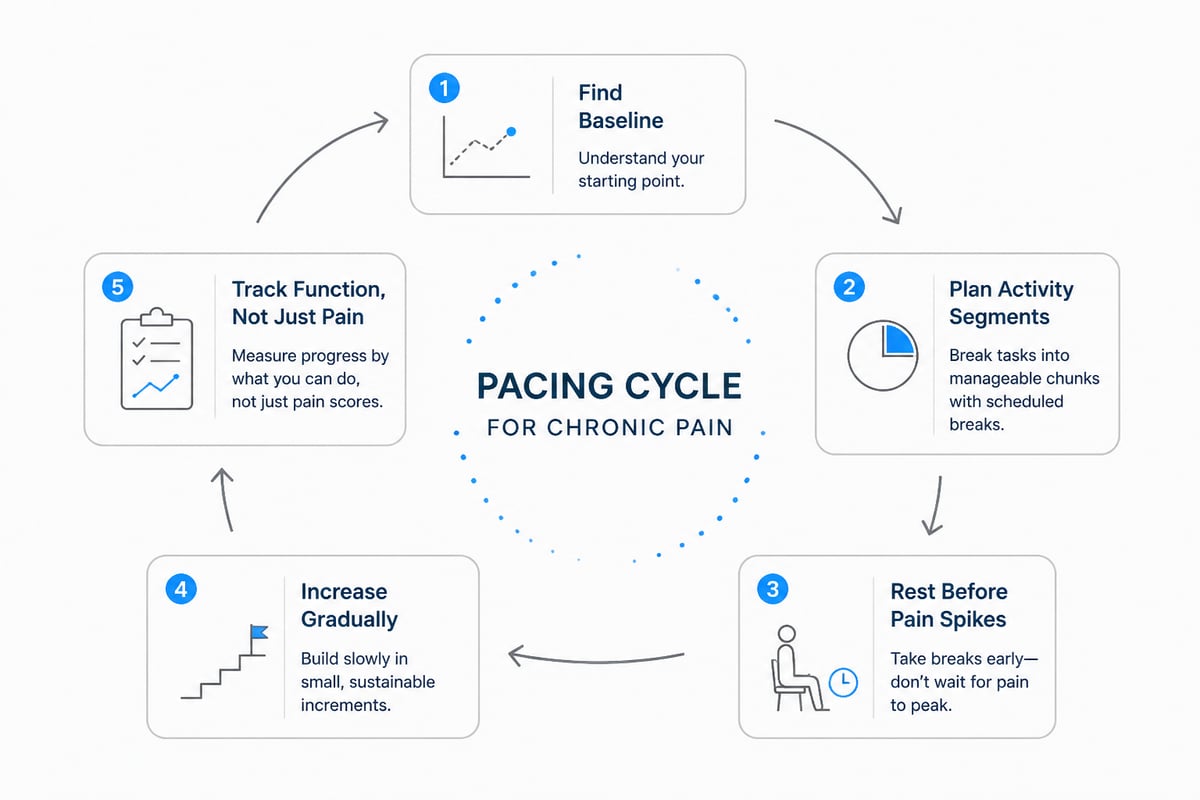
Pacing means matching your activity to a sustainable baseline so that you stop swinging between overexertion and forced rest. It is one of the most practical elements of the psychological management of pain because it turns an abstract idea into a daily routine you can follow.
To set a baseline, note how long you can perform a task, such as walking, standing at the sink, or sitting at a desk, before pain meaningfully rises. Then choose a starting time slightly below that limit and divide the task into planned segments with short breaks. After a week of steady practice, increase each segment by a small increment, often 10 percent or less.
A few principles keep pacing effective:
- Rest before pain forces you to stop, not after.
- Alternate demanding tasks with lighter ones.
- Keep good days from becoming overspending days.
- Track progress by function, such as minutes walked or chores completed, rather than by pain score alone.
This approach rebuilds confidence in your body. Each completed session without a flare weakens the belief that activity is dangerous.
Mindfulness, Relaxation, and the Stress Response
Mindfulness and relaxation can calm the stress response that amplifies pain, but the research supports them as part of a broader plan rather than as a stand-alone cure. NICE found insufficient evidence to recommend mindfulness or relaxation as standalone treatments for chronic primary pain, and it called for further research.
That finding does not make these skills useless. Many people find that a few minutes of slow diaphragmatic breathing, a body scan, or progressive muscle relaxation lowers tension and makes other strategies easier to apply. Used alongside pacing and CBT or ACT, they act as a pressure valve during difficult moments. Treat them as supporting tools, and judge them by whether they help you function and recover faster after a flare.

Sleep, Mood, and the Hidden Pain Amplifiers
Poor sleep and low mood raise pain sensitivity, so addressing them is a core part of psychological treatment. Pain disrupts sleep, and sleep loss lowers pain tolerance the next day, creating another loop worth interrupting.
Cognitive behavioral therapy for insomnia (CBT-I) is the structured approach clinicians use here. NICE says its evidence for CBT for insomnia in chronic primary pain was smaller and insufficient for a practice recommendation, although some benefit, particularly for quality of life and sleep, was seen. Basic sleep habits are still reasonable to try:
- Keep a consistent wake time every day, including weekends.
- Reserve the bed for sleep, and leave it if you are awake and frustrated for a long stretch.
- Limit caffeine after midday and avoid screens close to bedtime.
- Write down worries earlier in the evening so they are not rehearsed in bed.
Depression and anxiety deserve direct attention as well. Untreated mood symptoms make every other strategy harder, and addressing them with counseling or appropriate medical care is not a detour from pain treatment. It is part of it.
Building Social Support and Communicating About Pain
Strong social support improves coping, and clear communication helps the people around you respond in useful ways. Pain is invisible, so family and coworkers often guess at what you need, sometimes by doing too much or by doubting you.
Try giving specific, practical information instead of general statements. "I can help with dinner for 20 minutes, then I need to sit" is more useful than "I'm having a bad day." Invite a trusted person to a clinic visit when possible so they hear the plan firsthand. Peer groups, whether in person or online, can also reduce the sense that you are the only one managing this.
Putting a Personal Plan Together
An effective plan combines psychological skills with medical care, built around your goals instead of a generic protocol. NICE recommends developing a care and support plan around how pain affects daily activities and the person's preferences, abilities, and goals. That principle applies whether you are working with a psychologist, a primary care physician, or a multidisciplinary team.
A practical starting sequence looks like this:
- Define two or three functional goals, such as walking the dog around the block, sitting through a family meal, or returning to a hobby.
- Track a baseline for two weeks, noting activity, sleep, mood, and pain.
- Choose one skill to practice first, usually pacing or a brief breathing routine.
- Add formal therapy, such as CBT or ACT, with a trained clinician.
- Review monthly, adjusting goals as function improves.
Psychological care works best when it sits alongside a medical plan that is also tailored. At Pain & Recovery Medical Centre, the Chronic Pain Management Program pairs medication options for Pennsylvania adults with a range of treatment approaches, so psychological strategies are not treated in isolation. Dr. Paul Simpson, who has over 35 years of practice experience in primary care Internal Medicine, is part of the care team. You can read more about how the practice approaches chronic pain and what living well with pain can look like.
Measuring Progress Beyond the Pain Score
Progress in the psychological management of pain is best measured by what you can do, not only by how much it hurts. A pain rating of 6 out of 10 that has not moved in months can hide real gains: longer walks, better sleep, fewer cancelled plans, and quicker recovery after a flare.
Keep a short weekly record with four entries:
- Minutes of planned activity completed
- Hours of sleep and how rested you felt
- Mood on a simple 1 to 10 scale
- Number of days you did something that mattered to you
Review the trend monthly with your clinician. Setbacks are expected and do not erase earlier progress. If a strategy has been practiced consistently for several weeks without benefit, that is useful information, and it is a reason to adjust the plan rather than abandon it.
Frequently Asked Questions
Does needing psychological treatment mean my pain is "all in my head"?
No. Pain is a real experience produced by the nervous system, and psychological treatment targets the thoughts, behaviors, and stress responses that make it worse. It is used for conditions with clear physical causes as well.
How long does it take to notice results?
Many people notice small changes in coping and sleep within a few weeks of consistent practice, while larger gains in activity and confidence usually build over several months. Regular practice matters more than session length.
Can psychological strategies replace medication?
They can reduce reliance on medication for some people, but any change to prescriptions should be made with your physician. The two approaches are designed to work together.
Is therapy safe?
NICE reports no strong evidence of harm from CBT for pain. Some people feel temporarily uncomfortable when facing avoided activities or difficult emotions, and a trained clinician can adjust the pace.
Start tonight by writing down two functional goals and tracking your activity, sleep, and mood for the next two weeks, so you have a clear baseline to bring to a clinician. If medication alone is no longer enough, Pain & Recovery Medical Centre can help you combine those psychological strategies with a plan built around your needs, including the Chronic Pain Management Program for Pennsylvania adults. When you are ready to talk through your options, Pain & Recovery Medical Centre is available, so call now to arrange your first conversation with the care team.