

Living with pain that medication no longer controls requires a daily system rather than a single fix: pacing your activity, protecting your sleep, moving in small and regular amounts, tracking patterns, and working with a clinician who can adjust your treatment plan. None of these steps removes pain overnight, but together they reduce flare-ups, restore a sense of control, and make ordinary days more predictable. This article covers the strategies with the strongest backing and explains when it is time to look at a broader medical approach.
What Chronic Pain Does to an Ordinary Day
Chronic pain is pain that persists beyond the expected healing time, and it reshapes how a person plans, works, and rests. It rarely stays confined to the body. Pain disrupts sleep, shortens patience, narrows social life, and often brings worry about what tomorrow will require.
Many adults reach a point where the medications that once helped no longer deliver enough relief, or where side effects have become a problem of their own. That is a common turning point, not a personal failure. It usually means the plan needs more layers, not that nothing can be done.
The strategies below work best in combination. A single technique rarely carries the load, but a handful of modest habits, practiced consistently, can change how pain feels and how much of your day it controls.
Pace Your Activity Instead of Pushing Through
Pacing means matching your activity to your current limits and increasing it gradually, rather than doing too much on good days and collapsing on bad ones. NHS inform advises planning what you will do, staying within your current limits, taking breaks before symptoms become too much, and building activity up in small amounts as you are able.
The boom-and-bust cycle is the most common trap. A good morning leads to an afternoon of yard work or cleaning, which leads to two days in bed. Pacing breaks that cycle.
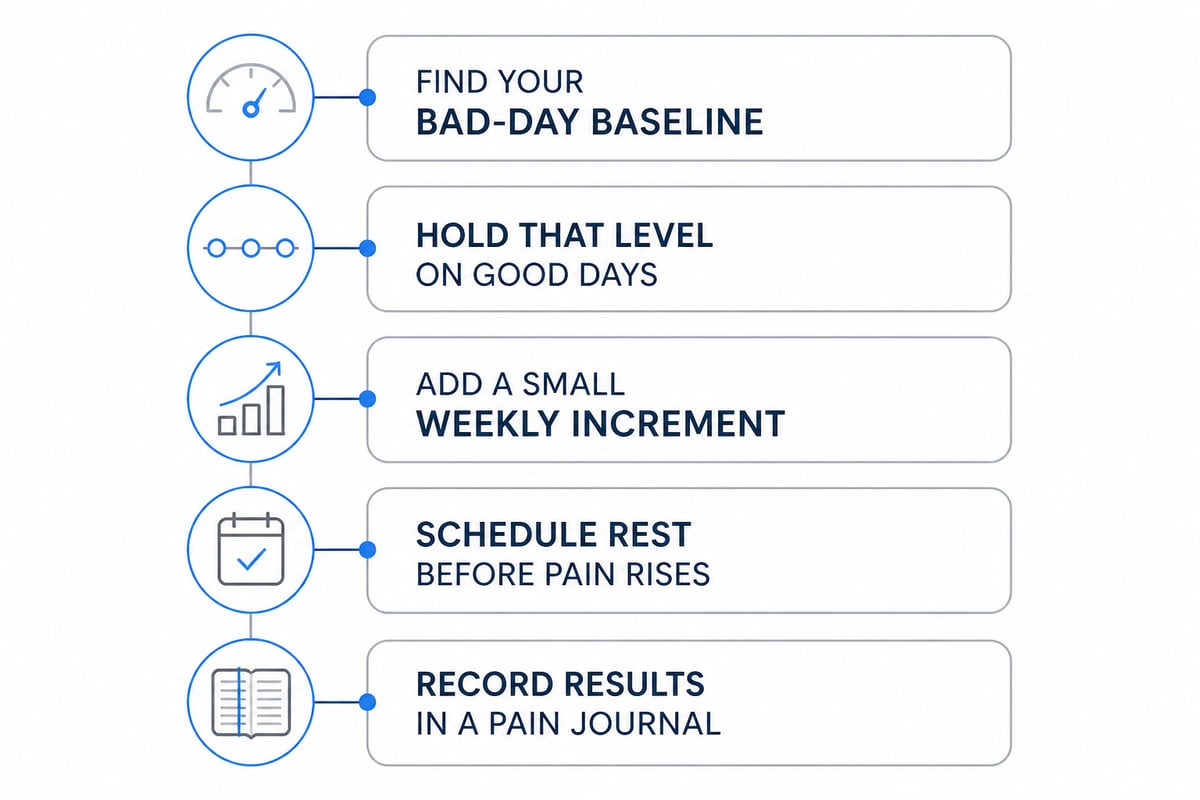
A practical way to start:
- Choose one task, such as walking, laundry, or gardening.
- Find the amount you can do on a bad day without a flare-up.
- Set that as your baseline, even on good days.
- Add a small increment, perhaps a minute or two, every week or so.
- Schedule a rest before you feel you need one.
This feels slow, and that is the point. Steady progress holds, while sudden bursts tend to be paid back with interest.
Build Movement Into Your Week, Safely
Regular, tailored movement is one of the best-supported long-term strategies for chronic pain, even when it feels counterintuitive. NICE recommends offering people with chronic primary pain a supervised group exercise programme tailored to their needs, preferences, and abilities, and encouraging them to stay physically active for longer-term general health benefits.
The word "tailored" matters. The right movement for someone with fibromyalgia differs from the right movement for someone with lumbar disc disease or knee arthritis. Options that tend to be well tolerated include:
- Walking, starting with short, flat routes and using a pacing plan
- Water exercise, which reduces joint load and is often available at local pools
- Gentle yoga or tai chi, which combine stretching, balance, and breath control
- Physical therapy, which provides a structured program and corrects movement patterns that aggravate pain
Expect some soreness as muscles adapt, and learn to tell it apart from the sharp or escalating pain that signals you have done too much. A physical therapist or physiatrist can help you draw that line.
Protect Your Sleep, Because Pain and Sleep Feed Each Other
Sleep and pain influence each other in both directions, so improving sleep is a direct pain strategy and not a side issue. NHS inform notes that pain can disrupt sleep, while poor sleep can increase stress and make pain harder to cope with.
The NHS advises keeping a regular bedtime and wake time, and speaking to a doctor if sleep problems persist. Consistent timing helps steady the body clock, which can influence how sensitive you feel to pain and how your mood holds up.
Habits worth adopting:
- Keep the same wake time every day, including weekends
- Make the bedroom cool, dark, and quiet
- Stop screens at least an hour before bed
- Limit caffeine after midday and avoid alcohol close to bedtime, since it fragments sleep
- Try a supportive pillow arrangement that keeps painful joints or the spine in a neutral position
If you lie awake for long stretches despite these steps, bring it up with your clinician. Sleep problems in chronic pain often respond to a treatment adjustment, and they are worth addressing directly.
Work With Your Mind, Not Against It
Pain involves the nervous system and the brain's interpretation of signals, which is why mental strategies produce measurable relief for many people. Stress, fear, and constant vigilance amplify pain, while relaxation lowers the volume.
Three approaches have a practical track record:
- Slow breathing: Several minutes of slow, controlled breathing can help reduce muscle tension and ease a flare-up in progress.
- Mindfulness and body scanning: These teach you to observe pain without layering dread on top of it, which often reduces suffering even when the sensation remains.
- Counseling or cognitive behavioral therapy: A therapist who understands chronic pain can help with catastrophizing, grief over lost abilities, and the anxiety that often accompanies persistent symptoms.
Mood deserves attention for its own sake. Depression and chronic pain often occur together, and treating one can help the other. Asking for help with low mood is part of pain care, not separate from it.
Keep a Pain Journal That Actually Informs Treatment
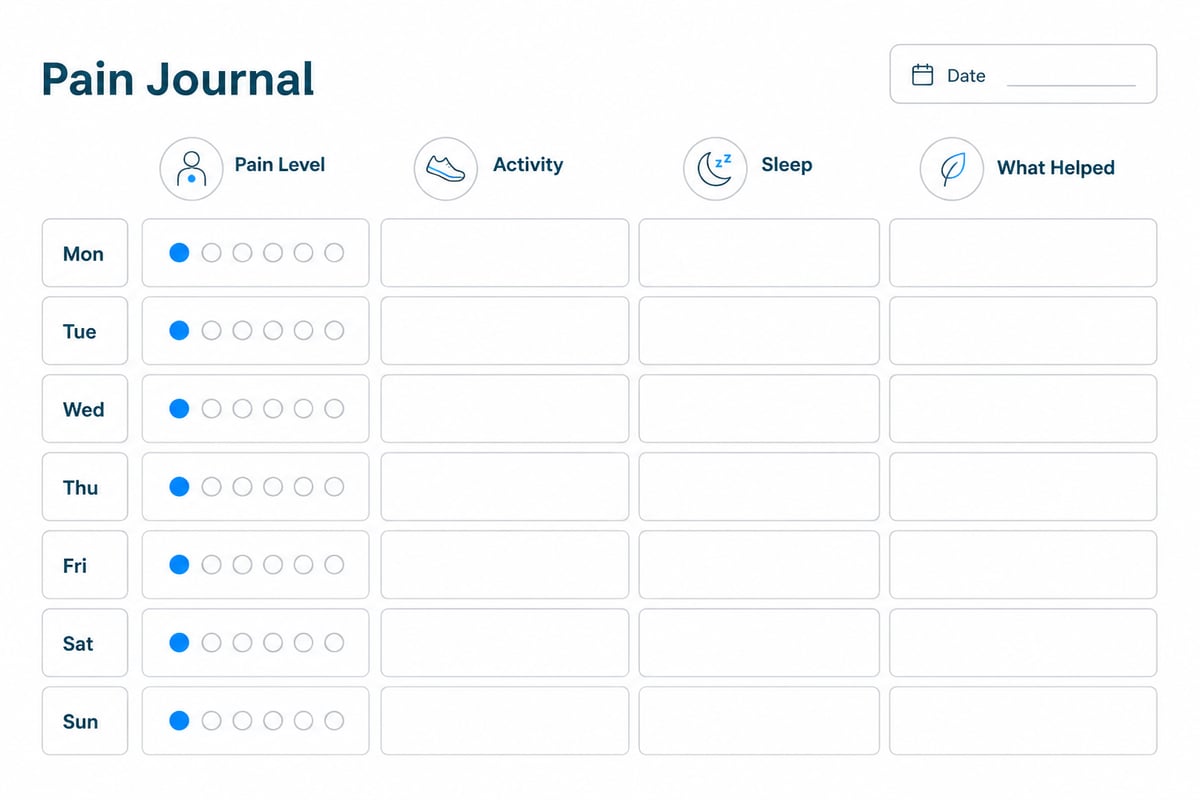
A short daily pain record turns vague impressions into patterns a clinician can act on. Most people discover triggers they had not noticed, such as a particular chair, a poor night of sleep, or a weather change.
Keep it simple enough that you will really do it. Record these items once a day:
| What to track | Example entry |
|---|---|
| Pain level (0 to 10) | 6 in the morning, 4 by evening |
| Main location | Lower back, left hip |
| Activity that day | 15-minute walk, an hour of cooking |
| Sleep | About 6 hours, woke twice |
| Mood and stress | Tense, anxious about appointment |
| What helped | Heat pad, stretching, breathing |
Bring several weeks of entries to your appointments. A record showing that pain spikes after poor nights of sleep, or that a medication seems to wear off by mid-afternoon, gives your clinician something concrete to work with, and it can help shorten the path to a better plan.
Use Heat, Cold, and Everyday Comfort Tools
Simple physical comforts will not cure chronic pain, but they give you reliable, low-risk relief on hard days. Heat relaxes tight muscles and eases stiffness, which suits back and neck pain. Cold can calm acute inflammation around a swollen joint. Gentle self-massage, a supportive chair, and a warm bath all lower baseline tension.
Build a short "flare kit" so you are not improvising when pain peaks: a heat pad, a cold pack, a written list of your breathing exercise, and the phone number of your clinic. Having the tools ready reduces the panic that often makes a flare worse.

Stay Connected, Because Isolation Makes Pain Heavier
Chronic pain tends to shrink a person's social world, and that withdrawal often worsens both pain and mood. Plans get cancelled, and friends gradually stop asking.
Counter this deliberately. Tell one trusted person what a bad day looks like and what helps. Keep short, low-effort social commitments, such as a brief coffee or a phone call, that you can manage even when energy is low. A peer support group, whether in person or online, offers something family often cannot: people who understand the daily arithmetic of limits without needing it explained.
Work matters here too. If pain affects your job, a conversation about adjusted hours, a different workstation, or scheduled breaks can preserve both income and identity.
When Medication Is No Longer Enough
If your current medications leave you in significant pain or cause side effects you cannot tolerate, that is a clear signal to ask for a broader treatment review. Relying on a single drug, or escalating doses, is rarely the best answer for long-standing pain.
A fuller plan usually combines several approaches matched to your diagnosis and goals. Depending on the person, that can include non-opioid medications, nerve-targeting drugs, physical therapy, acupuncture, chiropractic care, counseling, trigger point injections, dietary changes, and, where appropriate, medical marijuana or buprenorphine. For more on how these pieces fit together, see this overview of managing chronic pain and this look at treating chronic pain.
In Pennsylvania, the Chronic Pain Management Program at Pain & Recovery Medical Centre serves adults 18 and older with individualized treatment that combines conventional and alternative options. Dr. Paul Simpson, who has decades of experience in primary care Internal Medicine, oversees patient care. It is worth confirming that the center's approach matches what you need before you book.
Questions to Bring to Your Next Appointment
Going into an appointment with specific questions makes the visit more productive and helps you take part in decisions rather than simply receive them. Consider asking:
- What is the most likely source of my pain, and has it been fully evaluated?
- Which non-drug treatments suit my diagnosis, and how would we measure whether they work?
- If my current medication is not helping, what are the alternatives and their risks?
- Could a mind-body therapy or counseling support be added to my plan?
- What should I do during a flare, and when should I call the office?
- How will we judge progress: pain scores, function, sleep, or all three?
Treating function as a goal, not just pain scores, tends to produce better outcomes. Walking to the mailbox, sitting through a meal, or sleeping five uninterrupted hours are meaningful measures of progress, even when the pain number barely moves. If you want a sense of what a comprehensive plan can include, the center's page on pain management services outlines the range.
Setting Realistic Goals for Living With Pain
Living with pain over the long term often goes better when the goal shifts from eliminating every symptom to expanding what you can do. That reframing is not resignation. It is a strategy that keeps you moving toward a fuller life while treatment continues to improve.
Set goals in three tiers: a daily one (a ten-minute walk), a monthly one (returning to a hobby you dropped), and a longer-term one (a trip, a return to part-time work, a family event). Review them with your clinician and adjust when your condition changes. Progress is rarely a straight line, and setbacks are part of the pattern, not proof that the approach has failed.
Small wins accumulate. A person who paces well, sleeps more regularly, moves daily, and keeps a clear record is far better positioned to benefit from every treatment than someone starting from exhaustion and uncertainty.
Start tonight by writing down your pain level, your sleep, and one thing that helped, because that single page gives any clinician something real to work with. If medication alone is no longer controlling your pain, the team at Pain & Recovery Medical Centre can build a plan around your needs, including the Chronic Pain Management Program. Reach out through the Pain & Recovery Medical Centre contact page, or call now to ask whether their approach fits your situation.