
Chronic soreness is muscle or joint pain that lingers well beyond the normal healing window, and it usually points to an ongoing driver such as nerve sensitization, inflammation, stress, or an unaddressed medical condition rather than simple overuse. Pain is generally considered chronic when it lasts longer than three months after the usual recovery period, according to NHS inform. If medication no longer controls your symptoms, a structured evaluation and a combined treatment plan are the most reliable way forward.
What Is Chronic Soreness and How Does It Differ From Normal Muscle Aches?
Chronic soreness differs from normal muscle aches in duration, pattern, and response to rest: ordinary soreness fades within days, while chronic soreness persists, returns without clear cause, or spreads.
Delayed onset muscle soreness after a hard workout typically peaks a day or two later and fades over the following days. Chronic soreness behaves differently. It may fluctuate with weather, sleep, or stress, feel deep and diffuse rather than localized, and continue even when you reduce activity.
The scale of the problem is considerable. The CDC Morbidity and Mortality Weekly Report found that chronic pain affects a substantial share of U.S. adults, with women and men both affected in large numbers. If you live with it, you are far from alone, and the condition is recognized as a legitimate medical concern, not a personal failing.
Common features that suggest the pain has become chronic include:
- Soreness lasting more than three months
- Stiffness that is worst in the morning or after inactivity
- Tenderness in specific points or across large muscle groups
- Fatigue, disrupted sleep, or low mood alongside the pain
- Pain that no longer tracks clearly with activity level
What Causes Chronic Soreness in the Muscles and Joints?
The causes of persistent muscle and joint soreness fall into three groups: mechanical strain, medical conditions, and changes in how the nervous system processes pain signals.
The Mayo Clinic lists tension, stress, overuse, and minor injuries as common sources of muscle pain, and notes that pain throughout the body can also be associated with infections or other health conditions. That range explains why two people with similar symptoms may need very different treatment.
Mechanical and lifestyle contributors
Repetitive tasks, poor workstation setup, long periods of sitting, and incomplete recovery from past injuries all place sustained load on the same tissues. Muscles held in guarded positions for months develop trigger points, which are tight, tender knots that refer pain to nearby areas. Deconditioning adds to the cycle: less movement leads to weaker muscles, which tire and ache sooner.
Underlying medical conditions
Several conditions can present primarily as widespread soreness:
- Fibromyalgia, which involves widespread pain, fatigue, and sleep disturbance
- Osteoarthritis and inflammatory arthritis, which affect joints and surrounding muscle
- Myofascial pain syndrome, centered on trigger points
- Thyroid disorders, vitamin D deficiency, and other metabolic issues
- Medication side effects, including some statins
- Nerve conditions, such as radiculopathy or peripheral neuropathy
Nervous system sensitization
With prolonged pain, the spinal cord and brain can become more reactive, amplifying signals that would once have felt mild. This process, called central sensitization, helps explain why soreness can persist after tissue has healed and why it often worsens with poor sleep or emotional strain.
What Are the Signs of Bone Pain Compared With Muscle Soreness?
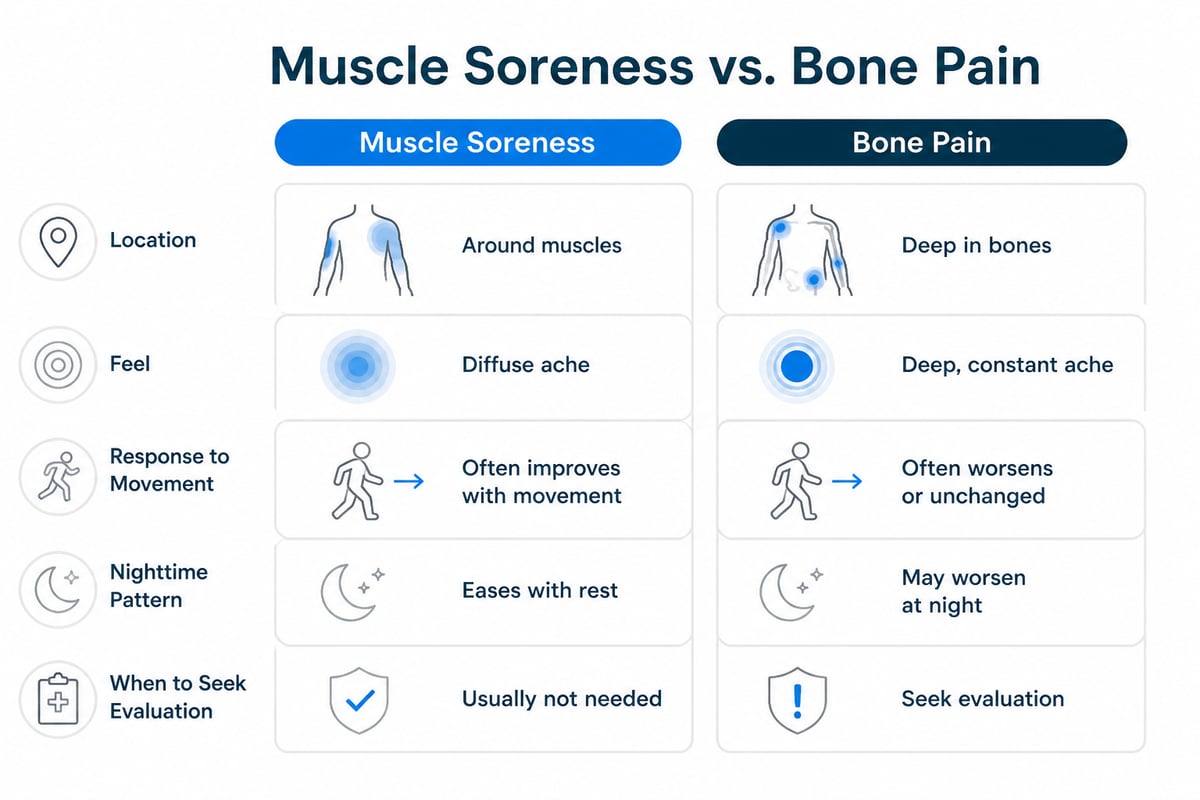
Bone pain typically feels deep, dull, and constant, and it often worsens at night or with pressure on the bone, while muscle soreness tends to ease with gentle movement and warmth.
Telling the two apart matters because bone pain has a different set of possible causes, including fractures, infection, bone loss, and in rare cases tumors or blood disorders. Signs that point toward bone rather than muscle include:
- Pain localized to one spot on a bone that is tender to direct pressure
- Aching that persists at rest or wakes you from sleep
- Pain accompanied by unexplained weight loss, fever, or a history of fracture
- Swelling or warmth over a bone
Any of these warrants prompt medical evaluation. Imaging and blood work can usually clarify the source quickly.
When Should Chronic Soreness Be Evaluated by a Physician?
You should see a physician when soreness lasts beyond three months, interferes with sleep or work, or arrives with warning signs such as fever, weakness, or unexplained weight loss.
Seek care sooner if you notice:
- Sudden severe pain after a fall or injury
- Numbness, tingling, or progressive weakness in an arm or leg
- Dark urine along with severe muscle pain, which can signal muscle breakdown
- Loss of bladder or bowel control
- Pain paired with fever, rash, or swelling of a joint
A thorough evaluation typically includes a detailed history of when the pain began and what changes it, a physical examination, and targeted testing. Because persistent pain often involves several overlapping factors, a clinician experienced in primary care internal medicine is well positioned to look at the whole picture rather than one body part in isolation.
What Are Some Ways to Treat Unexplained Muscle Pain in the Arms and Legs?
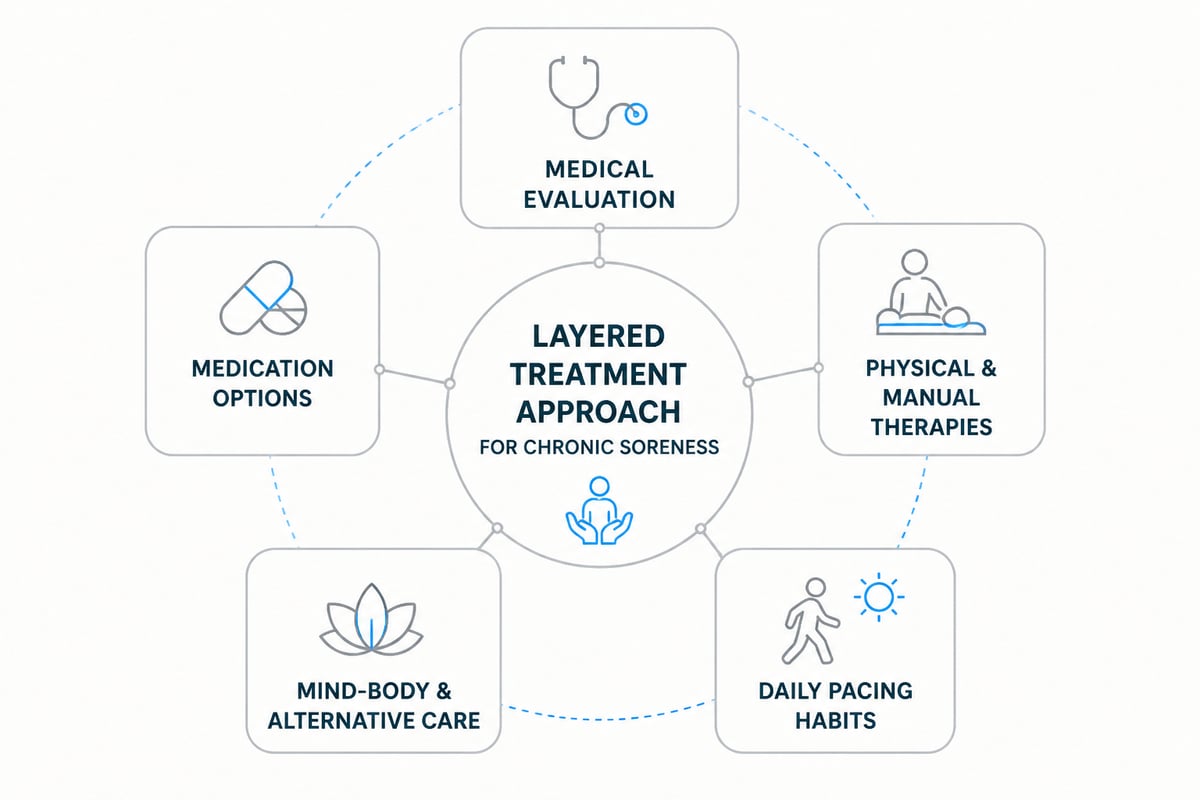
Unexplained muscle pain in the arms and legs is best treated by first ruling out medical causes, then combining gentle movement, targeted therapy, and, when needed, medication tailored to the likely mechanism.
A sensible sequence looks like this:
- Rule out contributors. Review medications, check for vitamin D deficiency and thyroid problems, and consider whether a pinched nerve in the neck or lower back could be referring pain to the limbs.
- Restore graded activity. Walking, stretching, and light strengthening, increased slowly, often reduce soreness over several weeks.
- Address trigger points and tight tissue. Physical therapy, massage, dry needling, and trigger point injections can release localized knots.
- Support sleep. Poor sleep lowers pain tolerance, so treating insomnia or sleep apnea can reduce soreness itself.
- Consider medication. Options depend on the cause and may include anti-inflammatories for inflammatory pain or nerve-targeted medications when neuropathic features are present.
When one approach alone has not been enough, combining several tends to work better than escalating a single treatment.
Medical Treatment Options for Chronic Soreness
Medical treatment for chronic soreness works best as an individualized combination of medication, hands-on therapy, and, where appropriate, interventional or alternative care.
Common categories include:
- Anti-inflammatory medications such as NSAIDs, useful when inflammation is a driver but limited by stomach, kidney, and cardiovascular risks with long-term use
- Nerve-modulating medications such as gabapentin-class drugs or topiramate, sometimes used when pain has a neuropathic component
- Buprenorphine, a partial opioid agonist sometimes used for persistent pain with a lower risk profile than full opioids
- Trigger point injections for localized muscle knots
- Physical therapy, chiropractic care, and physiatry to restore mechanics and strength
- Acupuncture and counseling-based therapies, including mind-body approaches that target the pain-processing side of the problem
- Dietary therapies aimed at inflammation and metabolic health
For adults in State College and central Pennsylvania whose current medications are no longer enough, the Chronic Pain Management Program at Pain & Recovery Medical Centre brings several of these options together under one plan. The treatment team provides compassionate, judgment-free care and builds each plan around the patient's needs, integrating conventional and alternative treatments. Dr. Paul Simpson, who practices Internal Medicine and has more than 35 years of experience in primary care, oversees care. Patients should confirm directly with the practice how payment and prescribing are handled.
Can Medical Marijuana Help With Chronic Soreness in Pennsylvania?
Medical marijuana can be an option for Pennsylvania adults whose chronic soreness is tied to a qualifying serious medical condition, and it requires certification by a registered physician.
Pennsylvania's program is condition-based, which means a physician must determine that you have a qualifying diagnosis, such as chronic or intractable pain, before certifying you. Some patients find it useful when conventional medications have stopped working or cause side effects they cannot tolerate. Evidence on benefit varies by condition and product, so it is best viewed as one tool within a broader plan, not a replacement for movement, sleep, and other care.
Pain & Recovery Medical Centre offers medical marijuana services as part of an integrated approach. To learn whether your situation may qualify, a consultation is the right starting point; the practice's contact page lists how to reach the team.
How Can You Control Pain Mentally?
You can reduce the intensity and distress of pain by training attention, calming the nervous system, and changing how you respond to flare-ups, though these methods work alongside medical care and do not replace it.
Because chronic pain involves the brain's processing of signals, mind-based strategies have a physical effect. Approaches with practical support include:
- Diaphragmatic breathing, which lowers muscle tension and stress arousal
- Mindfulness practice, which can reduce how threatening the pain feels
- Cognitive behavioral techniques, which challenge catastrophic thoughts such as "this will never improve"
- Graded exposure to activity, which rebuilds confidence in moving
- Consistent sleep routines, which improve pain tolerance the next day
Counseling with a clinician familiar with pain can accelerate these skills. Treating the emotional side is not an admission that the pain is imagined; it addresses a real pathway that amplifies physical symptoms.
Daily Habits That Reduce Flare-Ups
Daily habits that reduce flare-ups center on pacing, steady movement, sleep, and stress management, because consistency matters more than intensity.
NHS inform advises balancing activity by pacing and spacing tasks, and notes that staying active within realistic limits can support both physical and mental health. Pacing is the skill that separates good days from payback days.
A practical routine might include:
- Break tasks into segments. Work for 20 to 30 minutes, then change position or rest briefly, before pain forces you to stop.
- Set a baseline. Find the amount of walking or activity you can do on a bad day, and build from that number by small steps instead of overdoing it on good days.
- Move every hour. Short stretching breaks interrupt the muscle guarding that builds during long sitting.
- Apply heat for stiffness and cold for acute flare-ups, whichever your body responds to.
- Protect sleep. Keep a regular schedule and limit screens and caffeine late in the day.
- Track patterns. A simple log of sleep, stress, activity, and pain often reveals triggers worth discussing with your physician.

What Are the Most Painful Conditions, and Where Does Chronic Soreness Fit?
Conditions most often ranked among the most painful include cluster headaches, kidney stones, trigeminal neuralgia, and complex regional pain syndrome, while chronic soreness tends to be less intense but more constant and wearing.
Intensity is only one measure. A condition producing moderate soreness every day for years can reduce quality of life as much as a brief episode of severe pain. That is why treatment goals for persistent soreness focus on function: sleeping through the night, returning to work, walking the dog, or playing with grandchildren, not only on lowering a number on a pain scale.
FAQ
Is chronic soreness a sign of something serious?
Usually it reflects overuse, stress, or a manageable condition, but it can occasionally signal an underlying illness. Pain lasting over three months, or paired with fever, weakness, weight loss, or night pain, should be evaluated by a physician.
Can stress alone cause ongoing muscle soreness?
Yes. Sustained stress keeps muscles tense and heightens the nervous system's pain sensitivity, which can produce real, measurable soreness even without tissue damage. The Mayo Clinic lists stress among common causes of muscle pain.
Is rest or exercise better for chronic soreness?
Gentle, graded exercise generally helps more than prolonged rest, because inactivity weakens muscles and increases stiffness. Start below your limit, increase slowly, and adjust with guidance from a clinician.
If your soreness has outlasted your current medications, start by writing down when it began, what makes it better or worse, and every treatment you have tried, then bring that record to a medical visit. Pain & Recovery Medical Centre specializes in treating patients with chronic pain through programs designed to improve quality of life and promote independence, with services that include medical marijuana certification, chronic pain management, and substance dependence treatment, all tailored to individual needs. You can learn how the Chronic Pain Management Program combines these approaches, and if you are ready to talk with the team, Pain & Recovery Medical Centre is available when you call now to schedule a consultation.