

The best way to find a chronic pain therapist near you is to match the type of provider to the kind of pain you have, then confirm that the clinic offers a treatment plan built around your history rather than a single prescription. For adults in State College and central Pennsylvania whose medication no longer controls their pain, that usually means looking beyond one specialty and asking how a practice combines medical, physical and behavioral approaches.
Searching for a chronic pain therapist near me can return a confusing mix of psychologists, physical therapists, pain physicians and integrative clinics. Each plays a different part. This article explains who does what, how to evaluate a provider before the first visit, which questions reveal the most, and how to plan for the practical hurdles of care in a mostly rural region.
What a Chronic Pain Therapist Actually Does
A chronic pain therapist is any licensed professional who helps you manage pain that has lasted longer than three months, and the title covers several distinct disciplines. Knowing the differences keeps you from spending months with a provider whose training does not fit your problem.
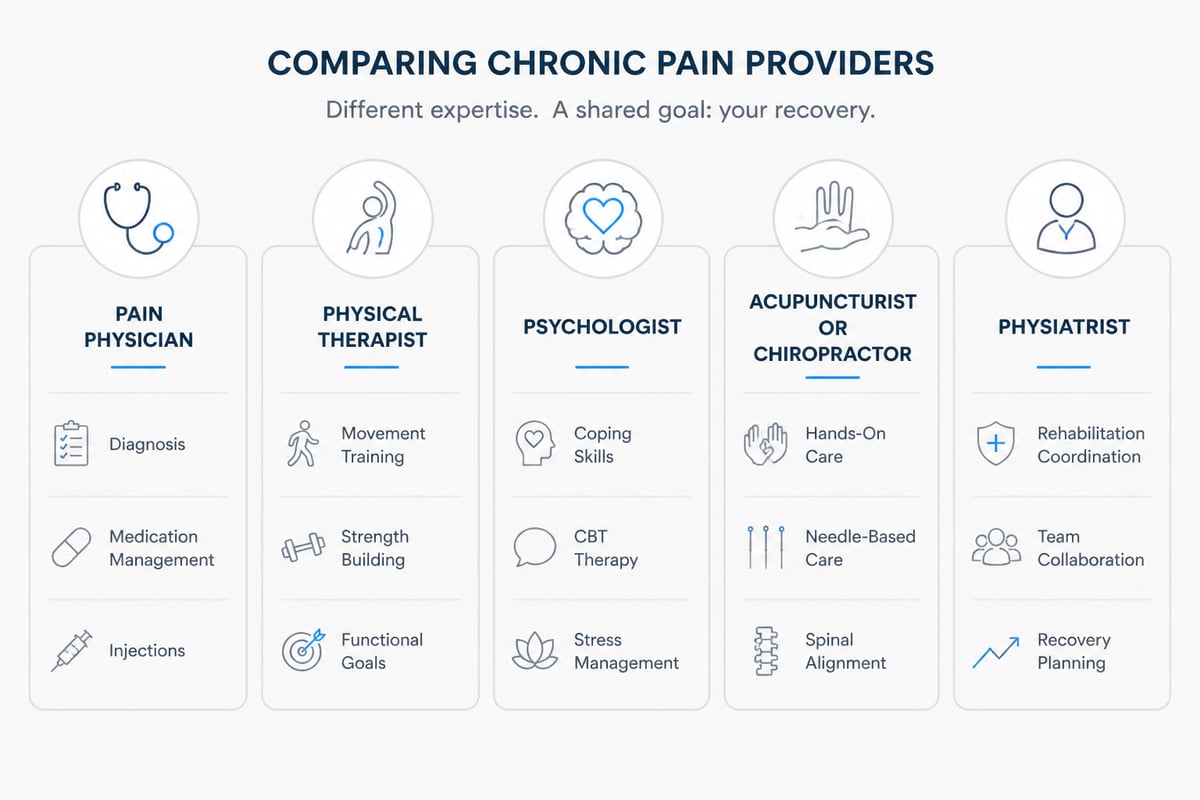
The most common types include:
- Pain medicine physicians evaluate the source of pain, order testing, prescribe medication and perform procedures such as trigger point injections.
- Physical therapists build strength, mobility and movement tolerance through guided exercise and manual treatment.
- Psychologists and counselors teach pain coping skills, address the stress and low mood that often accompany persistent pain, and use approaches such as cognitive behavioral therapy.
- Acupuncturists and chiropractors offer hands-on or needle-based treatment, often as part of a broader plan.
- Physiatrists specialize in physical medicine and rehabilitation, coordinating function-focused care.
Chronic pain rarely responds to one tool. When medication alone has stopped working, the next step is usually a coordinated plan that adds movement, mental health support and sometimes procedures. A good provider will say so plainly and explain which pieces they deliver themselves and which they refer out.
Why Medication Alone Often Stops Working
Medication can lose effectiveness for chronic pain because the nervous system itself changes over time, and prescriptions that target tissue damage may not address pain that has become a condition in its own right. Tolerance, side effects and the sheer complexity of long-term pain all contribute.
Cost is another pressure. The CDC reports that in 2023, 27.9% of adults with chronic pain reported at least one cost barrier for prescription medications, compared with 15.3% of adults without chronic pain. For many central Pennsylvania residents, the search for a therapist is partly a search for a more sustainable approach, one that does not depend on an ever-growing list of prescriptions.
If you have noticed that a medication helps less than it once did, or that side effects now outweigh the relief, that is useful information to bring to any provider. Our overview of pain meds for pain covers how different medication classes work and where they fall short.
How to Search for a Chronic Pain Therapist Near Me in Central Pennsylvania
Start with the provider type that matches your main problem, then narrow by location, payment model and treatment philosophy. A structured search saves weeks compared with calling every listing you find.
- Define your primary pain problem. Back pain, nerve pain, widespread pain and headache respond to different mixes of care. Write down where it hurts, how long it has lasted and what you have already tried.
- Search by specialty and town. Try terms such as pain management, physiatry or pain psychology paired with State College, Bellefonte, Lewistown or Altoona.
- Check licensure. Physicians can be verified through the Pennsylvania Department of State license lookup, and board certification adds a further layer of confidence.
- Confirm the payment model before booking. Some practices bill insurance, while others operate on a self-pay basis. Learn this on the first call so there are no surprises.
- Ask how the practice builds a plan. Look for language about individualized treatment rather than a standard protocol applied to everyone.
Rural geography matters here. In a region with long drives between towns, a practice that can handle several treatment types under one roof cuts down on travel. For a broader look at what to expect from local programs, see our guide to chronic pain management near me.
Questions to Ask Before Your First Appointment
The questions you ask on the phone and in the first visit reveal more about a provider than a website does. Bring a short list and listen for specific, unhurried answers.
Questions About Approach
- How do you decide between medication, procedures and non-drug therapies?
- Do you treat the whole person, including sleep, stress and daily function?
- What does a typical first visit involve, and how long does it take?
Questions About Practicalities
- What are the visit costs, and do you accept insurance or work on a self-pay basis?
- How often will I be seen, and how are prescriptions handled?
- Who coordinates referrals if I need physical therapy or counseling?
Questions About Fit
- How do you measure progress beyond a pain score?
- What happens if the first plan does not work?
- Will I have input into decisions about my treatment?
That last question matters more than it may seem. The CDC found that among adults receiving care for chronic pain in 2023, 69.5% said their provider asked their opinions or beliefs about pain treatment. If a provider never asks what you think about your own care, treat that as a signal.

Signs of a Good Match
A good match shows up as respect, careful listening and a plan that makes sense to you. Most patients already know these qualities when they see them, and the data supports it as the baseline to expect.
Among adults with chronic pain receiving medical care in 2023, 89.6% said their provider usually or always treated them with respect, and 89.5% said their provider listened carefully. If your own experience falls short of that, you are within your rights to look elsewhere.
Watch for these positive indicators:
- The provider reviews your full history, including prior treatments that failed.
- You leave the visit able to explain the plan in your own words.
- Goals focus on function, such as walking farther, sleeping through the night or returning to work, rather than only a lower number on a pain scale.
- Care is delivered without judgment, including when the conversation turns to medication use or past substance concerns.
Warning signs include rushed visits, a one-size-fits-all prescription, pressure to commit to expensive procedures at the first appointment, and dismissiveness about your reported symptoms.
What a Coordinated Program Looks Like
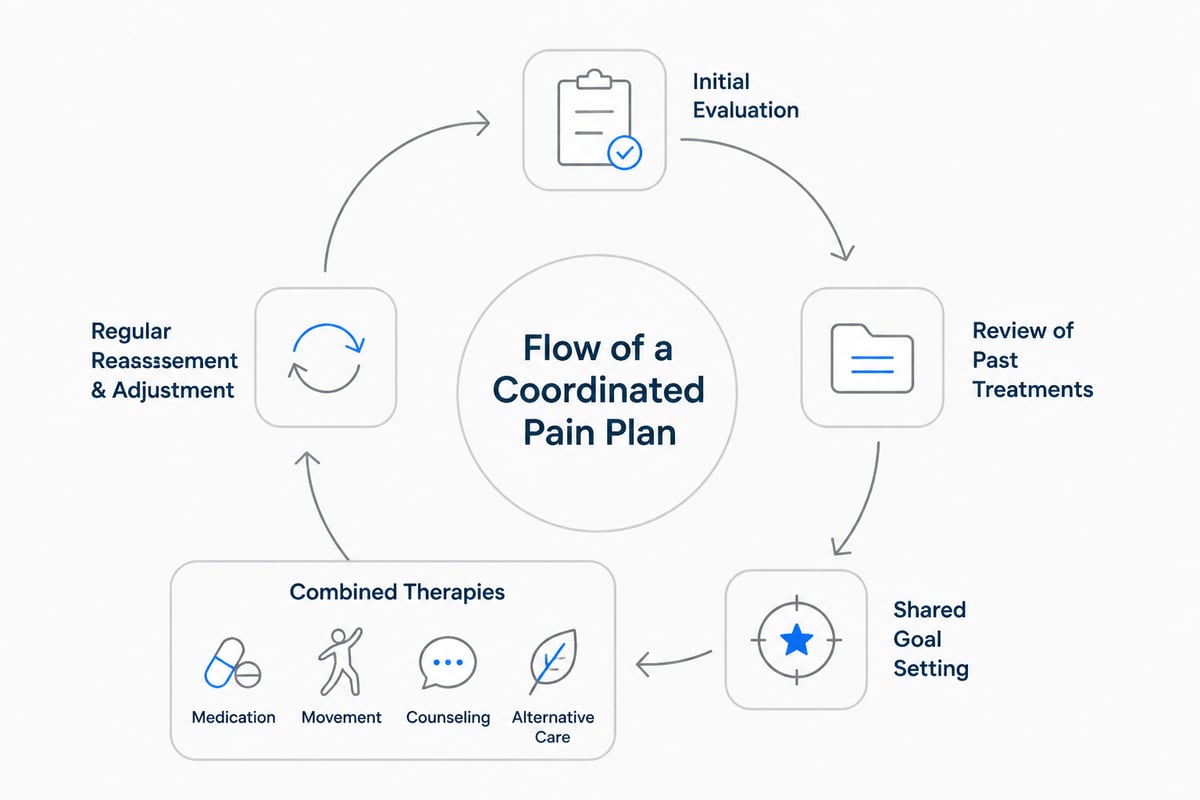
A coordinated program combines several treatment types under one plan, so you are not managing separate providers who never speak to one another. For people whose pain has outlasted a single prescription, this is often the structure that finally changes the trajectory.
Pain & Recovery Medical Centre offers this kind of approach through its Chronic Pain Management Program, which serves Pennsylvania adults aged 18 and older. Treatment may involve medications such as buprenorphine, NSAIDs, gabapentin-class medications or topiramate, alongside counseling, acupuncture, physical therapy, chiropractic treatment, mind-body therapies, physiatry, trigger point injections and dietary therapies. The center integrates proven conventional and alternative treatments, including medical marijuana, and its treatment is individualized to each patient. Prescribing is done electronically, as Pennsylvania law requires.
The clinical leadership is worth knowing about as well. Dr. Paul Simpson has over 35 years of practice experience in primary care Internal Medicine, and the treatment team provides compassionate, judgment-free care. You can read more on the about page.
One practical point: Pain & Recovery Medical Centre does not accept insurance plans, and it does not prescribe controlled substances other than buprenorphine. If you need insurance-billed care, a different type of practice will serve you better. For specific questions about visits and costs, the contact page is the right place to start.
Matching Treatment to Your Type of Pain
Different pain conditions call for different combinations of care, and a therapist should be able to explain why a given mix fits you. Here is how common patterns tend to map to treatment.
| Pain pattern | Often useful elements | Why |
|---|---|---|
| Chronic low back or neck pain | Physical therapy, chiropractic care, trigger point injections | Targets muscle, joint and movement contributors |
| Nerve-related pain | Gabapentin-class medication, topiramate, physiatry | Addresses nerve signaling |
| Widespread or sensitized pain | Counseling, mind-body therapy, graded activity | Works on how the nervous system processes pain |
| Pain with disrupted sleep or mood | Counseling, dietary therapy, medication review | Treats the cycle linking pain, sleep and stress |
Back pain deserves its own attention because it drives so many searches. If your pain persists even though imaging looks normal, the discussion of neuroplastic pain treatment describes how the brain's role in pain is addressed.
Planning for Cost, Travel and Follow-Through
Practical planning determines whether treatment actually continues, so settle cost and logistics before you commit. In central Pennsylvania, distance and payment model are the two factors that most often derail care.
Consider these steps:
- Ask for the full cost picture. Request visit fees and any add-on costs for injections or complementary therapies in advance.
- Map the drive. A weekly appointment forty minutes away is harder to sustain than a monthly one. Ask which parts of the plan can be done at home.
- Use records to your advantage. Bring prior imaging, medication lists and notes on what helped or failed.
- Track function, not just pain. A simple weekly log of sleep, activity and mood gives your therapist better information than a single daily number.
- Set a review date. Agree at the first visit when you will reassess whether the plan is working.
Seeking care is common but far from universal. Many adults with chronic pain are not receiving medical care for it at any given time, often for the reasons above.
If you want to understand how others adapt day to day while treatment takes hold, our resource on living with pain offers practical perspective.
Your next step is simple: write down your pain history, the treatments that have stopped working, and your top three questions, then use that list on a call to any provider you are considering. If you want a practice that builds an individualized plan combining conventional and alternative care, Pain & Recovery Medical Centre can talk through your situation, so call now to learn whether its approach fits you. The team specializes in treating chronic pain, with programs designed to improve quality of life and promote independence, and its Chronic Pain Management Program is a good place to see how that care is structured.