
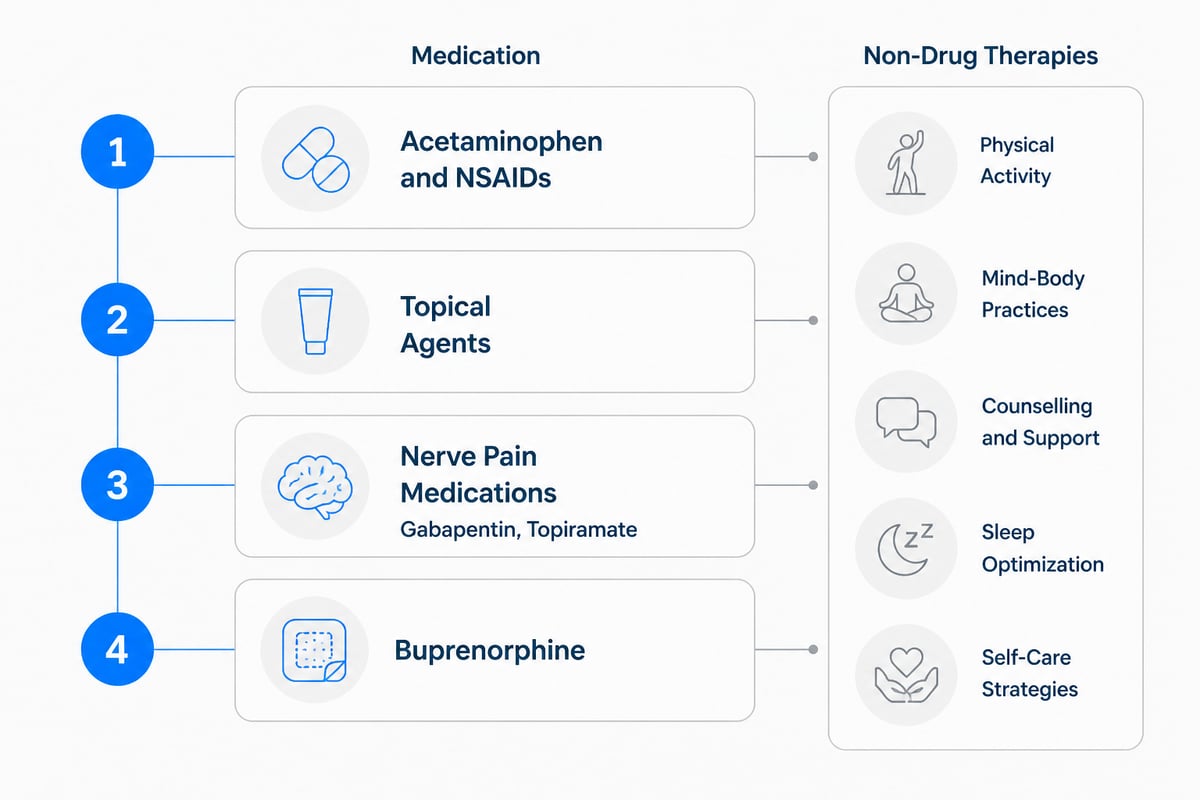
The main meds for pain management fall into six groups: acetaminophen, NSAIDs, topical agents, nerve pain medications, opioid-based options such as buprenorphine, and medical marijuana where state law allows. Each group works on a different part of the pain process, so the right choice depends on whether your pain is short-term or chronic, where it comes from, and what other conditions or medicines you already have. This guide explains how each option works, the safety limits that matter, and what to do when medication alone is no longer enough.
How Do Pain Medications Work?
Pain medications work by interrupting pain signals at different points: at the site of injury, along the nerves, or in the brain and spinal cord. Understanding which point a drug targets explains why one medicine helps a sprained ankle and another is needed for burning, tingling nerve pain.
Pain also comes in different types, and the type guides the drug:
- Nociceptive pain comes from tissue damage or inflammation, such as arthritis or a strained back muscle.
- Neuropathic pain comes from damaged or irritated nerves and often feels like burning, shooting, or electric shocks.
- Mixed pain combines both, which is common in long-standing back and joint conditions.
Chronic pain, defined as pain lasting more than three months, often involves changes in how the nervous system processes signals. That is one reason medicines that work well for acute injuries can lose effectiveness over time.
Over-the-Counter Options: Acetaminophen and NSAIDs
Acetaminophen and NSAIDs are common first choices for mild to moderate pain, and both are available without a prescription. They differ in how they work and in the risks they carry.
Acetaminophen (paracetamol outside the United States) reduces pain and fever but has little effect on inflammation. It is generally gentler on the stomach than NSAIDs, but the liver is the concern. The NHS guidance on paracetamol states that adults taking 500 mg tablets can take one to two tablets per dose, leave at least 4 hours between doses, and take no more than 8 tablets in 24 hours. Many cold remedies and prescription pain products also contain acetaminophen, and MedlinePlus warns that combining more than one acetaminophen-containing product can lead to accidental excess.
NSAIDs (nonsteroidal anti-inflammatory drugs) include ibuprofen, naproxen, and aspirin. They reduce both pain and inflammation, which makes them useful for arthritis, sprains, and muscle pain. According to the NHS guidance on ibuprofen, adults taking 400 mg tablets can take one tablet up to three times a day, with at least 4 hours between doses, and should not take more than 3 tablets in 24 hours.
NSAIDs carry a different risk profile:
- Stomach irritation and ulcers, especially with long-term use
- Elevated blood pressure and added strain on the kidneys
- Increased bleeding risk, particularly alongside blood thinners
- Possible cardiovascular risk with prolonged high-dose use
Over-the-counter products are designed for short-term use. NHS inform advises speaking to a pharmacist if you still need pain relief after 4 days. If you are reaching for the same bottle week after week, that is a signal to have your pain evaluated rather than simply taking more.
Topical Pain Relievers for Local Pain
Topical pain relievers deliver medication through the skin to a specific area, which lowers the amount that reaches the rest of the body. They suit pain that is concentrated in one joint, muscle, or small region.
Common topical options include:
- Topical NSAIDs such as diclofenac gel, useful for knee and hand arthritis.
- Lidocaine patches or creams, which numb the area and help with localized nerve pain.
- Capsaicin cream, which reduces pain signaling over repeated use but can cause initial burning.
- Menthol and methyl salicylate products, which provide a counterirritant sensation.
Because less drug enters the bloodstream, topical agents can be a sensible addition for some people who cannot tolerate oral NSAIDs. They are often not sufficient alone for widespread chronic pain, but they can pair well with other approaches.
Prescription Medications for Chronic and Nerve Pain
Prescription meds for pain management expand the toolkit when over-the-counter products stop working or when the pain is nerve-related. These medications are chosen for the pain mechanism, not simply for strength.
Gabapentin Class Medications
Gabapentin and pregabalin calm overactive nerve signaling. They are commonly prescribed for neuropathic pain, including diabetic neuropathy, nerve pain after shingles, and some radiating back and leg pain. Drowsiness and dizziness are the most common side effects, and doses are typically raised gradually to limit them.
Topiramate
Topiramate (Topamax) is an anticonvulsant used for migraine prevention and, in some patients, for other chronic pain conditions. It affects nerve excitability and can be helpful when other agents have not worked. Possible side effects include tingling in the hands, difficulty with word-finding, and appetite changes, so ongoing monitoring matters.
Antidepressants and Muscle Relaxants
Certain antidepressants, including duloxetine and amitriptyline, can reduce pain through their effect on pain-modulating pathways, independent of any effect on mood. Short courses of muscle relaxants can help with acute spasm, though they are not meant for long-term daily use.
Buprenorphine
Buprenorphine is a partial opioid agonist. Because it activates opioid receptors less fully than traditional opioids, it is generally associated with a lower risk of respiratory depression. It can be a practical option for people whose chronic pain overlaps with opioid dependence, since it addresses both concerns in one medication. Prescribing of controlled medications in Pennsylvania is done electronically, as state law requires.
Why Opioids Are No Longer a Default Choice
Traditional opioids such as oxycodone and hydrocodone are now reserved for specific situations, because long-term use brings tolerance, dependence, and in some patients a heightened sensitivity to pain called opioid-induced hyperalgesia. For most chronic conditions, the risks over months and years outweigh the benefits.
That shift does not mean pain should go untreated. It means treatment plans increasingly combine non-opioid medications with physical, psychological, and procedural therapies. For readers who have been on long-term opioids and want a safer path, the conversation with a physician should cover gradual adjustment, alternatives, and support for any dependence that has developed. The practice's overview of pain management approaches outlines how these pieces fit together.
Medical Marijuana for Chronic Pain in Pennsylvania
Pennsylvania's medical marijuana program allows certified physicians to recommend cannabis products to patients with qualifying conditions, and chronic or intractable severe pain is among them. A patient must be certified by a registered physician before obtaining a state-issued card and purchasing from a dispensary.
Cannabis-based treatment is typically considered when other options have produced limited relief or unacceptable side effects. Evidence is mixed across pain types, so expectations should be realistic. Potential downsides include drowsiness, changes in thinking or coordination, and interactions with other medications, which is why a physician who reviews your complete medication list is valuable.
Dr. Paul Simpson, who has over 35 years of practice experience in primary care Internal Medicine, provides this kind of review at Pain & Recovery Medical Centre, where medical marijuana is integrated alongside conventional treatment instead of being offered in isolation.

Safety Rules That Apply to Every Pain Medication
Safe use of meds for pain management depends on a few habits that apply regardless of which drug you take. These matter most for adults managing pain over months or years.
- Keep a written medication list that includes over-the-counter products, supplements, and cannabis, and bring it to every appointment.
- Check labels for duplicate ingredients, especially acetaminophen in combination products.
- Limit alcohol, which raises liver risk with acetaminophen and stomach bleeding risk with NSAIDs, and can intensify sedation with nerve pain drugs.
- Do not stop gabapentin, topiramate, or buprenorphine abruptly without medical guidance.
- Store medications securely, away from children and visitors.
- Report new symptoms promptly, such as black stools, swelling, confusion, or unusual drowsiness.
Blood pressure, kidney function, and liver health should be monitored when medication is taken regularly. A physician can order periodic checks and adjust the plan before a small problem becomes a large one.
Why Medication Alone Often Stops Working
Medication rarely controls chronic pain on its own, because persistent pain involves the nervous system, muscles, sleep, stress, and mood together. When a drug that once helped seems to fade, the cause is often tolerance, disease progression, or factors medication cannot reach.
Several non-drug therapies address those factors:
- Physical therapy and physiatry restore movement and reduce the guarding that keeps pain cycling.
- Acupuncture and chiropractic care offer relief for some back, neck, and joint conditions.
- Trigger point injections target tight, painful muscle knots directly.
- Counseling and mind-body techniques reduce the stress amplification that makes pain feel worse. The practice discusses this in its article on the psychological management of pain.
- Dietary therapies can reduce inflammation for some patients.

The most effective plans layer these approaches. A modest medication dose paired with physical therapy and counseling frequently outperforms a higher dose of medication alone, with fewer side effects.
Can Chronic Pain Cause Mental Health Issues?
Yes, chronic pain can contribute to depression, anxiety, and sleep disturbance, and the relationship runs in both directions. Living with daily pain wears down mood and coping capacity, while low mood and poor sleep lower the pain threshold and make pain feel more intense.
This is why a thorough pain evaluation includes questions about sleep, mood, and stress. Treating those factors is not a sign that the pain is "in your head." It is part of treating a condition that affects the whole nervous system. Some medications, such as duloxetine, address pain and mood together, and counseling gives patients practical tools for flare-ups.
Choosing a Pain Management Program When Medication No Longer Works
A structured program becomes appropriate when over-the-counter products and a first round of prescriptions have not restored daily function. The goal shifts from eliminating every bit of pain to improving what you can do: walking, working, sleeping, and staying independent.
The Chronic Pain Management Program at Pain & Recovery Medical Centre for Pennsylvania adults (18 and older) uses an individualized combination of medications, such as buprenorphine, NSAIDs, gabapentin class medications, and topiramate, with therapies including counseling, acupuncture, physical therapy, chiropractic treatment, trigger point injections, and dietary approaches. The team offers compassionate, judgment-free care and builds each plan around the patient's own needs and goals.
Practical points to weigh when choosing any program:
- Ask whether the plan combines medication with non-drug therapies.
- Confirm who will prescribe, monitor, and adjust your medications.
- Ask how the program handles dependence concerns, if they apply to you.
- Clarify costs and payment arrangements before the first visit. Contact the practice directly to ask about insurance and payment options.
If your back is the main problem, the practice's article on its chronic back pain clinic explains what a focused evaluation involves.
FAQ
What are some common causes of unexplained pain in the elderly?
Common contributors include arthritis, nerve damage from diabetes, vitamin deficiencies, side effects from medications, and spinal changes such as stenosis. Pain that seems unexplained often has several small causes layered together, so a physician should review medications, run basic lab work, and examine movement before settling on a treatment.
Where can I find support for chronic pain?
Start with your physician or a pain clinic, which can connect you with counseling, physical therapy, and local resources. The resources page at Pain & Recovery Medical Centre collects additional material for patients, and family and community support can make a measurable difference in coping.
Are there any online pain support groups available?
Yes, many nonprofit and patient-run organizations host moderated online groups for chronic pain, often organized by condition such as neuropathy, arthritis, or fibromyalgia. Choose groups with active moderation and avoid any that promote unproven cures or encourage changing prescribed medications without medical advice.
Begin by writing down every pain medication, supplement, and cannabis product you currently use, with doses and how well each one works, so your next appointment starts from accurate information. Pain & Recovery Medical Centre specializes in treating chronic pain through individualized programs that combine proven conventional and alternative care, including medical marijuana services and substance dependence treatment. To see how its Chronic Pain Management Program could fit your situation, reach out through the Pain & Recovery Medical Centre contact page and call now to arrange a consultation with a physician who will listen.