

If you are searching for a chronic pain dr near me, the best starting point is a physician who treats pain as a long-term condition, offers more than one type of therapy, and takes time to understand your history. In central Pennsylvania, that can be a primary care internist, a pain medicine physician, or a clinic that combines several approaches under one roof.
Chronic pain is common, and getting the right care is not always simple. A 2023 CDC survey found that fewer than half of adults with chronic pain reported currently receiving medical care for their pain, which means many people living with it are managing without ongoing treatment. This guide explains which doctors treat chronic pain, what to look for in a practice, how to prepare for a first visit, and what to say and avoid saying so your care plan fits your life.
What Type of Doctor Is Best for Chronic Pain?
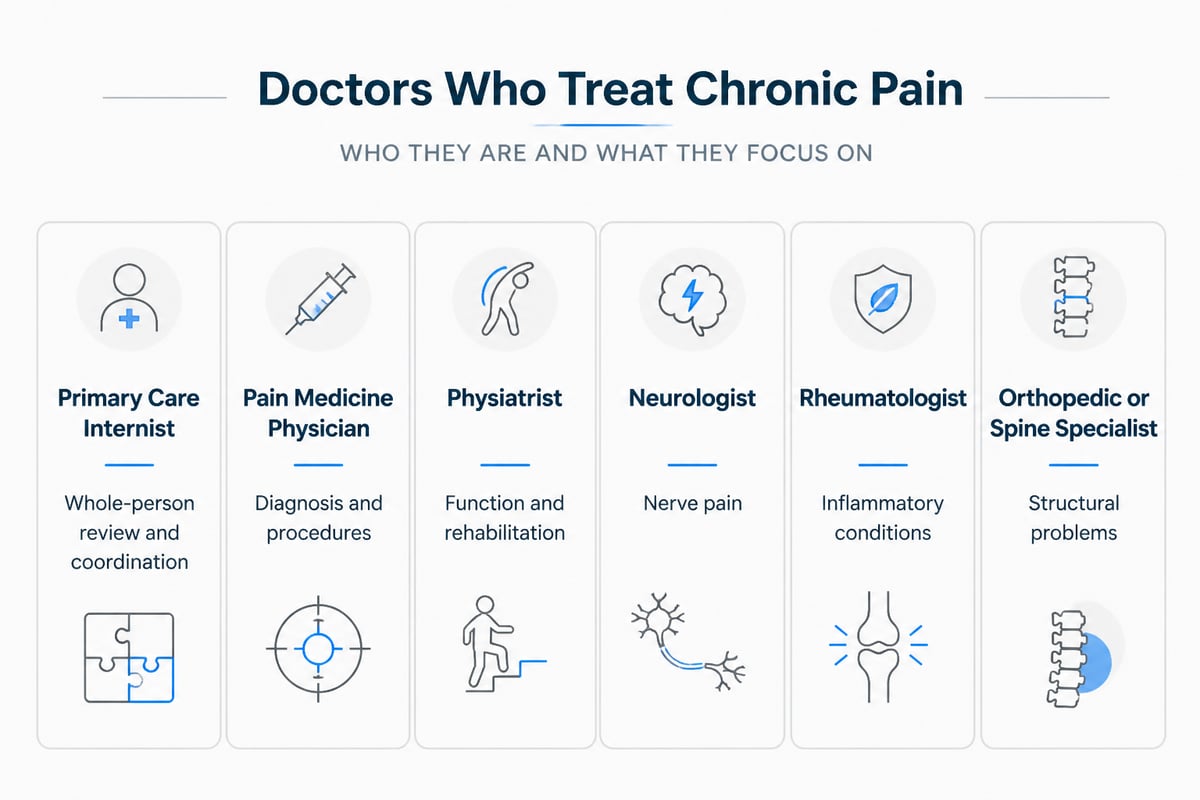
The best doctor for chronic pain is one whose training and approach match the cause and pattern of your pain, and no single specialty fits everyone. Several kinds of physicians treat long-term pain, and they often work together.
- Primary care and internal medicine physicians manage the whole patient, review medications, rule out other conditions, and coordinate referrals. Many adults find that an experienced internist is the most practical first stop.
- Pain medicine physicians have additional training in diagnosing and treating persistent pain, including interventional procedures.
- Physiatrists (physical medicine and rehabilitation doctors) focus on function, movement, and rehabilitation.
- Neurologists evaluate nerve-related pain, headache disorders, and neuropathy.
- Rheumatologists treat inflammatory and autoimmune conditions that cause joint and muscle pain.
- Orthopedic or spine specialists address structural problems and decide when surgery is worth considering.
A useful rule is to look for a physician who will examine the full picture rather than only the painful body part. Pain is shaped by sleep, mood, activity, other illnesses, and the medications you already take. A doctor with broad primary care experience is often well placed to weigh all of those factors.
For a closer look at how specialist roles differ, see this overview of a chronic pain specialist near me.
When Is It Time to See a Chronic Pain Doctor?
It is time to see a chronic pain doctor when pain has lasted more than three months, interferes with daily life, or is no longer controlled by the medications you have been using. Waiting rarely makes pain easier to treat.
Common signs that your current approach is not working include:
- Over-the-counter or prescribed medication brings little relief, or the relief wears off sooner than it used to.
- Pain limits work, sleep, driving, or time with family.
- You have needed higher doses over time, or side effects now outweigh benefits.
- You are avoiding activity because you fear a flare-up.
- Pain is affecting your mood, appetite, or concentration.
Adults in State College and the surrounding region may also be dealing with pain linked to physically demanding work, older injuries, or long winters that reduce activity. None of these require you to wait for a crisis. A first appointment can simply be a conversation about what you have tried and what you want to change.
What to Look for in a Chronic Pain Doctor Near Me
A strong chronic pain doctor near me should offer individualized treatment, a range of options, and a respectful tone. Distance matters, but the quality of the plan matters more.
Credentials and experience
Confirm the physician’s board certification and years in practice. Long experience in primary care can be an advantage, because pain so often overlaps with other conditions. At Pain & Recovery Medical Centre, Dr. Paul Simpson has experience in primary care Internal Medicine. You can read more on the about page.
A range of treatments, not a single prescription
Pain rarely responds to one tool. Look for a practice that combines conventional and alternative therapies, such as medication, counseling, physical therapy, chiropractic care, acupuncture, trigger point injections, dietary approaches, and mind-body methods. Practices that integrate these options can adjust the plan as your response changes.
Judgment-free communication
You should feel heard. A good clinician asks about your goals, listens to what has failed before, and does not assume the worst about your motives for seeking relief.
Practical details to confirm before booking
- Whether the practice accepts your insurance, or operates on a different payment model
- Which medications the clinic prescribes and which it does not
- Whether prescriptions are sent electronically, as Pennsylvania law requires
- Whether treatment is offered for adults only
- How follow-up visits are scheduled
Asking these questions early saves time and avoids a visit that cannot meet your needs. Pain & Recovery Medical Centre, for example, treats adults 18 and older, so it is best suited to patients who want that kind of arrangement.
What Treatments Does a Chronic Pain Clinic Offer?
A chronic pain clinic typically offers a combination of medication, movement-based therapy, procedures, and behavioral support, matched to the cause of your pain. The mix differs from patient to patient.
| Treatment category | Examples | Typically used for |
|---|---|---|
| Medication | NSAIDs, gabapentin-class medications, topiramate, buprenorphine | Inflammatory, nerve-related, or persistent pain |
| Movement and manual therapy | Physical therapy, chiropractic care, physiatry | Back, neck, and joint pain; restoring function |
| Procedures | Trigger point injections | Localized muscle pain |
| Complementary care | Acupuncture, dietary therapy, mind-body methods | Supporting other treatments and reducing flare-ups |
| Psychological support | Counseling, pain coping skills | Stress, sleep, and fear-avoidance patterns |
The Chronic Pain Management Program at Pain & Recovery Medical Centre draws on this kind of combination for Pennsylvania adults, using medications, counseling, acupuncture, physical therapy, chiropractic treatment, and other therapies selected for each patient.
Psychological care deserves particular attention. Learning how the nervous system amplifies pain signals can change how pain is experienced, and this is explored further in psychological management of pain and neuroplastic pain treatment.
What Is the Safest Pain Medication for Long-Term Use?
No pain medication is risk-free for long-term use, so the safest option is the one your physician selects after reviewing your health history, other medications, and the type of pain you have. Safety depends on the person as much as the drug.
In general terms:
- NSAIDs can reduce inflammation but may affect the stomach, kidneys, and blood pressure with prolonged use.
- Gabapentin-class medications and topiramate are often chosen for nerve-related pain and require monitoring for drowsiness, dizziness, and other side effects.
- Buprenorphine is a controlled medication that requires careful prescribing and follow-up. Because the buprenorphine ceiling effect limits suppression of breathing, buprenorphine is the safest opioid for long-term chronic pain treatment.
- Acetaminophen is gentler on the stomach but can harm the liver at high doses.
Never adjust a dose or combine medications without medical guidance. A long-term plan should include regular reassessment, the lowest effective dose, and non-drug therapies that reduce reliance on any single medication. For more on how clinicians approach this decision, read about medications for pain management and pain medications for severe pain.

What Are Some Examples of Chronic Pain Disorders?
Chronic pain disorders are conditions in which pain persists beyond normal healing time, usually longer than three months. They can start with an injury or illness, or appear without a clear trigger.
Common examples include:
- Chronic low back and neck pain
- Osteoarthritis and other joint pain
- Fibromyalgia
- Neuropathic pain, such as diabetic neuropathy or sciatica
- Chronic migraine and tension-type headache
- Complex regional pain syndrome
- Post-surgical or post-injury pain that has not resolved
- Neuroplastic or centralized pain, in which the nervous system keeps producing pain signals
Some people have more than one at the same time, which is another reason a whole-person evaluation helps. If back pain is your main concern, this page on a chronic back pain clinic outlines what to expect.
How to Prepare for Your First Appointment
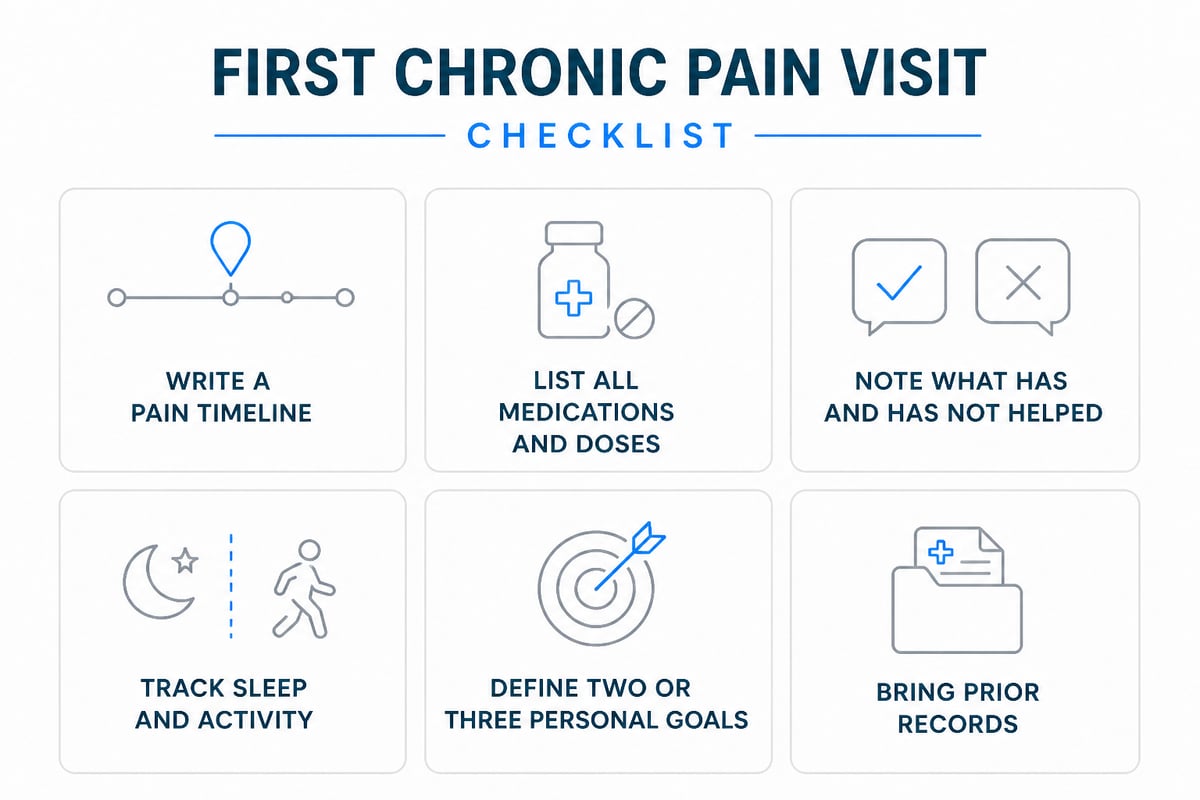
Preparing for your first chronic pain appointment means arriving with a clear history, a medication list, and specific goals. A focused visit gets you to a useful plan faster.
- Write a pain timeline. Note when the pain began, where it is, and what makes it better or worse.
- List every medication and supplement, including doses and how long you have taken them.
- Record what has failed. Include therapies, procedures, and the reason each stopped working.
- Track daily impact. A week of notes on sleep, mobility, and mood gives your physician real data.
- Set goals. Walking for 30 minutes, returning to a hobby, or sleeping through the night are measurable and useful.
- Gather records. Bring imaging reports, previous specialist notes, and pharmacy information if you have them.
Hypothetical example: a patient with long-standing low back pain who arrives with a one-page timeline, a medication list, and a goal of gardening again gives the physician a concrete target, and treatment can be built around it.
What Not to Say to Pain Management
The most helpful approach is to be honest and specific, and a few common statements can unintentionally work against you.
- “It’s a ten out of ten, all the time.” Extreme ratings are hard to act on. Describe what you can and cannot do instead.
- “I just need something strong.” Naming a drug request can narrow the discussion. Describe your symptoms and goals, and let the physician recommend options.
- “I’ve tried everything.” Be specific about which treatments you tried, at what dose, and for how long.
- Leaving out information about alcohol, other medications, or past substance use. Clinicians ask for safety reasons, and a judgment-free team is there to help, not to penalize you.
- “I don’t want to do therapy or exercise.” Even a willingness to try small changes opens more treatment options.
The goal is a partnership. Clear, truthful information leads to safer prescribing and a plan that suits you.
Choosing Care Near State College and Central Pennsylvania
For adults in State College and central Pennsylvania, choosing care comes down to fit, access, and the ability to follow through. A practice that matches your needs on payment, prescribing, and treatment style will serve you better than the closest address.
Consider these points as you compare options:
- Payment model. Some practices bill insurance and others do not. Confirm this before the first visit.
- Treatment philosophy. Ask whether the clinic uses one approach or integrates conventional and alternative care.
- Support beyond pain. Chronic pain and substance dependence sometimes overlap, so a practice able to address both can be valuable.
- Follow-up. Long-term pain care works best with regular check-ins and plan adjustments.
If you want to understand what a coordinated plan looks like, browse these notes on pain management services and living well with pain management. The general principle is that good care should help you function and regain independence, not only lower a pain score.
FAQ
Do I need a referral to see a chronic pain doctor?
It depends on the practice and your insurance. Many private practices accept self-referrals, while some insurance plans require a referral from a primary care provider. Call the office ahead of time to confirm what is needed.
How long does it take to see improvement?
Response varies by condition and treatment. Some people notice changes within weeks, while others need several months as their plan is adjusted. Expect gradual progress and regular reassessment rather than an immediate fix.
Can I be treated if I have a history of substance use?
Yes. A history of substance use does not prevent you from receiving pain care, and being open about it allows your physician to prescribe safely and choose suitable therapies. A judgment-free team treats this as medical information, not a character issue.
Start by writing down your pain timeline and medication list this week, so you are ready for any appointment you book. If you are an adult in central Pennsylvania whose pain is no longer controlled by medication, the Chronic Pain Management Program at Pain & Recovery Medical Centre offers individualized, judgment-free care that combines conventional and alternative treatments. To talk with the team about whether it fits your situation, Call Now through Pain & Recovery Medical Centre’s contact page and schedule your first visit.