

Chronic nerve pain is best relieved by a combination of treatments, not a single fix: nerve-targeted medications, interventional procedures, physical therapy, and attention to sleep and mood, matched to the cause of your pain. For adults whose current medication no longer controls symptoms, the path forward usually involves changing the medication strategy, adding a procedure or complementary therapy, or both.
Nerve pain, also called neuropathic pain, behaves differently from the pain of a sprain or a sore joint. It often feels burning, shooting, stabbing, or electric, and it can appear without any obvious injury. That difference is why ordinary pain relievers frequently fall short and why a different set of tools is needed.
What Causes Chronic Nerve Pain?
Chronic nerve pain results from damage to, or dysfunction of, the nervous system, and the most common sources are diabetes, spinal nerve compression, shingles, injury, and surgery.
Typical causes include:
- Diabetic neuropathy, where prolonged high blood sugar damages small nerve fibers, usually in the feet and hands
- Radiculopathy, including sciatica and pinched nerves in the neck or lower back
- Postherpetic neuralgia, pain that lingers after a shingles outbreak
- Post-surgical or post-traumatic nerve injury
- Chemotherapy-related neuropathy
- Trigeminal neuralgia, a severe facial pain condition
- Carpal tunnel and other entrapment syndromes
Symptoms vary, but many patients describe burning or tingling, numbness, sensitivity to light touch (allodynia), and pain that worsens at night. A clear diagnosis matters because the best treatment for a compressed spinal nerve differs from the best treatment for diabetic neuropathy. Diagnosis typically involves a physical examination, a review of medical history, and sometimes nerve conduction studies, blood work, or imaging.
Medications Used for Nerve Pain
Medications remain the first-line approach, but they are specific ones: certain antidepressants and anti-seizure drugs rather than standard over-the-counter painkillers.
The NHS notes that neuropathic pain does not usually improve with common painkillers such as paracetamol and ibuprofen, and that other medicines are often used, usually started at a minimum dose and then increased gradually. The same guidance lists amitriptyline, duloxetine, pregabalin, and gabapentin among the main medicines recommended for nerve pain.
Clinical guidelines from NICE recommend offering a choice of amitriptyline, duloxetine, gabapentin, or pregabalin as initial treatment for adult neuropathic pain, with the exception of trigeminal neuralgia, where carbamazepine is the recommended starting medication.
| Medication class | Examples | Common considerations |
|---|---|---|
| Tricyclic antidepressants | Amitriptyline | Can cause drowsiness and dry mouth; may help sleep |
| SNRI antidepressants | Duloxetine | May cause nausea early on; also addresses mood |
| Gabapentinoids | Gabapentin, pregabalin | Dizziness and sedation possible; dose increased gradually |
| Anticonvulsants | Carbamazepine, topiramate | Used for specific conditions such as trigeminal neuralgia |
| Topical agents | Lidocaine, capsaicin | Useful for localized pain with fewer systemic effects |
Antidepressants and anti-seizure medicines are commonly used for nerve pain, and dosing is typically adjusted over time.
When Medication Stops Working
Reduced benefit over time is common and does not mean you have failed treatment. Options include adjusting the dose, switching classes, combining two medications that work through different mechanisms, or adding a non-drug therapy. A tolerance problem, side effects that outweigh benefit, or an underlying cause that has progressed can each be behind a plateau. A physician who reviews your full history can sort out which applies.
Interventional Procedures for Nerve Pain
When pills alone are not enough, procedures that target the nerve directly can reduce pain for weeks, months, or longer.
Common options include:
- Nerve blocks. An injection of local anesthetic, sometimes with a steroid, near an irritated nerve to interrupt pain signals and help clarify where the pain originates.
- Epidural steroid injections. Used for pain from a compressed or inflamed spinal nerve root.
- Radiofrequency ablation. Heat energy applied to specific nerves to reduce their ability to transmit pain.
- Peripheral nerve stimulation. A small device delivers mild electrical pulses to a targeted nerve. Peripheral nerve stimulation is one option among the procedures used for nerve pain.
- Spinal cord stimulation. An implanted device modulates pain signals traveling through the spinal cord, generally reserved for severe cases after other treatments have been tried.
- Trigger point injections. Helpful when muscle tightness around an irritated nerve adds to the pain.
Candidacy depends on the diagnosis, imaging findings, and how you have responded to earlier treatment. A reasonable expectation is meaningful reduction rather than complete elimination of pain.
Physical Therapy, Movement, and Complementary Care
Movement-based and complementary therapies reduce nerve pain by improving mobility, reducing pressure on irritated nerves, and calming an overactive pain response.
Physical therapy can address the mechanical contributors to nerve pain: posture, muscle imbalance, and restricted joint movement that compress nerves. For pinched nerves in the spine or hips, targeted stretching and strengthening often reduce flare-ups. Gentle, consistent activity such as walking or water exercise also improves circulation to affected nerves, which matters particularly for diabetic neuropathy.
Other options that patients commonly pair with medical treatment include:
- Acupuncture
- Chiropractic care for spinal alignment concerns
- TENS units for short-term symptom relief at home
- Dietary changes, including blood sugar control for diabetic neuropathy and attention to deficiencies such as vitamin B12
- Medical cannabis, where it is legally and clinically appropriate
At Pain & Recovery Medical Centre, Dr. Paul Simpson, who is board certified in Internal Medicine and has over 35 years of practice experience in primary care, integrates proven conventional and alternative treatments, including medical marijuana, into individualized plans. The Chronic Pain Management Program for Pennsylvania adults draws on medications, counseling, acupuncture, physical therapy, chiropractic treatment, trigger point injections, and dietary therapies, selected according to what each patient needs.
How to Relieve a Pinched Nerve in the Buttock
A pinched nerve in the buttock, often involving the sciatic nerve or the piriformis muscle, usually responds to a mix of gentle stretching, activity modification, and, if needed, medical treatment.
Start with the basics. Avoid prolonged sitting, and change positions every 30 minutes. Gentle piriformis and hip stretches, performed slowly and without forcing through sharp pain, can ease pressure on the nerve. Heat before stretching and ice after can help some people. Short-term anti-inflammatory medication may reduce swelling, though it does not treat the nerve pain itself.
Seek medical evaluation if the pain persists beyond a few weeks, spreads down the leg with weakness, or comes with numbness. Sudden loss of bladder or bowel control, or progressive leg weakness, requires emergency care. Persistent cases may benefit from physical therapy, a nerve block, or an epidural injection, depending on the source.

Can Depression Worsen Nerve Pain?
Yes, depression can worsen nerve pain, and the relationship runs in both directions: persistent pain increases the risk of depression, and low mood amplifies how intensely the brain registers pain.
Pain and mood share overlapping neural pathways and chemical messengers, including serotonin and norepinephrine. That overlap is one reason duloxetine and amitriptyline can relieve nerve pain even in people who are not depressed. When depression is present, treating it can lower pain intensity and improve the ability to take part in physical therapy and daily activity.
Counseling approaches such as cognitive behavioral therapy and other mind-body methods teach practical skills for managing pain flares, reducing fear of movement, and breaking the cycle of poor sleep, low mood, and heightened pain. Telling your physician about changes in mood, motivation, or hopelessness is part of pain care, not a separate issue. If you are having thoughts of harming yourself, call or text 988, the Suicide and Crisis Lifeline, at any hour.
How to Sleep With Peripheral Neuropathy
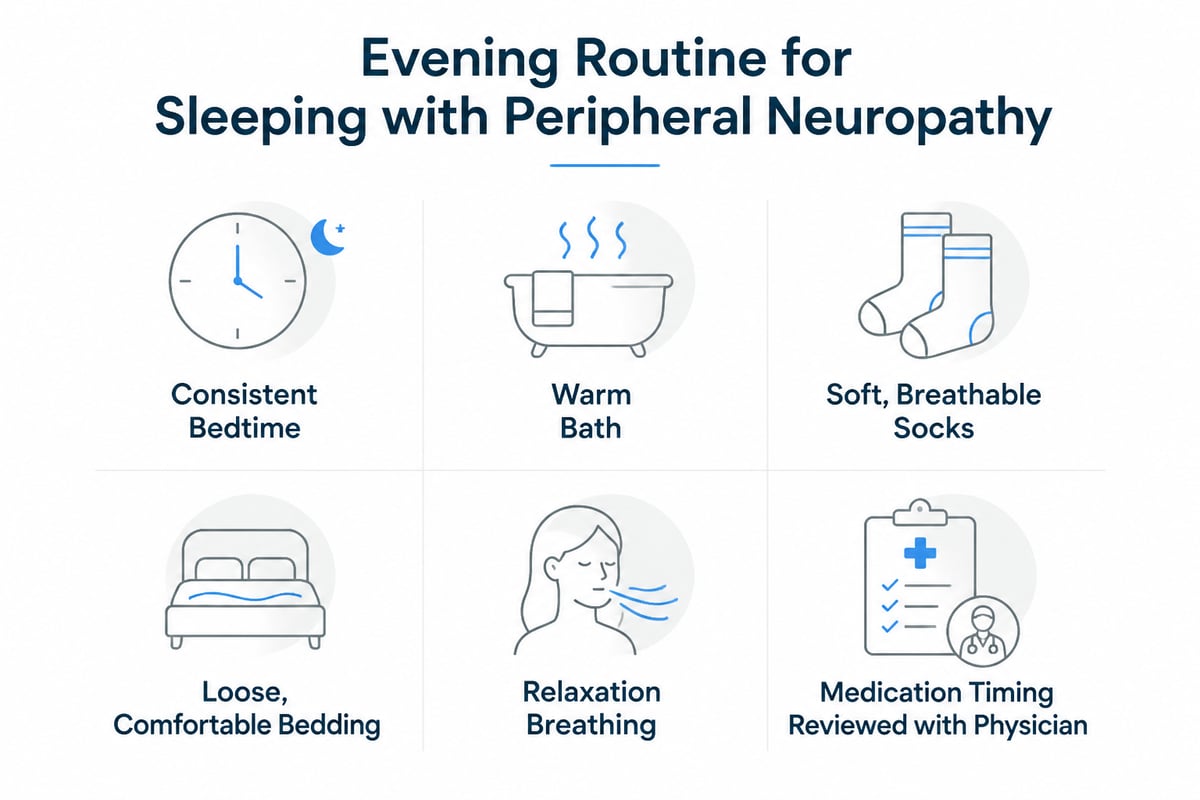
Better sleep with peripheral neuropathy comes from controlling nighttime symptoms, since neuropathic pain often intensifies in the evening when distractions fade.
Practical steps include:
- Keep a consistent bedtime and wake time
- Use loose bedding or a bed cradle if sheets irritate sensitive feet
- Wear soft, breathable socks if your feet feel cold
- Take a warm (not hot) bath before bed; test water temperature with an elbow or thermometer if you have numbness
- Discuss timing of medications with your physician, since some nerve pain drugs cause drowsiness and are often taken in the evening
- Limit caffeine after midday and alcohol near bedtime, which fragments sleep
- Try gentle stretching or relaxation breathing to reduce muscle tension
If pain still prevents sleep, tell your physician. Poor sleep lowers pain tolerance, so treating it is part of treating the nerve pain itself.
Building a Chronic Nerve Pain Relief Plan
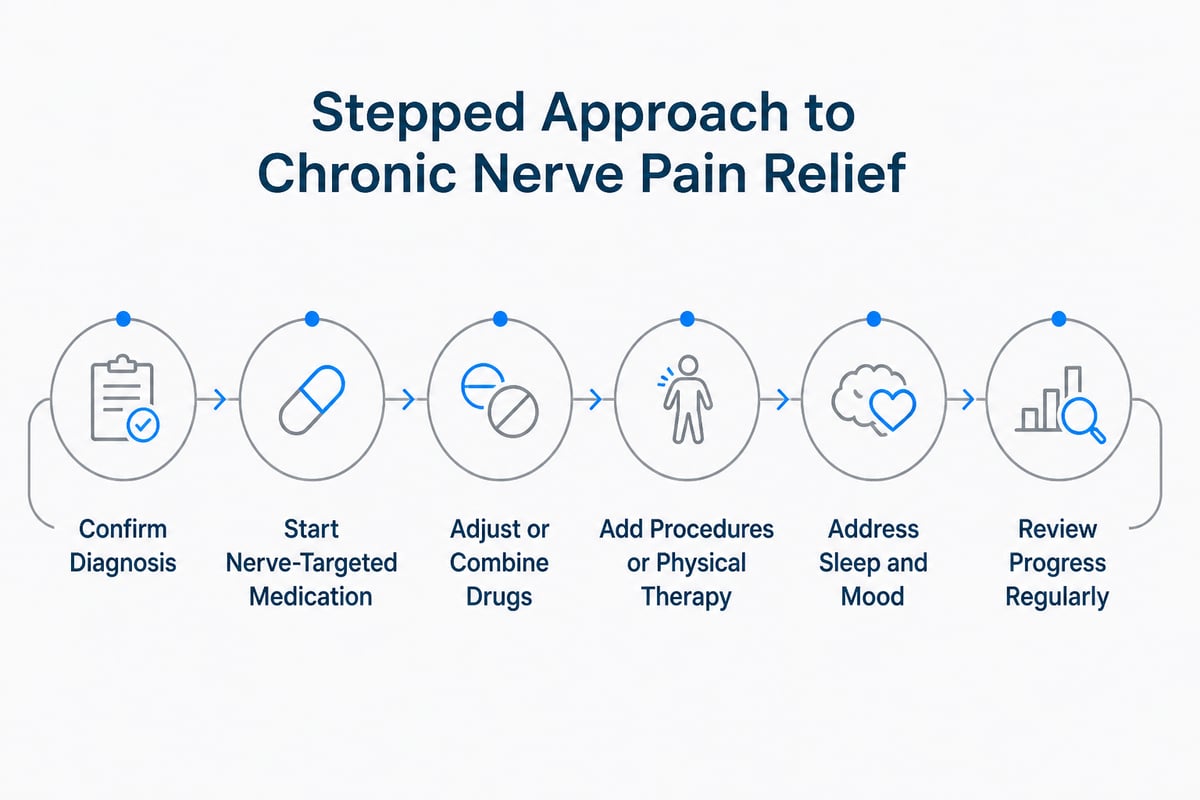
A workable chronic nerve pain relief plan combines a confirmed diagnosis, a clear goal, and a schedule to review what is and is not helping.
Define success in functional terms. Rather than aiming for zero pain, set targets such as walking 20 minutes, sleeping five hours without waking, or returning to a hobby. These goals let you and your physician judge whether a change is working.
Then work through a sequence:
- Confirm the cause and rule out treatable contributors such as blood sugar problems or vitamin deficiencies.
- Start or adjust a nerve-targeted medication at a low dose and increase gradually.
- Add a second layer, such as physical therapy, injections, or a stimulation device.
- Address sleep, mood, and stress directly.
- Reassess every few weeks and change course if there is no meaningful benefit.
Keeping a simple pain diary, noting intensity, triggers, sleep, and medication timing, gives your physician better information than memory alone. Patterns often emerge: pain that peaks after long drives, flares with weather, or worsens during stressful weeks.
Pennsylvania prescribers send prescriptions electronically, as state law requires, which keeps medication records organized across your care. Pain & Recovery Medical Centre provides compassionate, judgment-free care, and its team can explain how a plan would be built around your history. Confirm with the practice how its approach fits your needs before scheduling. You can learn more on its about page and read related guidance on treating chronic pain and managing chronic pain.
FAQ
How to let go of physical pain?
You cannot will pain away, but you can reduce its grip by lowering the fear, tension, and attention that amplify it. Paced activity, relaxation breathing, mindfulness, and counseling all help the nervous system turn down its alarm response, and they work best alongside medical treatment.
How long does it take for nerve pain medication to work?
Most nerve pain medications are started at a low dose and increased gradually, so benefit often builds over several weeks rather than days. Your physician will typically review progress at regular intervals and adjust the dose or switch medications if relief is limited.
Can nerve pain go away on its own?
Some nerve pain, such as that from a mild compression or a recent injury, improves as the nerve heals. Chronic nerve pain that has lasted months usually needs active treatment, since the nervous system can become sensitized and keep sending pain signals after the original problem has settled.
Start today by writing down where your pain is, how it feels, what makes it worse, and which medications you have already tried, then bring that record to a physician who can build a plan around it. Pain & Recovery Medical Centre specializes in chronic pain, offering individualized programs, including the Chronic Pain Management Program, that combine conventional and alternative treatments to improve quality of life and independence. If medication alone is no longer controlling your nerve pain, Pain & Recovery Medical Centre is ready for your call now, so reach out to discuss which options fit your situation.