
Clinical pain is pain that is persistent or severe enough to need professional assessment and a structured treatment plan, rather than short-term self-care. For adults in State College and across central Pennsylvania whose medication no longer controls their pain, the most effective approach is usually a combination of treatments chosen for the individual: medication adjustments, physical activity, psychological strategies, and sometimes interventional procedures.
This guide explains how clinicians classify pain, how a proper evaluation works, and which treatment options are available, so you can have a more informed conversation with your provider.
What Counts as Clinical Pain?
Clinical pain is pain that interferes with daily function, lasts longer than expected tissue healing, or does not respond adequately to first-line treatment, and it therefore requires medical evaluation and a managed plan.
Duration is the most common dividing line. The CDC clinical practice guideline covers outpatient acute pain lasting less than 1 month, subacute pain lasting 1 to 3 months, and chronic pain lasting more than 3 months in adults aged 18 and over. Once pain crosses the three-month mark, it is typically treated as a condition in its own right, not just a symptom of an injury that has not yet healed.
Several features separate clinical pain from ordinary aches:
- It continues after the original injury or illness should have resolved.
- It affects sleep, mood, work, or relationships.
- It spreads, changes character, or becomes more sensitive to touch or movement.
- Over-the-counter or previously effective prescription medication stops working.
For many adults, this last point is what prompts a new look at the whole treatment approach. When a medication that once helped no longer does, the answer is rarely just a higher dose. It is often a broader plan.
What Are the Four Types of Pain?
Clinicians often describe several types of pain, including nociceptive, neuropathic, nociplastic, and inflammatory pain, and each may respond best to a different mix of treatments.
Nociceptive pain comes from tissue damage or irritation, such as a sprained joint, a surgical incision, or worn cartilage. It is usually described as aching, sharp, or throbbing and tends to track with movement or pressure.
Neuropathic pain results from damage to or dysfunction in nerves. People describe burning, shooting, tingling, or electric sensations. Sciatica, diabetic neuropathy, and post-shingles pain are common examples.
Nociplastic pain arises from altered pain processing in the nervous system without clear tissue or nerve damage. Fibromyalgia and some forms of chronic low back pain fall into this category. The pain is real, and the amplification occurs in how the brain and spinal cord handle signals.
Inflammatory pain is driven by immune activity, as in rheumatoid arthritis. Swelling, warmth, and morning stiffness are typical signs.
Many people have more than one type at once. A person with chronic back pain, for example, may have a structural problem (nociceptive), a pinched nerve (neuropathic), and heightened sensitivity (nociplastic). Identifying the mix matters because a nerve-targeted medication will do little for purely mechanical pain, and the reverse is also true.
How Is Clinical Pain Assessed?
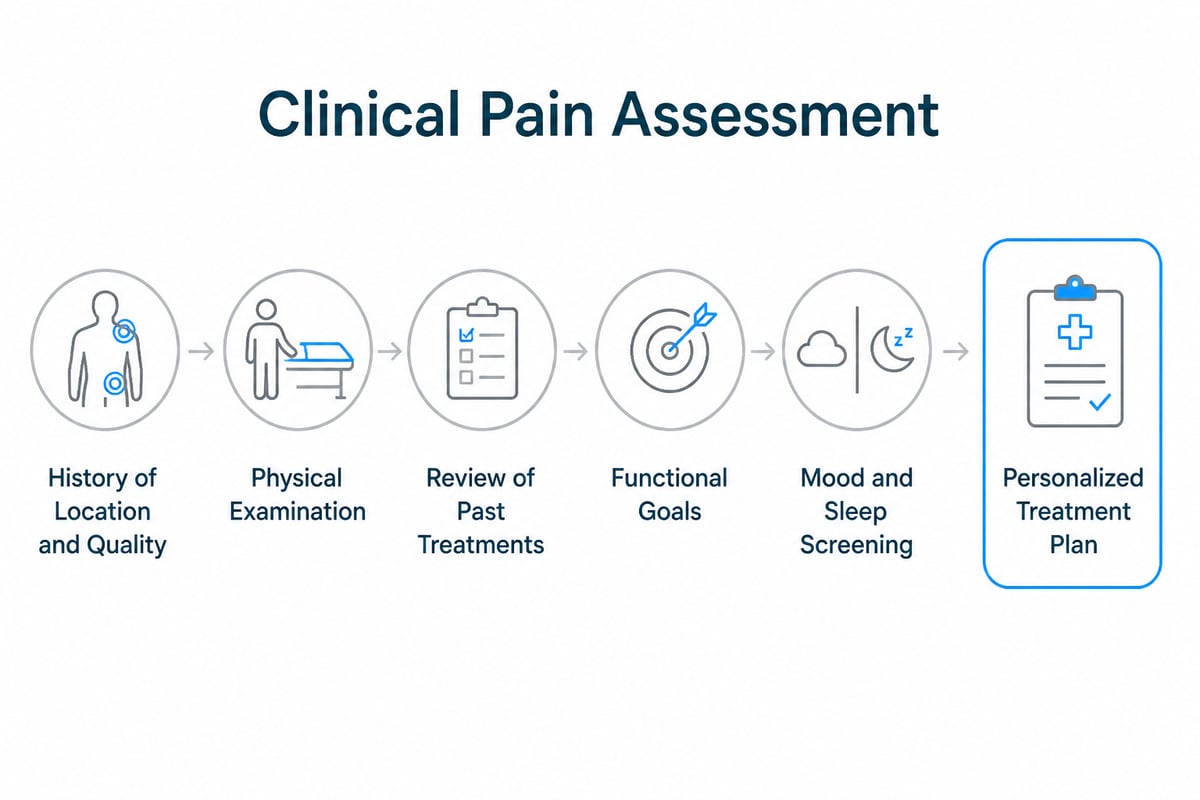
A thorough clinical pain assessment combines a detailed history, a physical examination, targeted testing, and a review of how pain affects daily life, because no single scan or blood test measures pain itself.
Expect your clinician to ask about:
- Location and pattern. Where the pain sits, whether it travels, and what time of day it worsens.
- Quality. Burning, aching, stabbing, or pressure-like.
- Intensity and function. Not only a 0 to 10 score, but what you can and cannot do because of the pain.
- Triggers and relievers. Activities, positions, weather, stress, or foods that change symptoms.
- Treatment history. Every medication, injection, therapy, and procedure tried, with the results and any side effects.
- Mood, sleep, and stress. These both influence and are influenced by persistent pain.
Imaging such as MRI or X-ray can be useful, but findings do not always match symptoms. Many adults have disc bulges or joint changes on imaging without pain, and others have significant pain with unremarkable scans. A good evaluation treats imaging as one piece of evidence, not the verdict.
What Does Evidence Say About Medication for Chronic Pain?
Current guidance supports a selective role for medication, with different drug classes suited to different pain types and some commonly used options offering limited long-term benefit.
The UK's National Institute for Health and Care Excellence (NICE) has published some of the most explicit guidance on this. In its guideline on chronic primary pain, NICE advises not to initiate opioids, NSAIDs, or paracetamol to manage chronic primary pain in people aged 16 and over. The same guidance recommends considering an antidepressant for adults aged 18 and over after discussing the benefits and risks. Note that this guidance addresses chronic primary pain, meaning pain that is a condition in itself, and not pain driven by an identified disease such as cancer or inflammatory arthritis.
Common medication categories used in practice include:
- NSAIDs for inflammatory or musculoskeletal pain, used at the lowest effective dose and with attention to stomach, kidney, and cardiovascular risks.
- Gabapentin-class medications for nerve-related pain.
- Topiramate in selected cases, typically where headache or nerve pain features prominently.
- Antidepressants that act on pain pathways, which can help even in people who are not depressed.
- Buprenorphine, a partial opioid agonist sometimes used for chronic pain, particularly where there is a history of dependence or concern about higher-risk opioids.
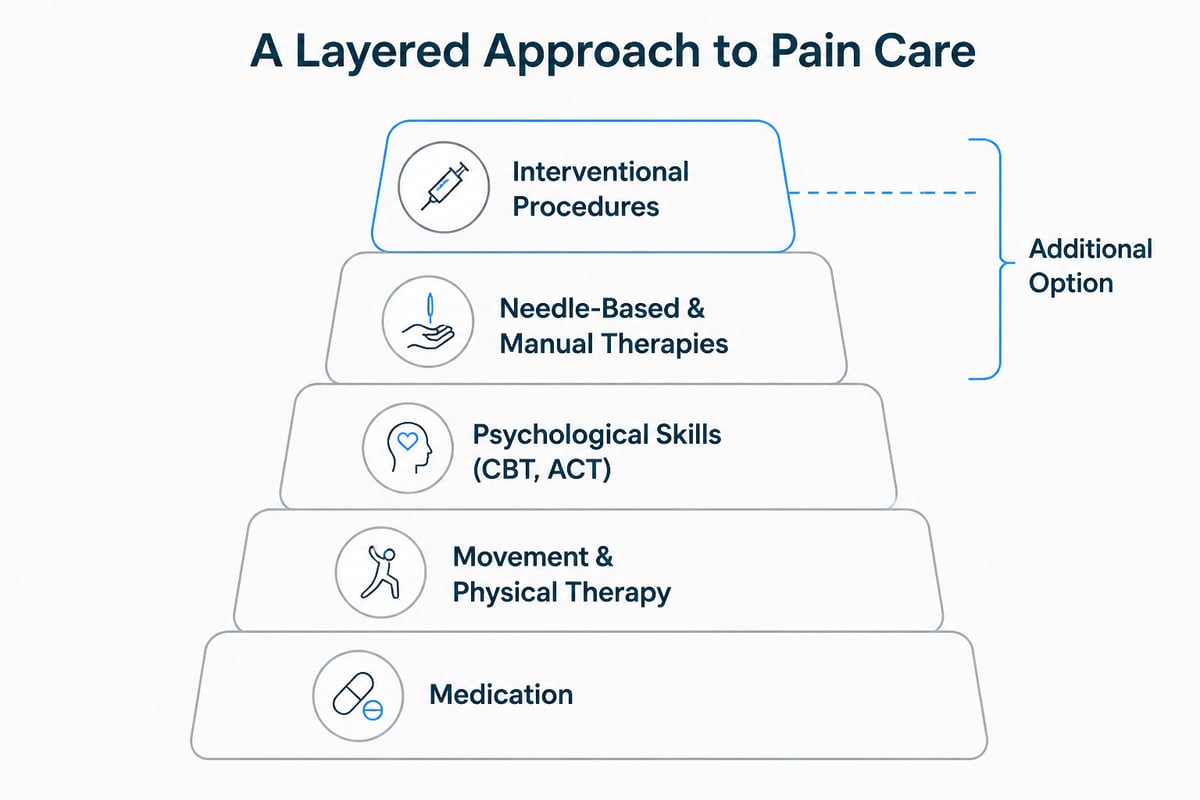
Medication works best as one component. Used alone, even well-matched drugs tend to produce partial relief, which is why the sections below matter as much as the prescription.
Which Non-Drug Treatments Help Most?
Movement-based therapy, psychological approaches, and manual or needle-based therapies have the strongest support among non-drug options, and they are most effective when used consistently over weeks, not days.
Exercise. NICE recommends offering supervised group exercise to people aged 16 and over with chronic primary pain and encouraging continued physical activity for longer-term benefit. Starting small matters. Walking, aquatic exercise, gentle strengthening, and guided physical therapy let the body adapt without triggering flare-ups.
Psychological therapies. NICE also recommends considering cognitive behavioral therapy (CBT) for pain or acceptance and commitment therapy (ACT) for adults with chronic primary pain. These approaches do not suggest the pain is imagined. They teach skills for pacing activity, reducing the fear that makes movement harder, and living well alongside symptoms.
Acupuncture and dry needling. NICE recommends considering a course of acupuncture or dry needling for people aged 16 and over with chronic primary pain.
Other options often included in individualized plans:
- Physical therapy and physiatry (physical medicine and rehabilitation)
- Chiropractic care
- Mind-body practices such as mindfulness, relaxation training, and yoga
- Dietary changes aimed at reducing inflammation or supporting weight management
- Sleep improvement, which has a direct effect on pain sensitivity
When Are Interventional Procedures Worth Considering?
Interventional procedures are worth considering when pain is localized to an identifiable source, when conservative care has not provided enough relief, and when the goal is to create a window in which rehabilitation can progress.
Procedures commonly discussed for chronic pain include:
- Trigger point injections for painful, tight bands within muscle.
- Epidural steroid injections for nerve root irritation in the spine.
- Joint and facet injections for arthritic or spinal joint pain.
- Nerve blocks and radiofrequency ablation for pain carried by specific nerves.
- Spinal cord stimulation for selected cases of persistent nerve-related pain, typically after other options have been exhausted.
- Surgery, reserved for structural problems with a clear surgical target.
Injections rarely cure the underlying condition. Their value is in reducing pain enough to let you exercise, sleep, and participate in therapy. A reasonable question to ask before any procedure is what specific functional improvement it is meant to achieve and how that will be measured.
Where Does Medical Marijuana Fit?
Medical marijuana is an option some Pennsylvania patients explore for chronic pain, and it is best considered within a monitored plan rather than as a stand-alone fix.
Evidence for cannabis in pain is mixed, and individual response varies. Considerations include potential interactions with other medications, effects on alertness and driving, and the importance of clinical follow-up to judge whether it is actually helping function. Pain & Recovery Medical Centre integrates proven conventional and alternative treatments, including medical marijuana, so the decision can be weighed alongside your other options in one conversation.

Can Chronic Pain Be Cured?
Chronic pain can sometimes be resolved when its cause is treatable, but for many people the realistic goal is substantial reduction, better function, and a return to meaningful activity.
When a clear, correctable cause exists, such as a compressed nerve that can be decompressed or an inflamed joint responding to targeted therapy, pain may resolve fully. For conditions involving long-standing nervous system sensitization, complete elimination is less common. That does not mean progress is limited. Many adults achieve large improvements in sleep, mobility, and independence even when some pain persists.
Setting goals around function tends to work better than chasing a score of zero. Examples include walking a certain distance, sleeping through most of the night, returning to a hobby, or reducing reliance on rescue medication.
How Can Older Adults Manage Everyday Aches and Pains?
Older adults manage aches and pains most effectively with regular low-impact movement, careful medication review, and treatment of sleep and mood, because age changes how the body responds to both pain and drugs.
Practical steps include:
- Keep moving daily. Short walks, stretching, and strength work help joints and muscles, and inactivity usually worsens stiffness.
- Review medications with a clinician. Kidney function, other prescriptions, and fall risk all affect which pain medicines are safe.
- Use heat, gentle massage, or topical options for localized muscle and joint discomfort.
- Protect sleep. Poor sleep lowers the pain threshold.
- Address balance and strength. Physical therapy reduces both pain and fall risk.
- Stay socially connected. Isolation and low mood intensify the experience of pain.
What Does Individualized Care Look Like in Practice?
Individualized pain care means the plan is built around your pain types, history, goals, and risks, then adjusted over time as you respond.
Pain & Recovery Medical Centre's Chronic Pain Management Program is an example of this model for Pennsylvania adults aged 18 and over. Depending on the patient, it can draw on medications such as buprenorphine, NSAIDs, gabapentin-class drugs, or topiramate, alongside counseling, acupuncture, physical therapy, chiropractic treatment, mind-body therapies, physiatry, trigger point injections, dietary therapy, and in some cases surgical referral. Physician Dr. Paul Simpson is board certified in Internal Medicine and has over 35 years of practice experience in primary care. The team provides compassionate, judgment-free care, and prescribing is done electronically, as Pennsylvania law requires.
Two practical points apply. Check directly with the center about insurance and about which controlled substances it prescribes. If those terms match what you are looking for, you can learn more about the practice and its approach, or read related topics on the clinic’s blog.
How Do You Prepare for a Pain Appointment?
Preparing before a pain appointment helps your clinician see the whole picture quickly, which leads to a more accurate plan at the first visit.
- Write a medication timeline. List each drug, dose, duration, benefit, and side effect, including supplements.
- Keep a brief pain diary for one to two weeks. Note intensity, activities, sleep, and mood.
- Bring prior records. Imaging reports, procedure notes, and physical therapy summaries save repeated testing.
- Define two or three functional goals. For example, gardening, driving comfortably, or standing through a meal.
- List your questions and concerns. Include worries about dependence, side effects, or cost.
Honest answers about past medication use, including any concerns about dependence, allow for safer recommendations. A judgment-free setting makes that conversation easier.
FAQ
What is the worst pain in the world?
No single condition holds a universal title, because pain is subjective and cannot be compared on one scale. Cluster headaches, trigeminal neuralgia, kidney stones, and complex regional pain syndrome are often described by patients as among the most severe. If your pain feels unbearable or is changing quickly, seek medical evaluation.
When should I see a provider about long-lasting pain?
See a provider when pain lasts beyond three months, interferes with sleep or daily tasks, or stops responding to medication that once worked. Seek urgent care for sudden severe pain, new weakness or numbness, loss of bladder or bowel control, or pain with fever or unexplained weight loss.
Does needing a pain plan mean something is wrong with me?
No. Persistent pain is a recognized medical condition, and needing a structured plan is common. Pain involves both the body and the nervous system, and treating both layers is standard practice.
Start by writing down your medication history and your top two or three functional goals, since that single page makes any first appointment more productive. If medication alone is no longer controlling your pain, Pain & Recovery Medical Centre offers individualized care for central Pennsylvania adults, including its Chronic Pain Management Program, and you can call now to ask how a tailored plan could fit your situation.